Murielle’s Rage: From Beauvoir’s pages to the stage
When we asked about Ta Maksoura ‘s essence, Dania described it as more than a performance.
“ةِ مكسورة …Ta Maksoura” is not merely a play. In truth, it’s an existential earthquake for one woman, voiced through the body and soul of millions who endure similar suffering in silence.
It’s an adaptation from Simone de Beauvoir’s novel A Woman Destroyed, a French philosopher best known for her writings on women. More notably, her book The Second Sex remains a detailed analysis of women’s oppression and a foundational text for contemporary feminism.
Dania explained that the protagonist, Murielle, embodies this oppression, yet in a powerful act of defiance, she shatters her silence through a monologue that becomes an act of revenge against traditions, human relationships, and the entire social system.
As Gustave Flaubert once wrote: “She took her revenge through monologue”
How Ta Maksoura Became Her Freedom Manifesto
A sharp, knowing smile crossed her face, the smile of someone who had danced with demons on stage and won, before she delved into the answer.
What began as a university experiment became a personal awakening. Beauvoir’s text met her inner strength, and the stage amplified both. Gradually, she adapted Beauvoir’s brutally honest narrative to match her own courage at the time, but after opening night, that courage grew. Beyond that, the stage freed her to confront more “taboos” Beauvoir had exposed, transforming confession into liberation where she gave it a new skin that was not afraid to speak out.
Dania confessed: “Murielle’s monologue wasn’t on paper anymore; in fact, it crawled under my skin. In that moment, I stopped ‘performing’ and started bleeding on stage.”
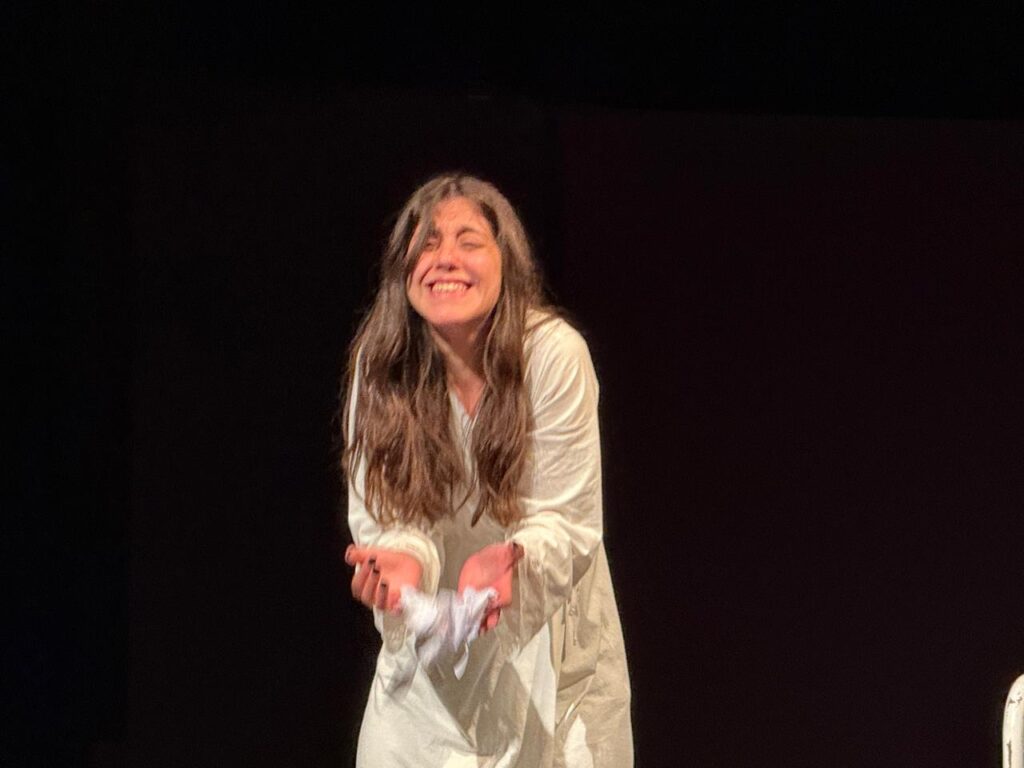
What stands out, however, is that she chose this text out of her belief that true art is born in unsafe spaces: where vulnerability becomes aesthetic strength, where the body and voice channel rage and freedom rather than tears. Most importantly, this script dragged her from safe spaces to war zones; the character’s pain, when exposed, turned into her liberation…
Dania concluded: “Sometimes power lies in solitude. Every woman must take that first step towards freedom… because on the other side of fear, life awaits you.”
Ta Maksoura: Directing the Unspoken
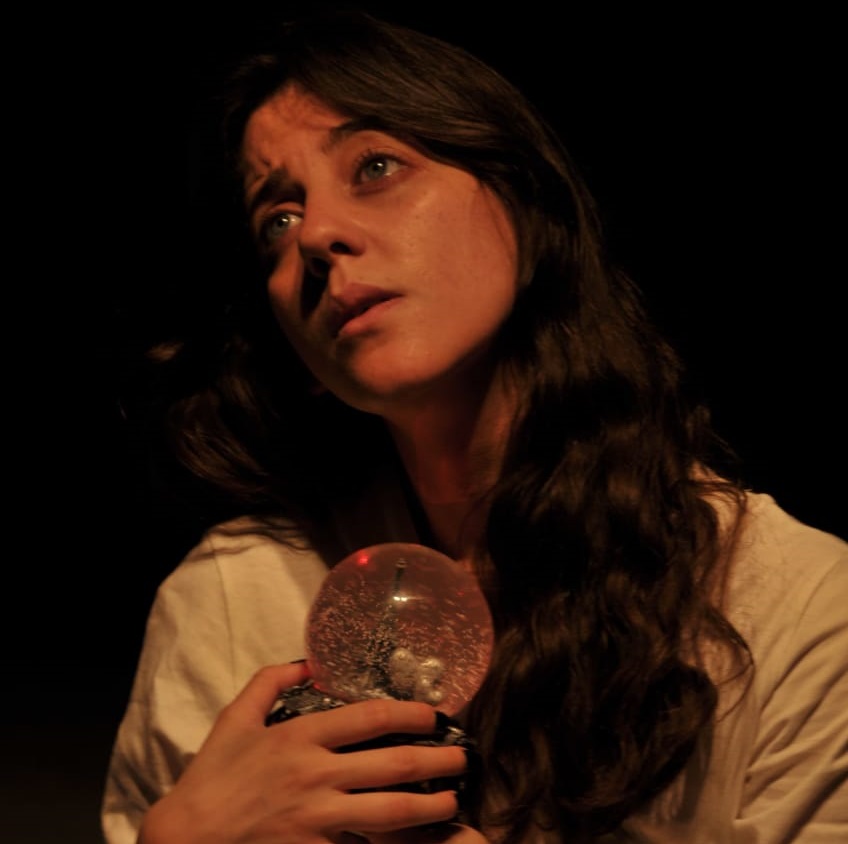
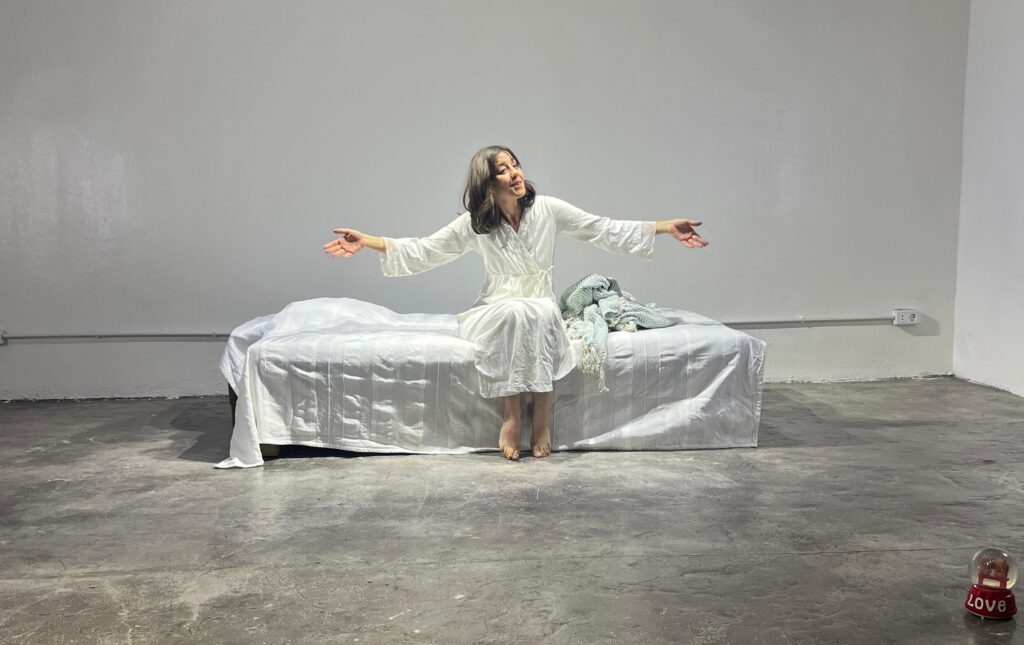
Explaining her directorial vision, Dania leaned forward with focused intensity, saying that Murielle no longer languishes in her cramped apartment on New Year’s Eve, tormented by noisy neighbors and street chaos. More profoundly, she relocated her to a mental asylum. Her isolation crystallized in a bed and a cordless phone (a metaphor for her need for connection). Her psychological state evolves with the progression of events and the dramatic arc she created for herself. The endless wait for visitors who never came turns the asylum into both a prison and a stage where truth is revealed.
At its core, she said:
Beauvoir’s heroine, Murielle, ceased to be fiction; “She became our next-door patient, right there on the theater stage.”
The truth is, we’re all patients here, but only some of us speak.
Her Personal Journey [The Soloist’s Paradox] Holding a Thousand Heartbeats
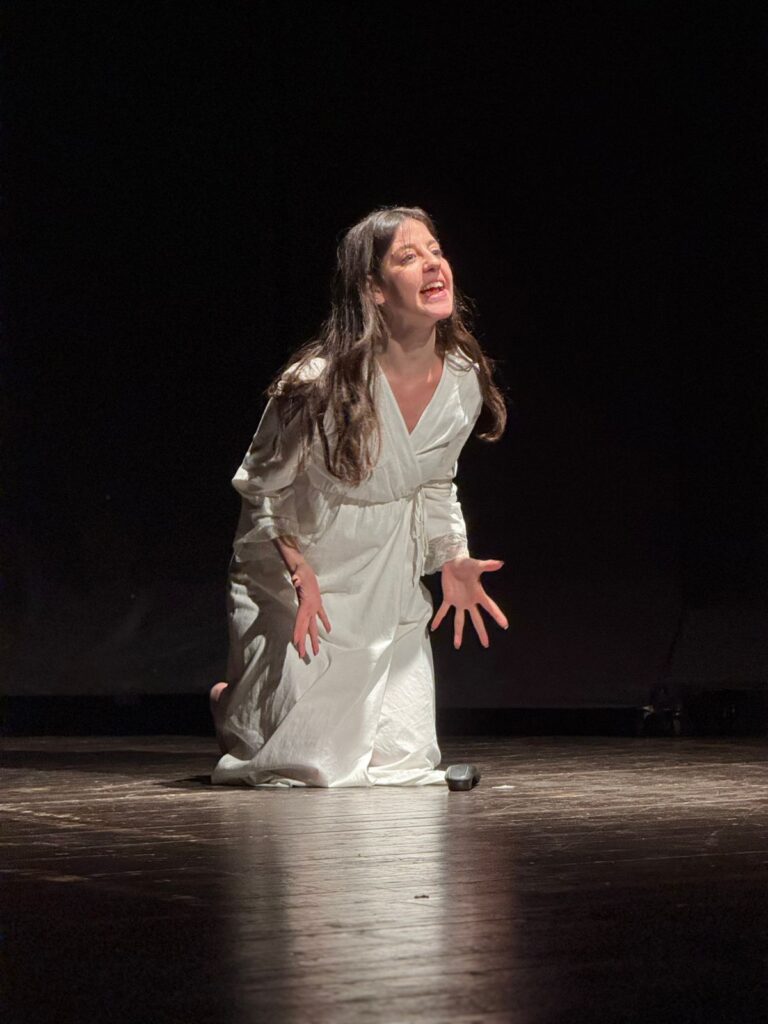
When we asked Dania about her personal journey, she leaned in closely and said that she cherished the experience, especially as the first actress to bring Beauvoir’s previously unstaged text to a Lebanese stage, carrying it alone for no less than 35 minutes. More importantly, it became a solo performance where she lived as Murielle, her pulse syncing with the audience’s breath. Her body became an open book, narrating the silent struggle of every Lebanese woman.
Despite everything, she rejects Murielle’s fate. Like the phoenix, she believes Lebanese women rise from ashes, stronger and brighter.
35 Minutes of Pure Pressure: “What They Don’t See Behind the Curtain”
Curious to understand more, we asked her about the pressure and challenges she had to face, Dania met the question with a lifted chin and said:
“Carrying the entire weight, adaptation, direction, acting, was grueling, especially during repeated emotional breakdown scenes.”
Beneath the silence, a hollow look briefly entered her eyes and confided: “Some scenes didn’t feel like acting. They felt like tearing open a wound again and again, and trusting the audience not to look away.”
Then she confessed:
“I had to stand firm in all circumstances, in the face of all obstacles, because if I fell, the entire play would fall with me. In reality, every second was a high-wire act.”
In addition, she sent a special thanks to the management of the Sunflower Theater for giving her enough days to rehearse without any costs, in light of the difficult economic situation, and the inability to find other places at reasonable costs.
She also credited her supervisor, Dr. Gabriel Yammine, for guiding her patiently.
“A Grateful Message, To Her Sacred Witness, the Keeper of Her Unwritten Chapters”
She paused, choosing her next words with the care of someone touching a holy relic. Her gratitude was a quiet, powerful force, she said:
To You….. you are the only person who can read the name, because some stories are kept behind the scenes, and in my heart forever:
You didn’t just show me the path, you inspired me to claw my own.
When others doubted, you bet on my success.
You read me like an open book, while others skimmed without understanding.
You kept holding up the mirror until I saw myself through your eyes.
Thank you…
“You gave me small eternities—and for that, I’m forever grateful.”
Ta Maksoura: The Woman Who Dared to Remove the Mask
Dania ended not with a conclusion, but a provocation, her voice shifting from the past’s pain to the future’s rebellion.
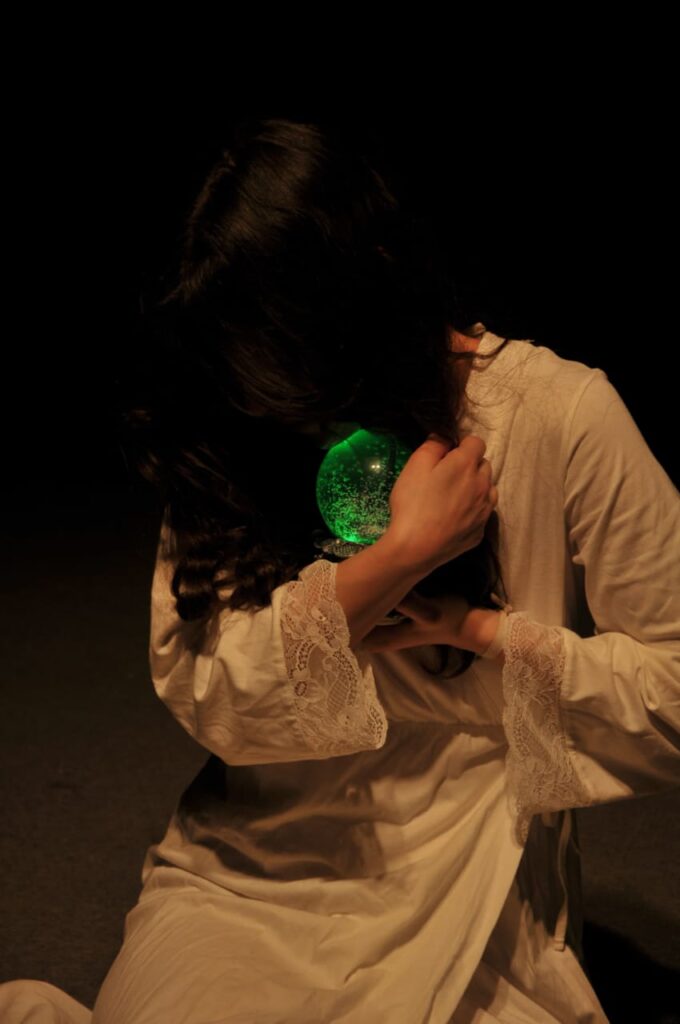
“ةِ مكسورة, Ta Maksoura…” was her theatrical firstborn. She poured into it unspoken fragments of herself and of countless others gnawed at by hidden wounds that will keep gnawing at us forever, if we don’t talk about it. Through this act of honesty, she shattered countless taboos, and she stood transformed as the curtain fell, lighter and freer.
Today, she sets tragedy aside to write comedy, not to mock pain, Indeed, but to pull the rug from under its feet. After all, laughter is an act of rebellion against despair.
None of this would’ve happened without stripping away masks, hers and the character’s. So she asks you: Which mask will you remove to set yourself free?
Stay Connected with Dania:
https://www.instagram.com/dania_awadd
https://twitter.com/Dania_Awd?t=wK5W0Gf981MvE_g1mJiHlA&s=08

Stay Connected with EWG:
Follow us on Instagram: https://www.instagram.com/executivewomen_
Like us on Facebook: https://www.facebook.com/ExecutiveWomen
Connect on LinkedIn: https://www.linkedin.com/company/executive-women/
Read more articles: https://executive-women.global/en/theatre-scene-with-a-rising-actress/