As women in Congress reach a historic record, this remarkable achievement opens a bigger conversation about women in leadership, breaking barriers, and inspiring generations to believe that no ambition is beyond their reach.
Some numbers count people. Others tell the story of how far we’ve come.
And sometimes, a number becomes a milestone.
160.
In a historic moment for women in Congress, at least 160 women are set to serve in the United States Congress in 2027, following the November 2026 midterm elections.
According to the Center for American Women and Politics (CAWP) at Rutgers University, this record-breaking achievement marks an important chapter for women in leadership, representation, and the generations of women who have worked to make opportunities more accessible.
It also reflects the importance of environments where women’s ambitions are encouraged, their abilities embraced, and their contributions recognized. Progress becomes possible not only when women persevere, but also when the people and institutions around them create opportunities for their talents to flourish.
A historic achievement. A celebration of perseverance. And a reminder that every generation of women opens doors that once seemed firmly closed.
But perhaps the most powerful part of this story is not how many women have made history.
It is how many more women may now believe they can.
Women in Congress: 160 Stories of Leadership and Determination
Behind every historic milestone are years of ambition, determination, obstacles overcome, and opportunities pursued.
The upcoming U.S. Congress will include at least 137 women in the House of Representatives, setting a new record for that chamber as well.
Together, women are expected to hold at least 29.9% of congressional seats, compared with 28.4% in the current Congress.
It is an achievement worth celebrating, especially when we remember that women were once entirely absent from these institutions.
Yet the numbers also offer perspective.
Nearly 70% of congressional seats will still be occupied by men.
This is not a reason to diminish the achievement. It is a reason to recognize that progress is a continuing journey.
And it is not a race against men. It is a shared journey toward a world where talent is welcomed, potential is nurtured, and achievement is acknowledged regardless of gender. The encouragement of mentors, colleagues, families, and communities has an essential role in making that journey possible.
Because the goal is not simply to celebrate women for reaching positions of leadership.
It is to build a world where their presence in those positions becomes completely ordinary.
And while each woman’s journey is different, collectively, these achievements reflect generations of women who refused to accept that ambition should come with limitations.
Women who pursued their education, built careers, earned the trust of their communities, and believed that their perspectives deserved to be heard.
The record is theirs, but its significance reaches beyond them.
Women in Congress: The Power of Being the First
Every generation has women who are told, directly or indirectly, that certain doors are not meant for them.
And every generation produces women who open those doors anyway.
The 2026 elections brought historic firsts that deserve recognition.
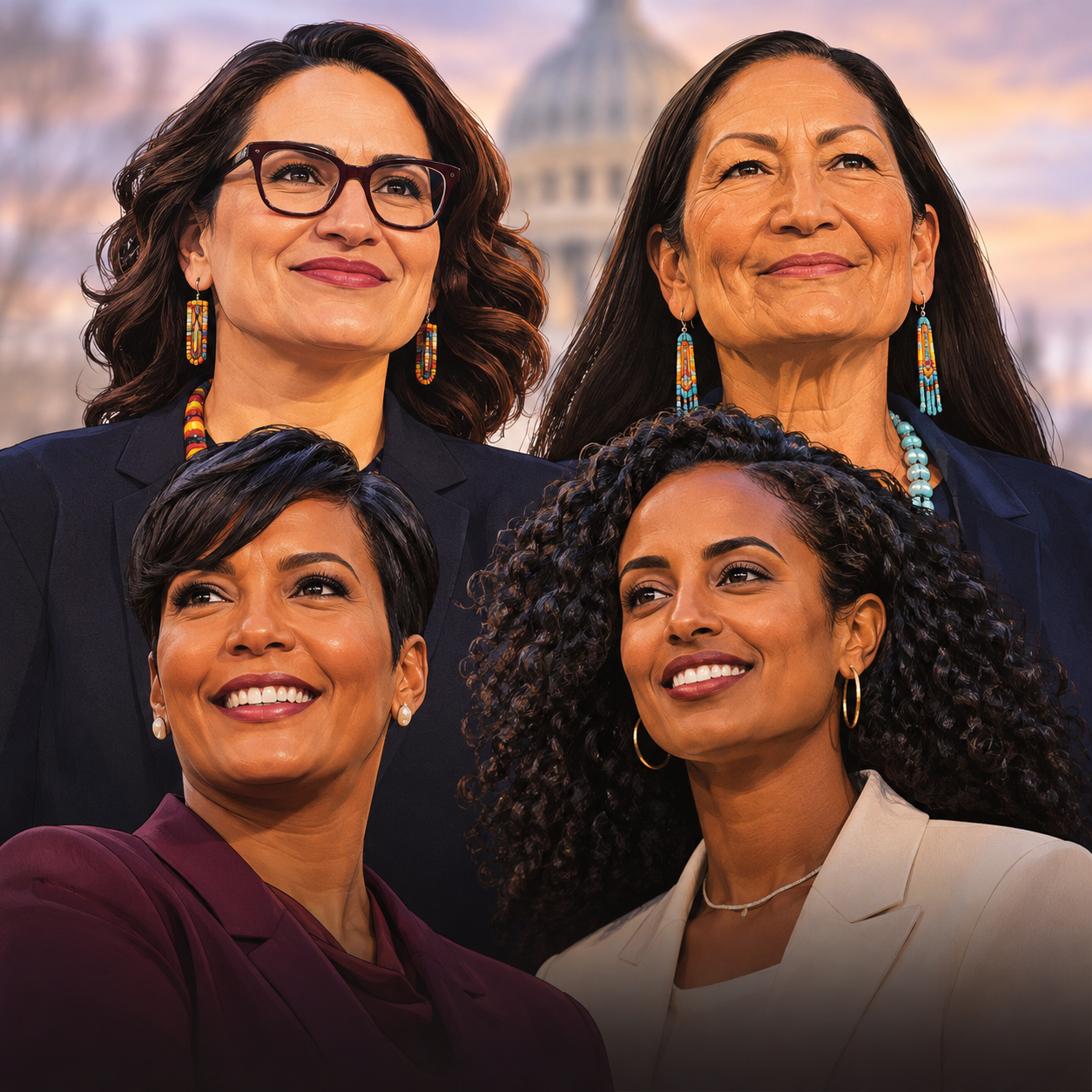
Peggy Flanagan of Minnesota is set to become the first Native American woman to serve in the U.S. Senate, marking an important moment for Indigenous representation.
Keisha Lance Bottoms of Georgia has become the first Black woman elected governor of a U.S. state.
Deb Haaland of New Mexico has also made history as the first Native American woman elected governor.
And Melat Kiros of Colorado has become the first Generation Z woman elected to Congress, bringing a new generational perspective to an institution with a long history.
These achievements are deeply personal, but their significance extends beyond the individuals who accomplished them.
They also demonstrate what becomes possible when determination meets acceptance, when aspirations are supported rather than questioned, and when women are recognized for their qualifications, dedication, and achievements. Each milestone represents not only individual effort, but also the value of encouragement and the gradual removal of barriers that once limited opportunity.
For young girls watching, they offer something that cannot always be measured in statistics: possibility.
The possibility of imagining themselves in places where they have rarely seen women who look like them, share their backgrounds, or understand their experiences.
There is something extraordinarily powerful about seeing a woman achieve what previous generations could only dream of.
And yet, there is also a question worth asking.
How many more firsts must women achieve before their success is no longer considered an exception?
When Women Rise, Possibilities Expand
Leadership has never belonged to one gender, one background, or one definition of success.
It belongs to people with ideas, determination, vision, and the courage to take responsibility.
From boardrooms to classrooms, from creative industries to entrepreneurship and public institutions, women continue to demonstrate that leadership takes many forms.
Some build businesses from the ground up.
Some transform industries.
Some create opportunities for communities.
Others break barriers simply by entering spaces where women have historically been underrepresented.
What connects these journeys is not a single profession or position.
It is the determination to participate, contribute, and make a difference.
And when that contribution is valued, when hard work is rewarded, and when accomplishments receive the recognition they deserve, success becomes more than an individual achievement. It becomes evidence of what supportive and inclusive environments can make possible.
The record number of women in Congress is one example of a much wider movement toward greater representation.
And the message travels far beyond the United States.
When women succeed in leadership, their achievements can inspire others to pursue ambitions they might previously have considered out of reach.
For a young woman considering a career in business, science, media, or public service, seeing another woman succeed can help transform an abstract dream into something tangible.
It offers reassurance that ambition is not misplaced and that the path ahead, although challenging, is possible.
But inspiration alone is not enough.
Women also need access to education, professional networks, mentorship, resources, and opportunities to turn ambition into achievement.
They need to be encouraged when they begin, embraced as they grow, accepted as capable leaders, recognized for their contributions, and rewarded for the value they bring. These are not privileges. They are essential elements of a culture that allows talent to thrive.
Recognizing a milestone should therefore encourage us to look beyond the celebration and consider how future generations can be supported.
Because every woman who breaks a barrier has the potential to make that barrier easier for someone else to cross.
One woman’s breakthrough can become another woman’s starting point.
Women in Leadership: A Milestone Beyond Borders
For women across the Middle East, North Africa, and the rest of the world, stories of historic achievements carry particular meaning.
The circumstances may be different, and the challenges are certainly not identical, but the desire to be recognized for one’s abilities is universal.
Women continue to build companies, lead organizations, challenge expectations, and make their mark in industries where their voices have not always received equal recognition.
Some have the support of established networks and mentors.
Others must create those opportunities themselves.
And many are doing both, building successful careers while making the journey easier for the women who will follow.
Across the MENA region, women are shaping entrepreneurship, advertising, technology, finance, education, social initiatives, and creative industries.
Their journeys are not defined by one universal experience. They represent different cultures, backgrounds, ambitions, and definitions of achievement.
Some are established executives leading international organizations. Others are young entrepreneurs taking their first steps with an idea and the determination to turn it into something meaningful.
Both journeys deserve visibility.
And both deserve encouragement, appreciation, and recognition. Whether a woman is taking her first professional step or celebrating decades of achievement, the support she receives can make a meaningful difference. Progress is not about replacing one voice with another, but about welcoming more voices, embracing different strengths, and reducing the resistance that still stands in the way of equal opportunity.
This is why global milestones in women in leadership matter.
Not because every woman must follow the same path, or because success should be measured by a title.
But because visibility can expand imagination, representation can encourage participation, and opportunity can transform potential into achievement.
The world does not need women to become leaders in exactly the same way.
It needs women to have the freedom and opportunity to lead in their own way.
And perhaps that is the most meaningful connection between an achievement in Washington and the aspirations of women thousands of miles away.
Different destinations. Different journeys. The same belief that potential should never be restricted by gender.
Beyond the Numbers: Making Room for the Next Generation
Celebrating 160 women in Congress is about recognizing an achievement. But it is also about understanding the responsibility that comes with visibility.
Because representation is not simply about occupying a position.
It is about contributing ideas, bringing valuable experiences into conversations, and demonstrating that leadership can be expressed through many different perspectives.
Women do not need to think alike, lead alike, or share identical ambitions for their presence to matter.
In fact, their different backgrounds and experiences are part of what makes broader representation meaningful.
The next generation should not grow up believing that there is only one acceptable model of a successful woman.
A woman can be a mother and an entrepreneur. An artist and a business owner. A scientist, an educator, an executive, or someone who chooses to create a path that does not yet have a title.
Her contribution should not be measured against a single definition of success.
What matters is that she has the opportunity to pursue it.
And that begins long before a woman reaches a leadership position.
It begins with the encouragement she receives as a child, the education available to her, the mentors who recognize her abilities, and the environments that allow her confidence to grow.
It continues when her ideas are welcomed, her efforts appreciated, her achievements celebrated, and her potential met with confidence rather than hesitation. The most meaningful progress happens when encouragement becomes a habit, acceptance becomes natural, and recognition is based on merit.
The next generation of women leaders is already watching. What they see today will help shape what they believe is possible tomorrow.
The Day We Stop Counting Firsts
There is a beautiful contradiction in celebrating historic firsts.
We celebrate them because they are extraordinary.
But we also look forward to a future in which they are no longer extraordinary at all.
A future where a woman becoming a CEO, a president, a founder, a scientist, or a leader is not surprising.
Where ambition is encouraged without stereotypes.
Where opportunities are not limited by expectations.
And where young girls grow up knowing that their dreams do not require anyone else’s permission.
A future built not on competition between women and men, but on mutual respect, shared encouragement, and the understanding that recognizing one person’s achievement does not diminish another’s. A future where barriers give way to acceptance, contributions are acknowledged, and excellence is celebrated wherever it is found.
The milestone of 160 women in Congress is an important chapter in that journey. It does not mean every barrier has disappeared, but it demonstrates that institutions can change, representation can grow, and progress can be measured.
At Executive-Women Global, we believe these moments deserve recognition not only for what has been achieved, but also for what they make possible.
Because the greatest achievements do not end with the women who accomplish them.
They inspire others to begin.
160 women. One historic milestone. And countless possibilities still waiting to be realized.
Perhaps the greatest milestone of all will be the day we no longer count how many women have reached the top.
Because there will be nothing unusual about finding them there.

Stay Connected with EWG:
Follow us on Instagram: https://www.instagram.com/executivewomen_/
Connect on LinkedIn: https://www.linkedin.com/company/executive-women/
Like us on Facebook: https://www.facebook.com/ExecutiveWomen/
Read more articles: https://executive-women.global/worlds-first-lawyer-with-down-syndrome-ana-victorias-historic-journey-to-legal-justice/
https://executive-women.global/dr-maliha-hashmi/
https://executive-women.global/viola-edward-president-of-red-global-de-mentores/