When everyone can create perfection with AI, Prada Christmas Campaign is betting that the real luxury is something a machine cannot replace: the human touch.
What happens when creativity becomes instant, affordable, and almost limitless? Human craftsmanship becomes the ultimate differentiator.
While fashion houses increasingly embrace artificial intelligence to create futuristic campaigns, Prada has taken a different approach. Its 2026 holiday campaign brings back hand-drawn animation, childhood nostalgia, and the unmistakable charm of human artistry.
However, the Prada Christmas Campaign is about much more than Christmas. It raises a fascinating question about AI in Luxury Marketing: if technology allows everyone to create extraordinary visuals, what makes luxury extraordinary anymore?
Perhaps the answer is no longer perfection. Perhaps it is the effort behind it.
Prada Christmas Campaign: A Return to the Human Touch
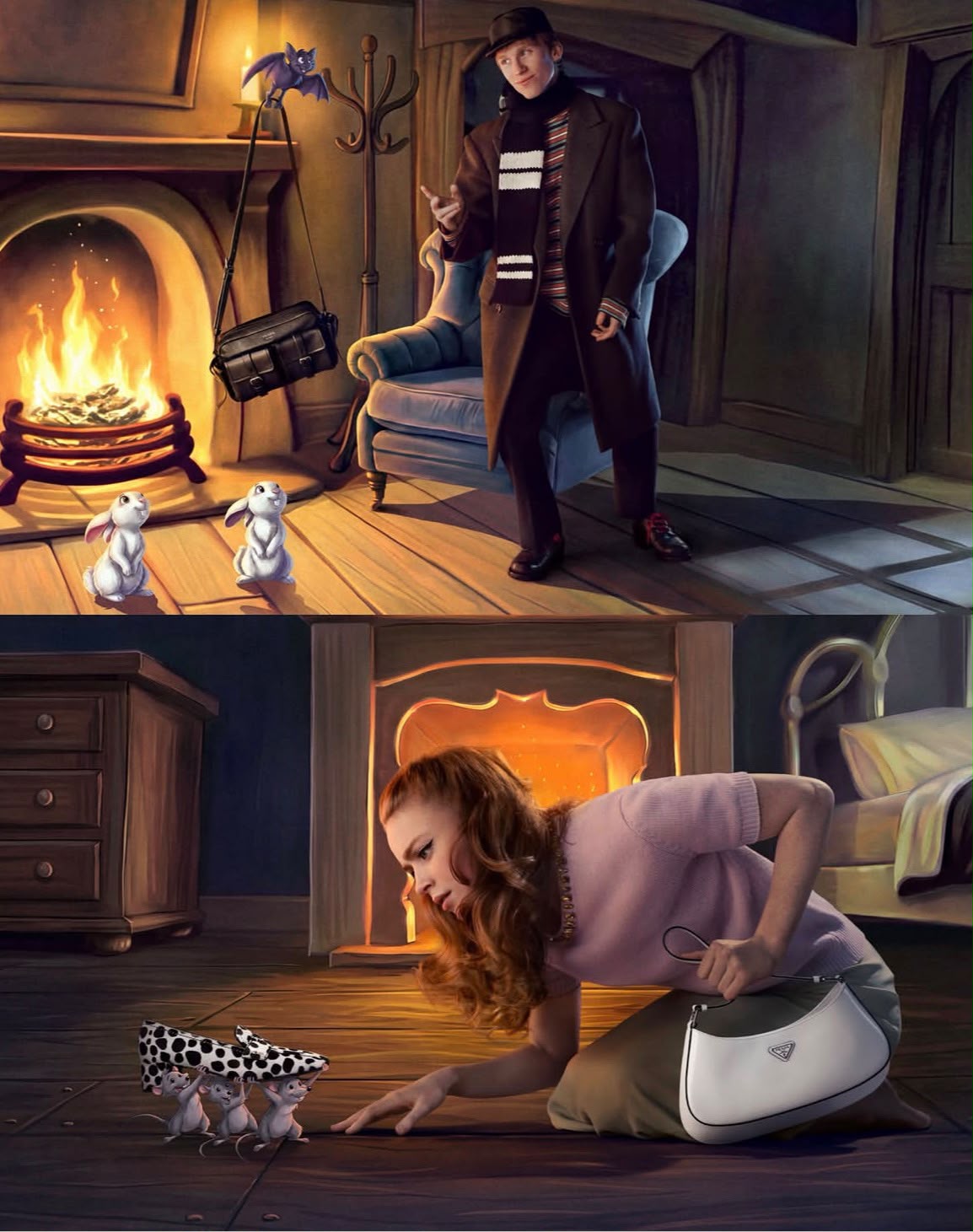
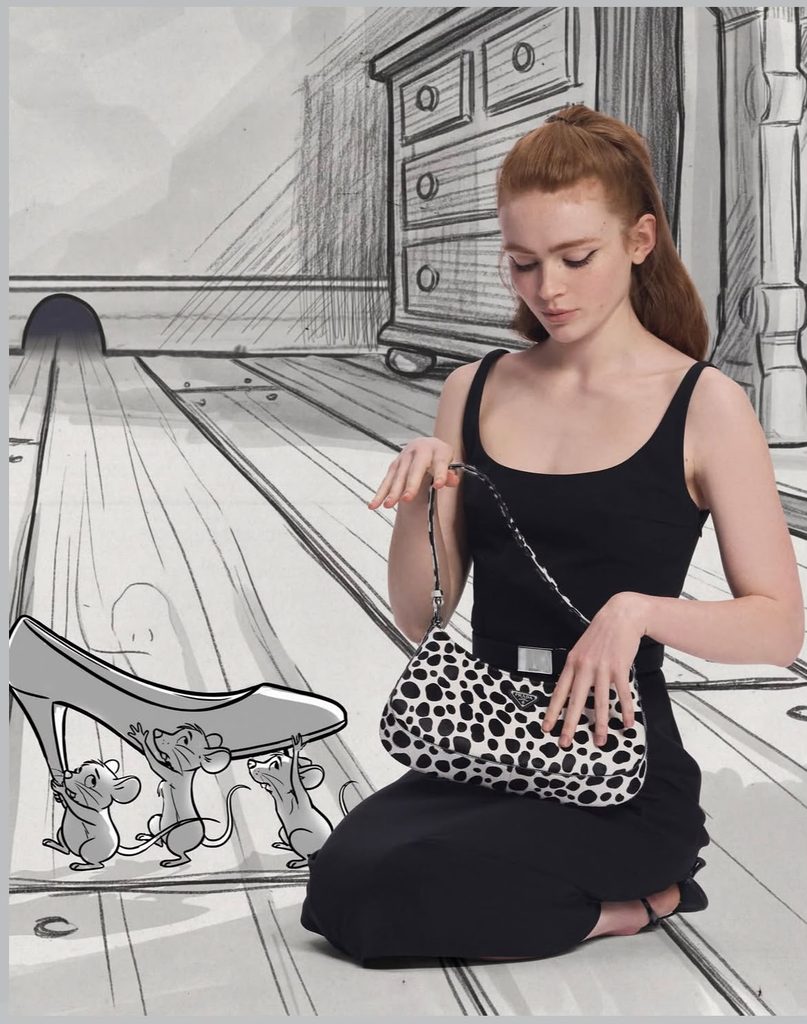
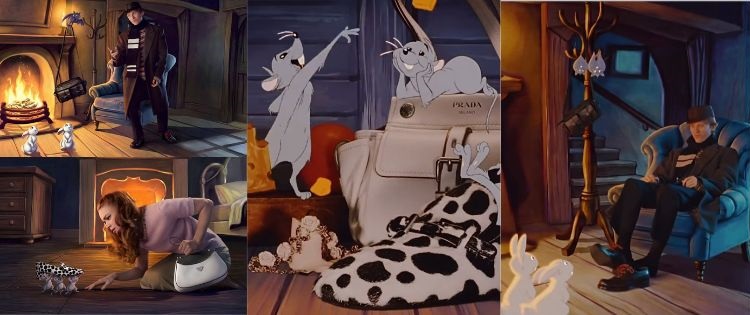
Prada’s Drawing Prada: Animated by Hand campaign transports audiences into a whimsical world where illustrated animals, winter landscapes, and luxury fashion meet. The brand collaborated with John Pomeroy, a veteran animator whose work includes Disney classics such as Pocahontas and Fantasia 2000, to bring traditional animation into a modern luxury campaign. Featuring Sadie Sink, Maya Hawke, and other international talents, the campaign blends live-action footage with hand-drawn illustrations, creating a nostalgic atmosphere that feels both familiar and unexpected.
Yet the real story lies behind the visuals. Instead of relying on generative AI to produce elaborate fantasy worlds, Prada invested in artists, traditional techniques, and a time-consuming creative process. Moreover, the brand shared sketches and behind-the-scenes material, allowing audiences to appreciate the work behind the finished campaign.
Consequently, the Prada Christmas Campaign transforms craftsmanship into part of the message itself. Prada is not simply advertising luxury products; it is demonstrating the patience, expertise, and artistic dedication that luxury traditionally represents. And in an industry increasingly fascinated by technological efficiency, that choice becomes a powerful statement.
AI in Luxury Marketing: When Everyone Can Create Magic
Artificial intelligence is changing advertising at remarkable speed. Today, brands can create surreal landscapes, elaborate visual concepts, and sophisticated digital imagery with fewer traditional production resources. As a result, visual spectacle is becoming increasingly accessible.
Luxury houses have already started experimenting. Valentino introduced AI-generated imagery to promote its DeVain handbag, using surreal transformations and imaginative digital environments. Meanwhile, Moncler explored AI-assisted creative worlds, while Gucci’s experiments with AI-associated visuals sparked conversations about authenticity and artistic intention.
Interestingly, Prada itself has experimented with AI-related production. Its earlier I, I, I, I AM… PRADA campaign, developed with artist Jordan Wolfson, incorporated AI into post-production rather than generating the entire campaign.
Therefore, the Prada Christmas Campaign does not represent a complete rejection of technology. Instead, it highlights something more strategic: knowing when technology adds value and when human creativity communicates more.
The challenge with AI in Luxury Marketing is not that AI produces unattractive content. Quite the opposite. It can produce extraordinary visuals. However, when increasingly accessible tools allow thousands of brands to achieve similar results, visual perfection alone loses some of its power to differentiate.
And that is precisely where craftsmanship enters the conversation.
The New Luxury Paradox: The Easier Creativity Gets, the More Valuable Craftsmanship Becomes
Luxury has always depended on more than appearance. Scarcity, heritage, expertise, and the time required to create something exceptional all contribute to its perceived value.
Now, AI in Luxury Marketing is introducing a new form of scarcity: visible human effort.
Consider the difference between an image generated in seconds and an illustration developed through hours of drawing, revision, and artistic judgment. Both can look impressive. However, the second carries a story about the people and expertise behind it.
That story can create emotional and commercial value.
Research published in the Journal of Advertising Research under the title When AI Doesn’t Sell Prada explored how consumers respond to AI-generated luxury advertising. The study found that AI disclosure could reduce perceptions of effort and authenticity, although highly creative AI imagery helped soften those negative reactions.
In other words, consumers do not necessarily reject AI. Rather, they care about what its use suggests about the brand.
This is what makes the Prada Christmas Campaign particularly interesting. By emphasizing traditional animation, Prada reinforces the qualities that justify luxury positioning: patience, specialization, originality, and artistic commitment.
Importantly, this does not mean handmade advertising automatically generates higher sales or that craftsmanship has universally become more expensive. Nevertheless, as automated production becomes more common, authentic artistic expertise may become increasingly desirable and commercially distinctive.
When perfection becomes easy to reproduce, the process behind it becomes part of the luxury.
Why Prada Is Selling Emotion, Not Just Christmas Gifts
The most successful luxury campaigns rarely focus exclusively on products. Instead, they sell a feeling, an identity, or a world that consumers want to enter.
The Prada Christmas Campaign understands this perfectly.
Through nostalgic animation, playful characters, and cinematic storytelling, Prada creates an emotional experience before introducing the commercial message. Its collaboration with an animator associated with beloved Disney films also connects the campaign to childhood memories and familiar artistic traditions.
However, nostalgia is only part of the strategy.
By revealing the creative process, Prada gives audiences another reason to engage. The sketches, artistic decisions, and behind-the-scenes footage become content in their own right, extending the campaign beyond the original advertisement.
This approach matters in an environment overflowing with digital content. While AI can help brands produce more material at greater speed, quantity does not automatically translate into emotional connection.
Consequently, the campaign demonstrates an important marketing principle: people may forget a beautiful advertisement, but they remember a story that makes them feel something.
Beyond Prada: The Brands Rediscovering Human Craft
Prada is not alone in recognizing the appeal of traditional artistic processes.
Hermès, for example, has collaborated with illustrators to create imaginative hand-drawn digital artwork, reinforcing its longstanding association with craftsmanship. Similarly, luxury haircare brand Oribe incorporated the work of mosaic artist Mathilde Herrero into its holiday packaging, transforming artistic expertise into part of the product experience.
Meanwhile, other brands continue exploring digital innovation. Ralph Lauren used CGI to bring its iconic teddy bear character to life in a Wimbledon-inspired campaign, demonstrating how technology can support imaginative storytelling without necessarily replacing traditional production.
These examples reveal an important distinction. CGI, hand-drawn animation, and generative AI are different creative techniques, each with its own strengths.
Therefore, the future of AI in Luxury Marketing is unlikely to involve abandoning technology altogether. Instead, brands may increasingly combine digital efficiency with distinctive human artistry.
For emerging businesses, this creates an opportunity. A smaller fashion label, beauty brand, or creative agency can highlight the designers, photographers, illustrators, and artisans behind its work.
After all, authenticity does not always require an enormous advertising budget. Sometimes, it requires showing the people behind the product.
The Business Lesson: AI Saves Time, but Craftsmanship Can Build Value
For marketing leaders, the Prada Christmas Campaign presents a commercial question: should brands prioritize producing more content for less money, or invest in fewer experiences that communicate greater value?
The answer depends on the brand’s positioning.
AI offers genuine advantages. It can accelerate creative development, support campaign adaptation, simplify workflows, and reduce certain production costs. However, efficiency alone does not create a distinctive brand identity.
Luxury companies must also protect the emotional and cultural qualities that justify premium pricing.
Consequently, the strongest strategy may involve using AI for operational efficiency while preserving human expertise for the creative decisions that define the brand.
This does not mean handcrafted campaigns always outperform AI-generated alternatives. Brands still need to measure awareness, engagement, consideration, and sales. Nevertheless, investing in recognizable artistic talent can help build long-term brand equity rather than simply producing short-term attention.
The distinction is especially relevant for luxury businesses, where perceived value often matters as much as functional value.
AI can make production cheaper. Human craftsmanship can make a brand feel harder to replace.
The Future of AI in Luxury Marketing: Imperfection Could Become the Ultimate Status Symbol
The Prada Christmas Campaign may reflect a broader shift in how brands communicate exclusivity.
As AI-generated imagery becomes increasingly sophisticated, the marks of human creativity may become more desirable. A hand-drawn line, an imperfect texture, or a visible artistic process can communicate something that polished digital imagery does not always convey: the presence of a person behind the work.
However, brands should not confuse craftsmanship with nostalgia alone. Authenticity requires genuine investment in creative talent, not simply the appearance of handmade production.
Ultimately, the future of AI in Luxury Marketing will not belong exclusively to artificial intelligence or traditional craftsmanship. It will belong to brands that use both strategically.
Prada’s holiday campaign offers a timely reminder that technology can expand creative possibilities, but human imagination still carries its own cultural and emotional value.
And as the world becomes increasingly automated, that value may become even more powerful.
When everyone can create perfection, the real luxury may be knowing that a human created it.
https://www.instagram.com/prada

Stay Connected:
Follow for more: https://www.instagram.com/executivewomen_
Like us: https://www.facebook.com/ExecutiveWomen
Connect & Follow: https://www.linkedin.com/in/neo-porscha-makgale-29079957/
Read more articles: https://executive-women.global/yoshita-1967-makes-history-the-kenyan-fashion-brands-historic-lvmh-savoir-faire-prize-win-by-tatiana-saleh/