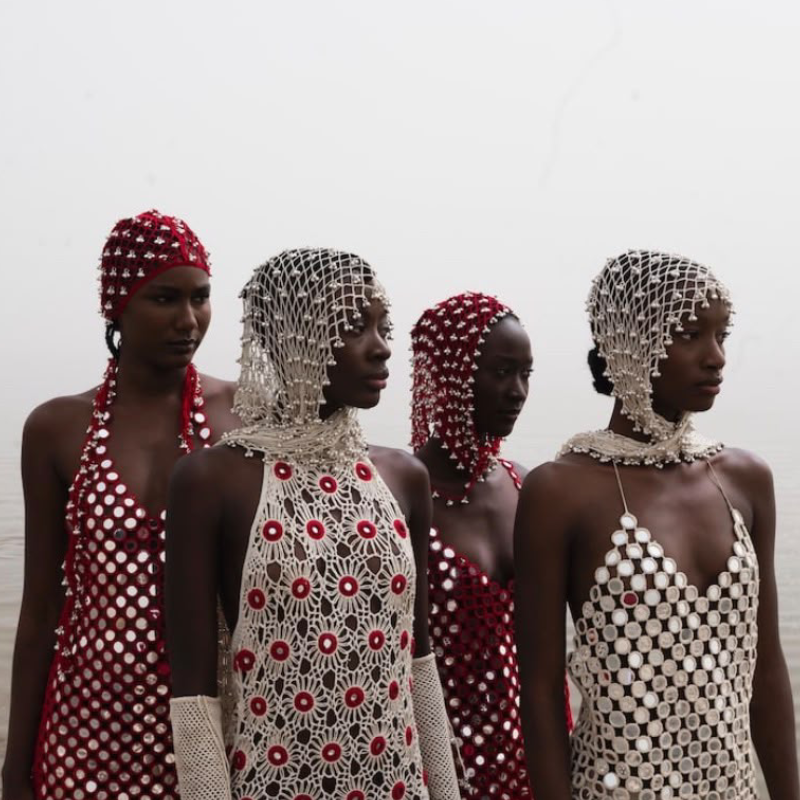
Fashion loves a breakthrough story. But every so often, a moment arrives that does more than introduce a new name—it changes who gets seen on the global stage.
On September 4, 2026, Kenyan designer Anil Padia, founder of Yoshita 1967, stepped into the Fondation Louis Vuitton in Paris and walked away with the 2026 LVMH Savoir-Faire Prize. Yoshita 1967 became the first Kenyan label to win an LVMH Prize distinction after already becoming the first Kenyan brand to reach the competition’s final.
For a brand rooted in Nairobi, Kenyan-Indian heritage and the hands of women-led craft communities, the win carried a message far beyond the trophy itself. Yoshita 1967 did not reach fashion’s international stage by leaving its identity behind. It reached it by putting that identity at the center.
Yoshita 1967’s Historic LVMH Win Puts Kenyan Fashion on the Global Stage
The numbers make the achievement even more striking.
More than 2,400 designers applied for the 2026 LVMH Prize, and only nine reached the final. Yoshita 1967 entered that final as the first Kenyan label ever to do so. Then it won the Savoir-Faire Prize, an award that LVMH created in 2024 to recognize craftsmanship, technical expertise, innovation and sustainable approaches to fashion.
Padia accepted the award in front of some of fashion’s most influential creative figures. The 2026 jury included Jonathan Anderson, Sarah Burton, Maria Grazia Chiuri, Nicolas Ghesquière, Stella McCartney, Phoebe Philo, Nigo, Michael Rider and Pharrell Williams, alongside senior LVMH figures.
The victory brings Yoshita 1967 a €200,000 endowment and one year of mentorship from LVMH experts. The brand will also receive support from LVMH Métiers d’Excellence through a collaboration with embroidery specialist Maison Vermont, including €50,000 worth of embellishments for an upcoming collection.
Yet the money and mentorship tell only part of the story.
The real significance lies in what the jury chose to recognize: a model of luxury built around human hands, cultural memory and community.
Yoshita 1967 Turns Kenyan Craftsmanship Into Contemporary Luxury
Yoshita 1967 describes itself as an artisan-led luxury house. Padia built the brand around slow production and long-term collaboration with women-led craft communities, placing training, dignity and stability at the heart of its approach.
That philosophy appears directly in the clothes.
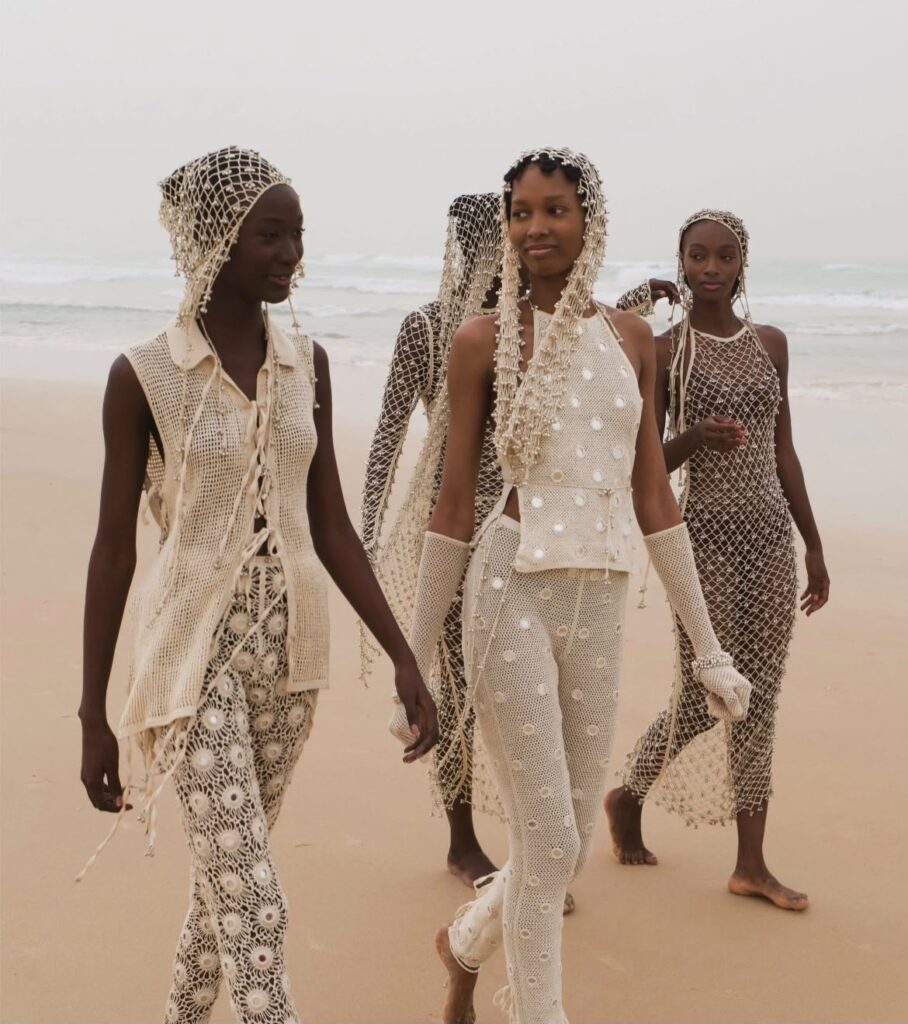
Crochet, embroidery and intricate hand embellishment form an essential part of the label’s visual language. Rather than treating traditional techniques as decorative references, Yoshita 1967 brings them directly into contemporary luxury fashion. The brand uses handwork to explore identity, memory and cultural histories while connecting its Kenyan and Indian influences.
This approach challenges one of luxury fashion’s most persistent assumptions: that innovation must always mean something entirely new.
Sometimes innovation means looking closely at what already exists—and recognizing its value.
Yoshita 1967 takes techniques that communities have practiced for generations and gives them a new context without stripping away the people behind them. The result feels modern precisely because it refuses to disconnect craftsmanship from its origins.
The LVMH Savoir-Faire Prize Celebrates the Hands Behind Yoshita 1967
Luxury often celebrates the finished object. Yoshita 1967 asks us to notice the hands that created it.
That distinction matters.
Padia has developed the house through long-term relationships with craft communities rather than simply borrowing their techniques. LVMH itself highlighted the brand’s artisan- and community-led model when announcing the award, praising a project that champions handiwork.
The label also connects circular thinking with people, not only materials. Its philosophy prioritizes skills, training and lasting economic relationships alongside slow production.
That makes the Savoir-Faire Prize particularly fitting. LVMH designed the award to recognize exceptional craftsmanship, technical expertise and innovation, and Yoshita 1967 places those elements at the center of its identity.
Padia also made clear that the achievement belonged to more than one person. After winning, he described the moment as a collective effort from his team in Nairobi and expressed his gratitude for the recognition.
In an industry that often places a single creative director at the center of the story, that emphasis on collective creation feels significant.
Yoshita 1967’s Historic Win Redefines What Global Luxury Can Look Like
Yoshita 1967’s victory also opens a wider conversation about geography and opportunity in luxury fashion.
Before 2026, Kenya had never appeared in an LVMH Prize final. When LVMH announced this year’s finalists, the organization specifically noted Kenya’s participation for the first time.
Now, that first appearance has become a win.
The moment does not mean that barriers for African designers have disappeared. Global fashion still concentrates enormous financial power, distribution networks, media attention and institutional access in established fashion capitals.
But Yoshita 1967 demonstrates what can happen when global platforms widen the frame.
African fashion does not need to imitate Paris, Milan, London or New York to justify its place in luxury. Designers can build globally relevant houses from specific histories, communities and cultural perspectives.
Padia’s work makes that point through clothes rather than slogans.
His Kenyan-Indian lineage, his experiences between Nairobi and Paris and his collaborations with craftspeople create a design language that could not come from anywhere else. That specificity becomes an advantage rather than something the brand needs to dilute.
The Historic Yoshita 1967 Win Is Bigger Than a Fashion Prize
Perhaps the most compelling part of this story comes down to one simple idea: craft still matters.
In an industry obsessed with speed, virality and constant novelty, Yoshita 1967 built its identity around something slower. It chose technique. It chose heritage. It chose collaboration. And it chose to place the people making the clothes inside the story rather than behind it.
The LVMH Savoir-Faire Prize now gives that philosophy a much larger international platform.
For Yoshita 1967, the next chapter comes with funding, mentorship, technical support and global attention. For Kenyan fashion, the win creates a new reference point: a Kenyan label has now entered one of luxury fashion’s most prominent emerging-designer competitions and left with an award.
And for the wider industry, the moment raises an exciting question.
What if the future of luxury does not come from abandoning tradition, but from finally understanding its value?
Yoshita 1967 may have just given fashion one answer.

Stay Connected:
Follow for more: https://www.instagram.com/executivewomen_
Like us: https://www.facebook.com/ExecutiveWomen
Connect & Follow: https://www.linkedin.com/in/neo-porscha-makgale-29079957/
Read more articles: https://executive-women.global/lifting-women-higher-through-aviation-drone-training-by-neo-porscha-makgale/