Celebrity Beauty Brands and the Beauty Business: When Fame Becomes a Billion-Dollar Asset
Can millions of followers create a billion-dollar company? The rise of Celebrity Beauty Brands suggests they can help, but the real success stories in the Beauty Business reveal something more valuable than fame: ownership, profitability, and customer loyalty.
In May 2025, e.l.f. Beauty announced its acquisition of Hailey Bieber’s Rhode for up to $1 billion. The agreement included $600 million in cash, $200 million in shares, and up to $200 million in additional payments tied to future performance.
Rhode had generated $212 million in net sales during the twelve months ending March 31, 2025. By September 2026, the company had expanded its Sephora presence into 19 additional European markets.
Meanwhile, Rihanna’s Fenty Beauty and Selena Gomez’s Rare Beauty demonstrated how celebrity-backed companies can develop substantial commercial operations.
Reuters reported approximately $450 million in Fenty Beauty net sales for 2024, while The Business of Fashion reported that Rare Beauty exceeded $400 million during the twelve months ending February 2024.
Although these figures cover different periods, they highlight the financial potential of celebrity entrepreneurship.
However, one question remains: What separates a viral beauty launch from a valuable, sustainable business?
Celebrity Beauty Brands and the Beauty Business: Why Ownership Matters More Than Popularity
The biggest financial advantage of Celebrity Beauty Brands is not necessarily their marketing reach. It is the opportunity to own part of the businesses they create.
Traditional endorsements compensate celebrities for promoting products. Equity ownership, however, allows shareholders to participate in a company’s value.
Rhode illustrates this distinction. Although headlines described a billion-dollar acquisition, the agreement provided $800 million in initial consideration and up to $200 million in performance-based payments.
Furthermore, the transaction involved Rhode’s shareholders, meaning the headline figure did not represent Hailey Bieber’s personal payout.
Fenty Beauty offers another example. In October 2025, Reuters reported that Rihanna and LVMH each owned 50% of the company. Sources estimated its potential valuation between $1 billion and $2 billion as LVMH explored selling its stake.
Importantly, this represented a reported valuation estimate, not a confirmed sale.
For entrepreneurs, the lesson is clear: A famous brand and a financially valuable ownership stake are two different things.
Understanding equity, dilution, shareholder agreements, and acquisition terms can matter as much as building a recognizable name.
Celebrity Beauty Brands and the Beauty Business: The Truth Behind Beauty Product Profits
A lipstick can sell out in minutes without generating substantial profits.
That is one of the most important financial realities behind Celebrity Beauty Brands and the wider Beauty Business.
Consider a hypothetical lipstick that generates $30 in net revenue. If its production and packaging costs included in the cost of goods sold total $9, the company earns $21 in gross profit, representing a 70% gross margin.
However, that figure excludes other expenses, including marketing, salaries, product development, and administration.
Distribution also changes the financial equation.
Direct-to-consumer sales give brands greater control over customer relationships, but companies must manage advertising, fulfillment, and customer service.
Retail partnerships, meanwhile, provide broader exposure but involve different pricing structures and commercial obligations.
Rhode demonstrates the importance of balancing these channels.
Industry reporting indicated that Rhode contributed approximately $160 million in net sales during e.l.f. Beauty’s quarter ending June 30, 2026.
Additionally, a June 2026 product launch reportedly generated approximately $27 million in direct-to-consumer sales in one day, with more than 70% of sales coming from existing customers.
That distinction matters: returning customer revenue can support growth, but strong sales alone do not prove profitability.
The lesson? Revenue attracts attention. Margins, operating costs, and cash flow determine financial sustainability.
Celebrity Beauty Brands and the Beauty Business: Why Followers Cannot Guarantee Loyalty
Celebrity Beauty Brands can reach millions of potential customers immediately. However, the Beauty Business proves that attention alone cannot sustain a company.
Consumers may purchase a product because they admire its founder. Yet repeat purchases depend on quality, pricing, availability, and overall experience.
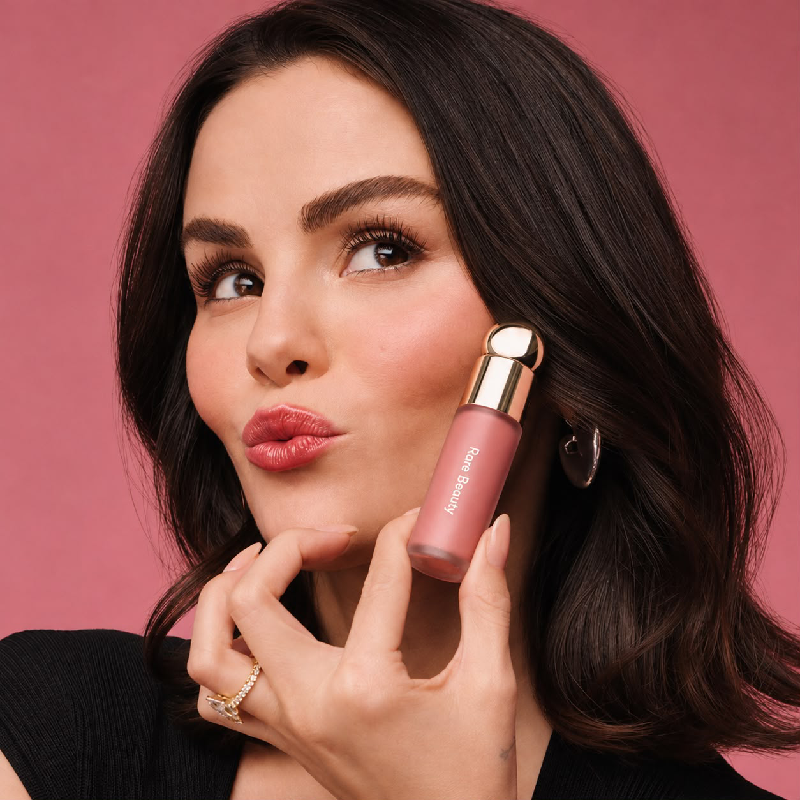
Rare Beauty has developed recognizable products, including its Soft Pinch Liquid Blush, while building an identity that extends beyond Selena Gomez’s celebrity status.
Similarly, Fenty Beauty differentiated itself by emphasizing complexion products for a wide range of skin tones when it launched in 2017.
Rhode established its own recognizable aesthetic through minimalist skincare, hybrid makeup, and consistent branding.
Although their strategies differ, these companies share an important characteristic: customers can identify what makes their products distinctive.
This creates a valuable lesson for entrepreneurs.
If the founder disappeared from every advertisement tomorrow, would customers still understand why they should choose the brand?
If the answer is yes, the company may have developed something more durable than celebrity influence.
Ultimately, the strongest marketing strategy does not simply attract customers. It gives them a reason to return.
Celebrity Beauty Brands and the Beauty Business: Why Distribution Drives Growth
A successful product launch creates demand. However, fulfilling that demand requires infrastructure.
For Celebrity Beauty Brands, scaling the Beauty Business involves manufacturing, inventory management, international distribution, and operational efficiency.
Rhode’s acquisition by e.l.f. Beauty illustrates how a larger corporate partner can provide resources that support expansion.
Its September 2026 Sephora expansion into 19 additional European markets created opportunities to reach customers beyond its original online audience.
However, international growth also introduces challenges, including inventory forecasting, transportation, regulatory requirements, and maintaining product availability.
These lessons extend beyond cosmetics.
Fashion labels need manufacturing partners. Food brands require distributors. Technology startups need infrastructure to support larger customer bases.
In every industry, marketing can generate interest, but operations determine whether a business can satisfy demand.
A brand cannot build lasting growth if its operational capacity fails to match its marketing success.
Celebrity Beauty Brands and the Beauty Business: Five Lessons Every Entrepreneur Should Apply
The rise of Celebrity Beauty Brands offers valuable insights for business leaders beyond the Beauty Business.
1. Build an asset, not just an audience. Social media visibility can accelerate awareness, but loyal customers and differentiated products create stronger foundations.
2. Understand ownership. A billion-dollar valuation does not mean a founder personally receives a billion dollars. Equity percentages and transaction terms determine financial outcomes.
3. Prioritize repeat purchases. Viral launches generate attention, but returning customers provide evidence of ongoing demand.
4. Protect profitability. Revenue growth means little without a clear understanding of margins, operating expenses, and cash flow.
5. Choose strategic partners. The right investor or corporate partner can provide distribution, infrastructure, and expertise that accelerate expansion.
These principles also help investors evaluate emerging companies.
Instead of focusing exclusively on celebrity recognition, investors should examine financial performance, customer retention, competitive differentiation, and the assumptions behind valuations.
For entrepreneurs, the bigger lesson is that visibility represents only the beginning of a business relationship.
The strongest companies transform attention into trust, trust into repeat purchases, and repeat purchases into sustainable commercial value.
Ultimately, Celebrity Beauty Brands demonstrate how fame can accelerate entrepreneurship, but it cannot replace financial discipline.
The next billion-dollar beauty empire will not necessarily belong to the celebrity with the most followers. It will belong to the business that gives customers the strongest reasons to keep buying.

Stay Connected:
Follow for more: https://www.instagram.com/executivewomen_
Like us: https://www.facebook.com/ExecutiveWomen
Connect & Follow: https://www.linkedin.com/in/neo-porscha-makgale-29079957/
Read more articles: https://executive-women.global/lifting-women-higher-through-aviation-drone-training-by-neo-porscha-makgale/