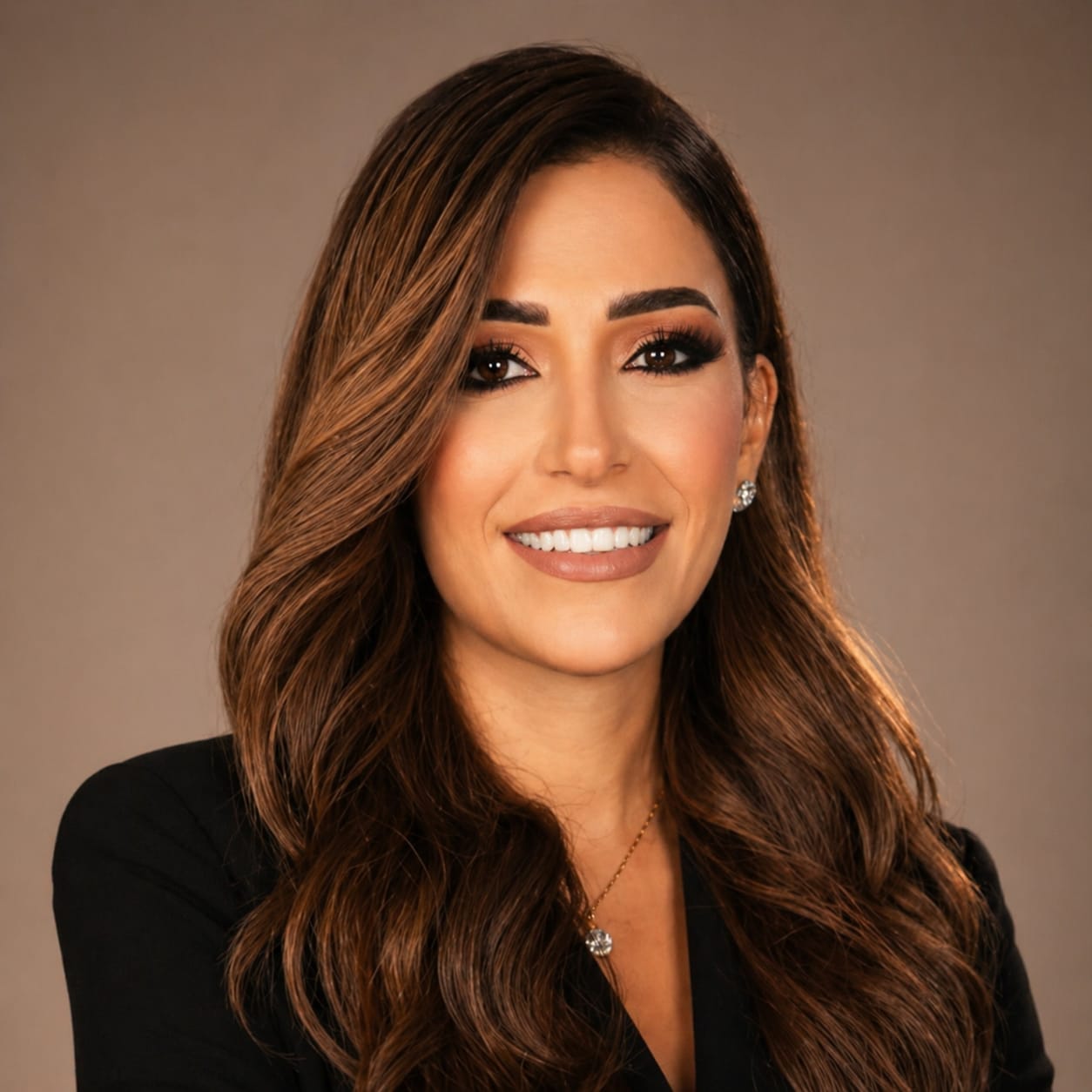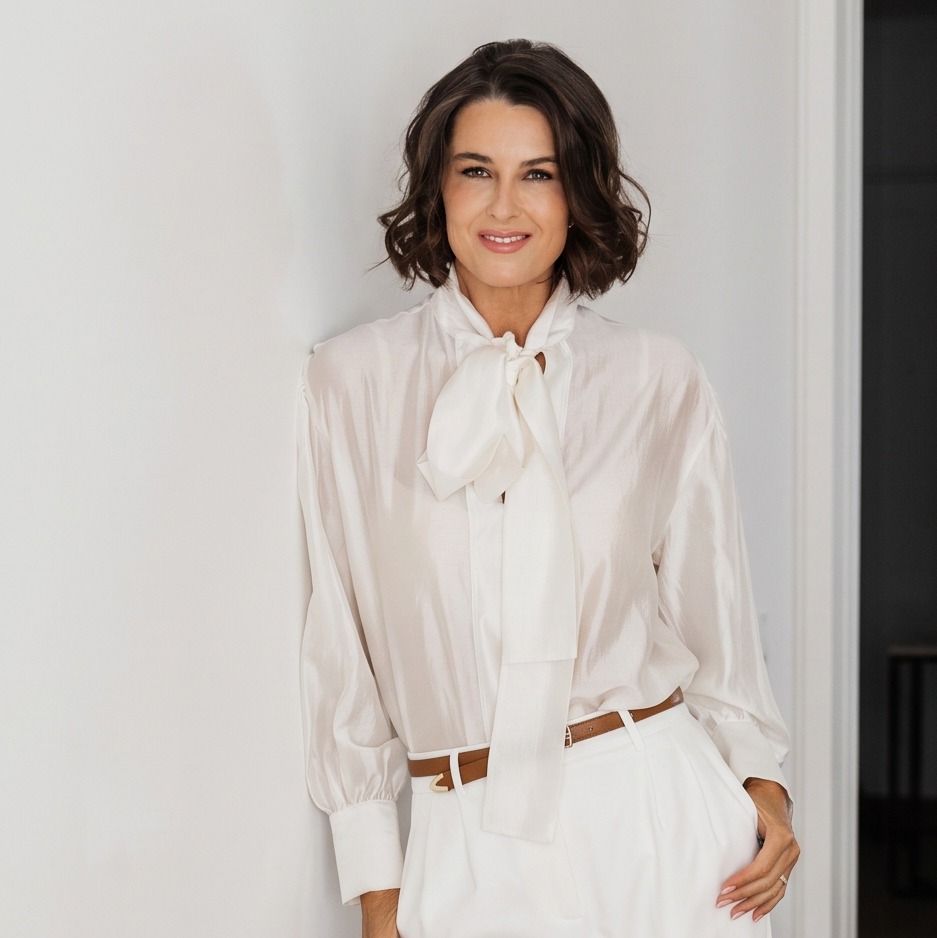
Marms Hope, Founder & CEO, Marmalade & Marms Hope LLC.
1. Marms Hope, why is fractional leadership booming right now, and why are founders rethinking traditional hiring?
Marms Hope: There is a particular look a founder gets when they tell you they need to hire someone. It’s the look of relief. They’ve found the answer, and they’ve named the problem, and the problem has a job title.
I’ve watched that look three times in the same room, for the same role, in the same company. Three hires. Three exits. Same gap sitting there afterwards, completely untouched.
It took six months to recruit, and six months to onboard. Then another twelve months to discover it was never the right person. Two years, gone. The problem is still breathing in the corner.
What’s shifted is that founders have started doing that maths out loud. And when you do, the conclusion is uncomfortable. A salary buys you someone’s availability, but it does not buy you their judgment. Most founders were paying for the first and quietly praying for the second.
The other half of it is us, the operators. There’s a generation of people with twenty years behind them who no longer want one chair and one logo on their email signature. We want range; we want to be inside four businesses at once because that’s where the pattern recognition sharpens.
So, the quality of person available this way is higher than it has ever been.
Founders aren’t hiring less because they’ve lost their nerve. They’re hiring later, and with far better aim.
2. What does it feel like to run multiple founder-led businesses at the same time?
Marms Hope: Quieter than anyone believes.
People imagine a woman with ten tabs open and a phone that never stops. That was me once, doing twenty-two-hour work days, whilst building someone else’s empire while he took the credit and I took the calls. I wore the exhaustion like proof of something.
Now the day starts with coffee, sun, my journal and silence. Nothing in my hands. Nothing asking anything of me. For a woman who once measured her worth in hours, sitting still was the hardest discipline I have ever learned, and I still have not mastered it.
Then the day begins. And it isn’t full of tasks and decisions. Twelve, maybe fifteen, each belonging to a different business, each needing to be made cleanly and then released. That’s the whole skill. Decide, and then stop carrying it.
Holding several businesses or clients does not make you scattered. It makes you ruthless. You cannot afford a vague thought. You cannot afford to reopen a decision at midnight because you were never sure of it.
And there’s a truth I’d want any founder reading this to hear. Simply put, if I walk into my day already depleted, I am the bottleneck. Not my team, and not the market. Just me. Yet that’s the part most founders overlook.
So, I protect my own state the way other people protect their revenue. It isn’t indulgence. It’s the most operational thing I do.
3. Marms Hope: Why are the best founders choosing to buy expertise rather than add headcount?
Marms Hope: Because headcount is a bet on potential. Expertise is a purchase of certainty. And most founders don’t have the runway to be romantic about the difference.
There’s a cost nobody puts on the spreadsheet. Every person you hire is a person you must lead, develop, correct, encourage and eventually keep. That is a leadership tax, and it comes out of the one account the founder is already overdrawn on. Their attention.
I’ve watched a founder hire to feel lighter and become heavier. Six months of onboarding, three difficult conversations, one resignation. He came to me thinner than when he started.
Expertise arrives differently. Someone walks in who has solved this exact problem in three other companies and starts solving it in yours before lunch. There is no ramp. There is no faith required.
The founders I admire most are simply honest about the gap. They can say the sentence out loud. I need someone whose judgment in this one area is better than mine.
That takes a particular kind of security. Consider this: the insecure founder hires people they can out-think. In contrast, the confident one buys the person they can learn from. Yet most never stop to ask which one they are.
You can delegate a task to anyone, but you cannot delegate a decision to someone who has never had to make it.
4. How is embedded, on-demand leadership changing the way SMEs scale?
Marms Hope: Embedded is the word I would underline.
A consultant hands you a document and a bill. You read it on a Sunday, agree with all of it, and change nothing, because you were never short of ideas. You were short of hands that know what to do with them. Most businesses do not have a knowledge gap, but an execution gap, and no document has ever closed one.
What has changed is who can afford the person who does. Senior operational leadership was priced for enterprise for most of my career. The businesses that needed it most were the ones locked out of it.
Let me tell you about a founder I sat with recently. Ten million in revenue was on his board. He looked at that number every morning and felt sick, because he could see the arithmetic of his own days. Every hour he spent running the business was an hour he wasn’t growing it. The goal wasn’t impossible; it was simply unreachable from inside his own calendar.
A month later, he told me ten million looked conservative.
Nothing had changed about his market. Nothing had changed about his product. We had not added a single person to his team.
We had given him his attention back. That is the whole mechanism. Everything else is noise.
5. You say fractional isn’t new, it’s just smarter. Why is it finally getting the recognition it deserves?
Marms Hope: The very wealthy have been doing this quietly for fifty years, and nobody thought to give it a name.
Non-executive directors, advisory boards, interim leadership, the family office, where a principal buys the finest legal mind in the country for eleven hours a year and would never dream of employing him. Old money has always understood that you purchase expertise by the slice. Nobody called it innovative. They just called it Tuesday.
However, what changed is not the model. It’s the access. And that arrangement has come down from the institutions and landed within reach of a founder with a good business and a clear head.
And the scoreboard had to move before anyone would admit it. Headcount used to be the jewellery. How many people, how many desks, how many floors. I sat in rooms where the first question asked of a founder was the size of their team, as though that were the measure of anything.
That reads differently now. A small business running beautifully has more authority in a room than a large one running hot.
This was never a compromise; it was always the more intelligent structure; it simply had no language, and the people using it had no reason to explain themselves.
6. You’ve worked behind the scenes for over 20 years. How do you convince founders to value invisible leadership, and how do you stay fulfilled when your work isn’t seen?
Marms Hope: I don’t convince anyone. I gave that up a long time ago.
Invisible work is only invisible while it holds. Take it away for a week and watch how loud it becomes. Founders have never needed a presentation on the value of operations. They need one Monday a week without it.
So, I let the absence make the argument; it has never lost.
The second half of your question is the harder one, and I’ll answer it honestly.
There were years I wanted the credit and even chased the title to get more credit. Time and again, I sat in rooms where decisions I had shaped were repeated back to me by men who believed they’d thought of them, and I smiled, and I went home, and it ate at me.
Yet, what changed wasn’t that I became more gracious. Instead, it’s that I changed what I was counting.
Recognition stopped being the measure. Instead, it became what a founder could do because I was in the room to hold them. That shift is visible in their diary. The decisions they no longer agonise over reveal it. And their voice on a Tuesday afternoon- that’s where the real truth of their business lives.
I came up the hard way. People who know my history tend to ask how I’m still standing. My answer is that resilience was never a quality I admired in myself; it was the only tool I was handed, and I have used every inch of it.
But there is one distinction I would want left with your reader.
Not needing to be seen is not the same as choosing to stay hidden.
“Twenty years behind the scenes, because that is where the work was, and no regrets about a single one of them. Stepped forward the day it became clear that the thinking behind the work had a value of its own.”
I wasn’t hiding. I was learning.
7. Marms, you’ve scaled businesses across five countries and are now based in Dubai. How has that global lens changed the way you diagnose problems, and what do Middle Eastern founders do differently from those in the West?
Marms Hope: SOUTH AFRICA – UAE – MALAYSIA – SINGAPORE – UK and full circle back I Dubai
I arrived in Dubai without a plan. I knew what I was good at. Structure, problem solving, and making chaos make sense. I had no idea what that looked like as a business, so I said yes to things and worked it out afterwards.
What five markets teach you is that businesses break in different places for identical reasons. Different currencies, different regulations, different rooms, but they all have the same fracture underneath.
The founder has become the system. Every decision routes through one exhausted human being, and the company can only ever move at the speed of that person’s recovery.
Which is why I no longer trust the presenting problem. A founder tells me she has a hiring problem. Nine times out of ten she has a clarity problem, and she is trying to recruit her way out of a decision she has not made. I know that now within about twenty minutes, and I know it because I’ve watched it happen in five languages.
On the difference between here and the West, I’d tread carefully, but there are two things I would stand behind.
Founders in this region move on relationship first. Trust is built in the room, over coffee, in the way you hold yourself, not in the proposal you send afterwards. And once that trust exists, decisions are made at a speed that would frighten a Western board.
The second is ambition. It is spoken plainly here; nobody lowers their voice to say a large number. I have spent years in markets where I watched brilliant women shrink their own figures before anyone else had the chance to, as though wanting more required an apology.
The trade is documentation. Speed and relationship come at the expense of process, and that is the first place I look.
Neither way is better. But if you asked me what I would build if I could choose, it would be this. The ambition of this region, with the structure of the one I came from.
I have yet to see anything compete with it.
Stay Connected with Marms:
Follow her on Instagram: https://www.instagram.com/marmshopeofficial
Connect on LinkedIn: https://www.linkedin.com/in/marmshope/
Website: marmshope.com

Stay Connected:
Follow us on Instagram: https://www.instagram.com/executivewomen_/
Connect on LinkedIn: https://www.linkedin.com/company/executive-women/
Like us on Facebook: https://www.facebook.com/ExecutiveWomen/
Read more articles: https://executive-women.global/so-you-thought-seo-was-hard-welcome-to-aeo-where-ai-decides-if-you-exist-by-cosette-awad/
https://executive-women.global/mariana-ignatov-a-lifetime-of-lifting-others-forward/
https://executive-women.global/maria-doyle-her-love-for-beauty-grace/