War and violent conflict profoundly affect children’s emotional and psychological well-being. Unlike adults, children often lack the emotional tools and cognitive maturity to understand danger, loss, and uncertainty. As a result, their reactions can include fear, aggression, withdrawal, or confusion.
However, the way adults respond during these moments can significantly shape how children process trauma and recover emotionally. With the right approach, caregivers can help children feel safer, regain emotional stability, and develop resilience even in the most difficult circumstances.
Understanding How War Affects Children Psychologically
First and foremost, it is important to recognize that children experience war differently depending on their age, personality, and exposure to danger.
Some children may become quiet and withdrawn, while others may show strong behavioral reactions.
Common psychological responses include:
- Fear of loud noises or sudden movements
- Nightmares and sleep disturbances
- Clinginess or separation anxiety
- Anger, aggression, or violent play
- Difficulty concentrating
- Regression (bedwetting, thumb-sucking, or baby-like behavior)
- Emotional numbness or silence
These reactions are not signs of “bad behavior”. Instead, they are often the child’s attempt to process overwhelming stress and fear.
Therefore, the goal is not punishment but emotional support and guidance.
Create a Sense of Safety and Stability
Even in unstable environments, children need to feel that the adults around them are in control and capable of protecting them.
For this reason, caregivers should focus on rebuilding a sense of safety.
Practical ways to do this include:
- Speak calmly and confidently
- Maintain daily routines whenever possible
- Keep children close to trusted adults
- Limit exposure to disturbing news or graphic images
- Reassure children that their feelings are normal
Most importantly, avoid making promises you cannot guarantee, such as saying “nothing bad will happen.” Instead, say:
“We are doing everything we can to keep you safe.”
This reinforces trust without creating unrealistic expectations.
Encourage Children to Express Their Feelings
Children often struggle to verbalize fear or sadness. As a result, emotions may appear through behavior rather than words.
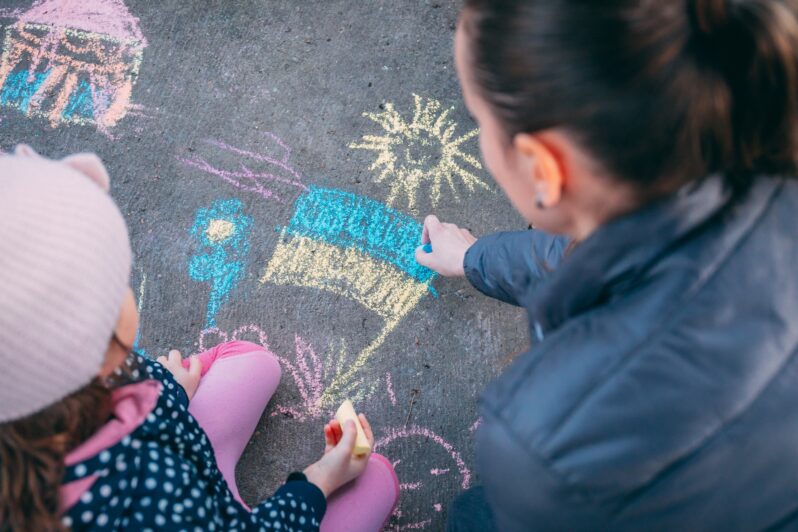
Therefore, it is essential to create safe spaces for emotional expression.
Healthy ways for children to release emotions include:
- Drawing or painting their feelings
- Playing with toys and role-playing situations
- Talking about what they saw or heard
- Writing stories or journaling (for older children)
When children express difficult emotions, listen without judgment.
Avoid dismissing their fears with phrases like:
- “Don’t think about it.”
- “Be strong.”
- “Stop crying.”
Instead, respond with empathy:
- “That must have been very scary.”
- “It’s okay to feel afraid.”
- “I’m here with you.”
This helps children feel understood rather than isolated.
How to Respond to Aggressive or Violent Behavior
Children exposed to violence may sometimes imitate what they see. This can appear as hitting, shouting, aggressive play, or anger toward others.
While this behavior can be alarming, it is often a stress reaction, not intentional cruelty.
When a child shows aggressive behavior, follow these steps:
1. Stay calm
Reacting with anger can increase the child’s stress. Maintain a steady and composed tone.
2. Set clear boundaries
Explain that hurting others is not acceptable, even when they are upset.
Example:
“It’s okay to feel angry, but it is not okay to hit.”
3. Help them name their emotions
Children often act out when they cannot identify what they feel.
Say things like:
- “Are you feeling scared?”
- “Are you feeling very angry?”
4. Offer safe alternatives to release tension
Encourage activities such as:
- Drawing what they feel
- Physical play (running, jumping, sports)
- Squeezing a pillow or stress toy
- Deep breathing exercises
5. Reinforce positive behavior
Praise moments of calmness, cooperation, and kindness.
Positive reinforcement helps children relearn safe social behaviors.
Important Things Adults Should Avoid
In stressful situations, adults may unintentionally make children’s anxiety worse.
Try to avoid the following behaviors:
- Arguing loudly in front of children
- Showing panic or hopelessness
- Forcing children to talk before they are ready
- Punishing fear-based behavior
- Overexposing children to violent media or news coverage
Children constantly observe adult reactions. When adults remain emotionally stable, children feel more secure.
The Power of Routine and Small Normal Moments
Even during crisis, maintaining simple routines can restore a sense of normal life.
Examples include:
- Eating meals together
- Reading bedtime stories
- Playing games
- Doing school activities
- Maintaining sleep schedules
These everyday moments create emotional anchors that help children regain stability.
Small routines can have a surprisingly powerful psychological impact.
When Professional Support Is Needed
In some cases, children may develop deeper trauma responses that require professional help.
Warning signs include:
- Persistent nightmares
- Extreme aggression or self-harm
- Complete withdrawal or silence
- Severe anxiety or panic attacks
- Loss of previously learned skills for long periods
If these symptoms continue for weeks or worsen, seeking help from a child psychologist or trauma specialist is essential.
Early psychological intervention can prevent long-term emotional damage.
Building Resilience in Children
Although war and crisis are deeply distressing, many children demonstrate remarkable resilience when supported by caring adults.
Children recover best when they have:
- A stable and loving adult presence
- Safe spaces to express emotions
- Clear structure and boundaries
- Opportunities for play and creativity
- Honest but age-appropriate explanations
Ultimately, what protects children most is not the absence of danger, but the presence of support, empathy, and emotional connection.
Stay Connected:
Follow us on Instagram: https://www.instagram.com/executivewomen_/
Connect on LinkedIn: https://www.linkedin.com/company/executive-women/
Like us on Facebook: https://www.facebook.com/ExecutiveWomen/
Read more articles: https://executive-women.global/en/the-secret-ingredient-in-great-marketing-its-stolen/