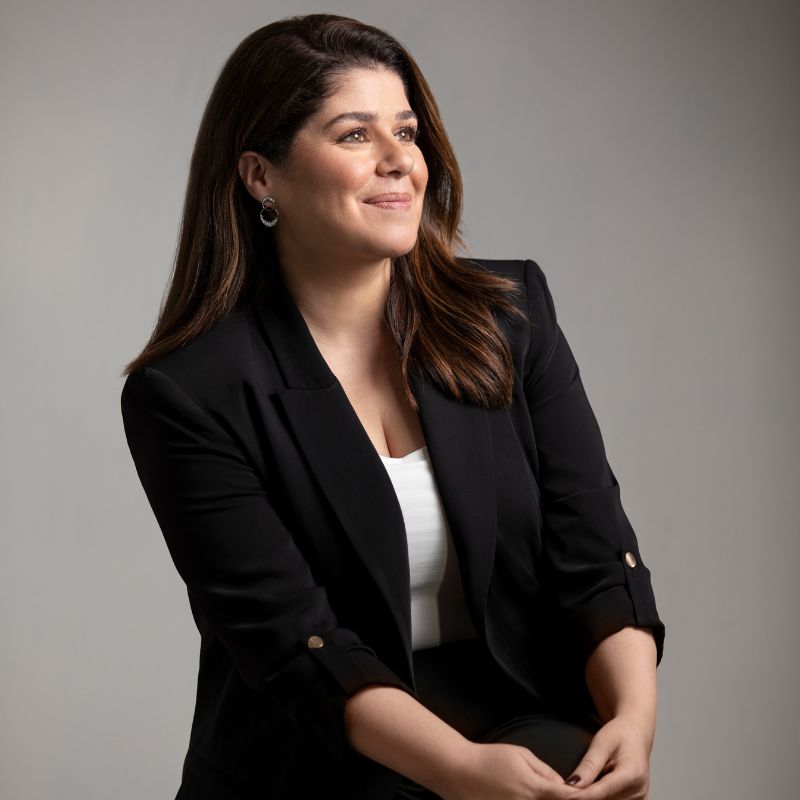
Racha Chibani Nehlawi
A Surprising Industry Shift.
I never thought that selling natural diamonds would become so controversial.
I entered the world of jewellery believing in beauty, craftsmanship, and quality, and believing those qualities would always speak for themselves. I never imagined there would come a time when selling natural diamonds would feel like taking a position.
However, lately, that’s exactly what it feels like.
There is this growing pressure in the industry, as if those of us who work with natural diamonds now need to explain ourselves, justify our choices, or prove that we are morally up to date. Moreover, if we do not sell lab-grown diamonds, some people look at us as though we missed the memo.
That shift fascinates me. Because when did choosing a natural diamond become controversial?
The Value of Natural Diamonds Still Matters
We are talking about one of the most desired materials in history. A stone formed by nature over billions of years. A symbol tied to celebration, status, craftsmanship, and legacy.
For generations, natural diamonds have represented milestones, permanence, and emotional significance. In addition, they carry a geological rarity that cannot be mass-produced.
And suddenly, we are expected to frame that as the less enlightened option?
To be clear, lab-grown diamonds absolutely have a market. They appeal to many buyers, and that is completely valid. More choice in any category is normal. In fact, what we are seeing is simply the natural evolution of the jewellery market.
Natural Diamonds vs Lab-Grown Diamonds: It Should Be a Choice.
But what I question is this strange idea that progress only counts if it replaces tradition. Why must one option be promoted by diminishing the other? Why has rarity become unfashionable and something we have to defend? Why are we acting as though value begins and ends with price?
Because if we are honest, that is what much of this conversation comes down to.
Cost.
People love to say that the debate is about ethics, modernity, or innovation. Sometimes it is. However, very often it is also about wanting access to the look of luxury, for less.
Again, that is fair enough. But let’s call things what they are.
A natural diamond offers something fundamentally different: finite supply, geological history, emotional weight, and symbolism that many people still care about. That matters. And no factory can recreate that origin and authenticity.
Consequently, that difference does not need to be apologized for.
When Transparency Protects Real Value
As a jeweler, I respect choice. I respect budgets. I respect different priorities.
What does not sit well with me, however, is the idea that timeless materials must now defend themselves in a culture obsessed with shortcuts.
Not everything expensive is a scam. Likewise, not everything cheaper is smarter. And not everything new is automatically better. Sometimes a woman wants a natural diamond simply because she values rarity, permanence, and the real thing. That should be enough.
Maybe the controversy isn’t diamonds at all. Maybe it’s that we’ve become uncomfortable admitting that some things still hold value precisely because they cannot be easily replicated.
We also have to be very transparent and honest about which diamond is which, and the prices need to reflect what’s been formed in Earth for years and years, and what’s been manufactured in a lab.
There should not be lazy comparisons claiming that lab-grown diamonds are purely ethical while natural diamonds are not, because lab-grown diamonds require substantial energy and resources as well.
The Future of Diamonds Is Coexistence
It’s not a competition. It’s a choice. And we need to learn to coexist.
I believe that lab-grown diamonds can absolutely create new possibilities in jewellery design. They can give new prospects and creativity without risking the high cost. You can travel with your lab-grown diamonds without getting stressed about them, and you can get that huge diamond that you’ve always wanted for a much smaller price.
But I also believe that in luxury, authenticity matters. story matters. Scarcity matters, and sometimes the higher price exists for a reason.
And sometimes what was created over billions of years should not have to compete with what was created last Tuesday.
Written by Racha Chibani Nehlawi
Founder & Creative Director
Tujla Fine Jewellery
Connect with Racha:
Follow her on Instagram: https://www.instagram.com/rachachibaniofficial/
Her Brand Instagram: https://www.instagram.com/tujlaofficial/
Her Website: https://www.tujla.com/

Editor’s Note:
This article offers a remarkably clear and articulate defense of natural diamonds within an increasingly polarized jewellery market. Racha Chibani Nehlawi presents her argument with directness, structure, and a command of the key tension points: tradition versus innovation, cost versus value, and authenticity versus accessibility. The writing is sharp, the transitions are effective, and the central question, why rarity has become something to apologize for, lands with genuine force. For any reader following the lab-grown versus natural diamond debate, this piece stands as a compelling, well-crafted statement from an industry insider who refuses to cede ground without good reason.
Stay Connected:
Follow us on Instagram: https://www.instagram.com/executivewomen_/
Connect on LinkedIn: https://www.linkedin.com/company/executive-women/
Like us on Facebook: https://www.facebook.com/ExecutiveWomen/
Read more articles: https://executive-women.global/how-to-build-influence-in-male-dominated-industries-a-5-step-guide-for-executive-women/