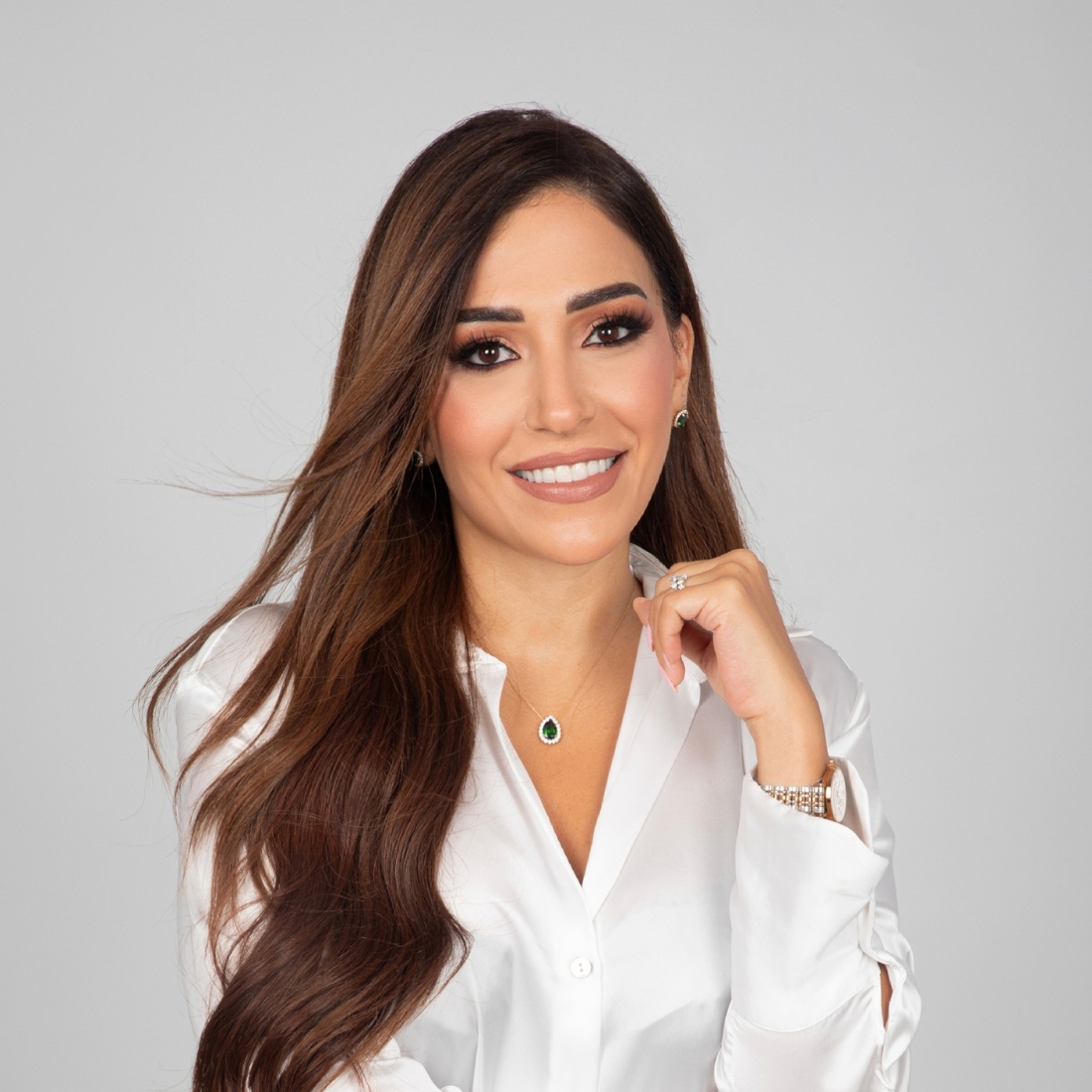
Prof. Dr. Nada Mallah Boustani
In today’s knowledge economy, women have never been more qualified.
Across the Arab world and globally, they are outperforming men in education, entering the workforce in greater numbers, and demonstrating strong performance across sectors from finance and academia to technology and public policy.
Yet, despite this progress, leadership remains disproportionately male.
People often frame the issue as a “confidence gap,” suggesting that women hesitate to step forward.
Admittedly, some truth exists here, but the explanation remains incomplete.
Why? Because it risks placing responsibility on individuals rather than questioning the systems within which they operate.
In fact, the reality is more complex: we are not facing a lack of confidence, but a failure to recognize competence.
The Confidence Gap – What It Misses
To begin, the narrative of the confidence gap has become deeply embedded in professional discourse.
For instance, people commonly argue that women apply for roles only when they meet nearly all the listed qualifications, whereas men apply when they meet far fewer.
Even so, whether the exact figures are debated or not, the underlying pattern is widely observed.
Consequently, women tend to seek readiness before action, shaped by social conditioning that values precision, caution, and preparation.
Meanwhile, men receive more frequent encouragement to take risks and project confidence even in uncertainty.
Over time, these differences translate into professional behavior.
Specifically, many women hesitate to pursue opportunities unless they feel fully prepared, often driven by fear of exposure as insufficient despite strong performance.
Thus, a paradox emerges: “when women do step forward, they are often already overqualified!”
Nevertheless, focusing on confidence alone oversimplifies the issue and risks misdiagnosing the problem.
After all, this focus implies that if women adjusted their behavior, the imbalance would disappear.
However, evidence suggests that even when women demonstrate equal or higher levels of competence, organizations do not evaluate them the same way.
In practice, organizations frequently promote men based on perceived potential, while they expect women to demonstrate proven performance before advancement.
As a result, a structural asymmetry shapes how organizations recognize talent.
Put simply, women are not simply competing at the same level; others assess them against higher and often less visible standards.
How Perception Reinforces the Gap
Moreover, deeply ingrained perceptions of leadership reinforce this dynamic.
For example, traits such as assertiveness, decisiveness, and authority – long associated with leadership – remain implicitly coded as masculine.
Therefore, men who display confidence often receive the assumption of competence, while women displaying the same traits may face different perceptions.
Importantly, this bias does not always operate consciously, but its effects remain tangible.
In practice, women frequently need to demonstrate sustained excellence before others view them as credible candidates for leadership roles, particularly in male-dominated sectors.
The Arab Context – Progress and Persistent Patterns
Turning to the Arab world, these patterns are evolving but still present.
Undeniable progress has occurred, with women entering fields once considered inaccessible and taking on visible roles in business, government, and innovation.
For instance, female entrepreneurs in Lebanon navigate economic instability, and women lead initiatives in technology and sustainability in the Gulf.
Thus, the region offers powerful examples of capability and resilience.
Yet even in these contexts, many women describe a similar experience: they must consistently prove their competence over time, while others more readily assume their male counterparts possess it.
The Double Bind Women Face in Leadership
For those who do reach leadership positions, another challenge emerges.
Specifically, women often operate within what researchers know as a “double bind,” where expectations require them to be both competent and likable, yet the behaviors associated with each do not always align.
Consider this: a woman who acts assertively and decisively may face perception as overly aggressive, while one who adopts a more collaborative style may appear to lack authority.
Consequently, a narrow corridor of acceptable behavior exists, requiring constant adjustment and self-monitoring.
In this sense, leadership becomes not only a matter of performance but also of perception management.
The Broken Rung – Where Careers Stall
The consequences of these dynamics appear most visibly at the early stages of career progression.
Specifically, the first promotion to a managerial role – often called the “broken rung” – represents a critical turning point.
Fewer women receive promotion at this stage compared to men, which reduces the pool of women available for senior leadership positions later on.
Over time, this initial imbalance compounds, resulting in a persistent gap at the top.
This is not merely an issue of representation; it is a matter of lost potential.
After all, organizations that fail to advance qualified women not only limit individual careers but also undermine their own capacity for innovation and long-term performance.
Why Mentorship Is Not Enough – The Need for Sponsorship
Efforts to address this imbalance have often focused on mentorship.
While mentorship remains valuable, it is not enough.
What frequently goes missing is sponsorship: active advocacy by senior leaders who are willing to put forward high-potential individuals for opportunities and support their advancement.
Unlike mentors, who provide guidance, sponsors play a direct role in shaping career trajectories.
However, women have less access to such influential networks, particularly in environments where informal relationships continue to drive decision-making.
In many parts of the Arab world, where professional advancement is closely linked to trust-based networks, this gap becomes even more significant.
What Leaders Must Change
Addressing the disconnect between competence and advancement requires a shift in how organizations define and evaluate leadership.
First, leaders must make promotion criteria more transparent and ground them in measurable competencies rather than subjective impressions.
Concepts such as “potential” or “leadership presence” often remain vague, allowing bias to influence decisions.
Clarifying expectations and aligning them with observable performance can reduce this ambiguity.
At the same time, organizations must recognize and correct the distribution of work.
Women often receive responsibility for tasks that are essential but less visible and less valued in promotion decisions.
Without addressing this imbalance, performance alone will not translate into advancement.
Rethinking the Role of Confidence
Furthermore, leaders need to reconsider the role of confidence itself.
In many professional environments, confidence continues to signal competence – even when evidence does not support it.
This creates an advantage for those who feel more comfortable projecting certainty, regardless of their actual readiness.
Moving toward a model that values demonstrated capability over perceived confidence would not only benefit women but also improve decision-making more broadly.
A Unique Opportunity for Change in the Arab Region
The current moment presents a unique opportunity for change, particularly in the Arab region.
Economic transformation agendas, digital innovation, and increased investment in education are reshaping the workforce.
Women are entering the labor market with strong qualifications, global exposure, and a growing presence in high-impact sectors.
At the same time, technological shifts are redefining how organizations measure performance and how careers evolve.
If leaders leverage these changes thoughtfully, they can help reduce some of the biases embedded in traditional systems.
However, without deliberate design, these changes risk reproducing existing inequalities in new forms.
The Question Leaders Must Ask
The question is no longer whether women are ready to lead.
Evidence suggests that they are, and often have been for some time!
The more pressing question is whether organizations are ready to recognize leadership differently.
As long as competence requires overproof, and potential continues to receive uneven assignment, the gap will persist.
Bridging it will require more than encouraging women to be more confident.
It will require rethinking how we define leadership, how we evaluate talent, and how we distribute opportunity.
Conclusion
Women are not overqualified by accident.
They are responding to systems that demand more of them.
The challenge now is not to ask them to adapt further, but to ensure that the structures around them evolve accordingly.
Connect with Dr. Nada: https://www.linkedin.com/in/nada-mallah-boustani-phd-hdr-99484b96/
Stay Connected:
Follow us on Instagram: https://www.instagram.com/executivewomen_/
Connect on LinkedIn: https://www.linkedin.com/company/3654085/admin/dashboard/
Like us on Facebook: https://www.facebook.com/ExecutiveWomen/
Read more articles: https://executive-women.global/en/the-secret-ingredient-in-great-marketing-its-stolen/