Women on Academic Boards: Sought After or Imposed?
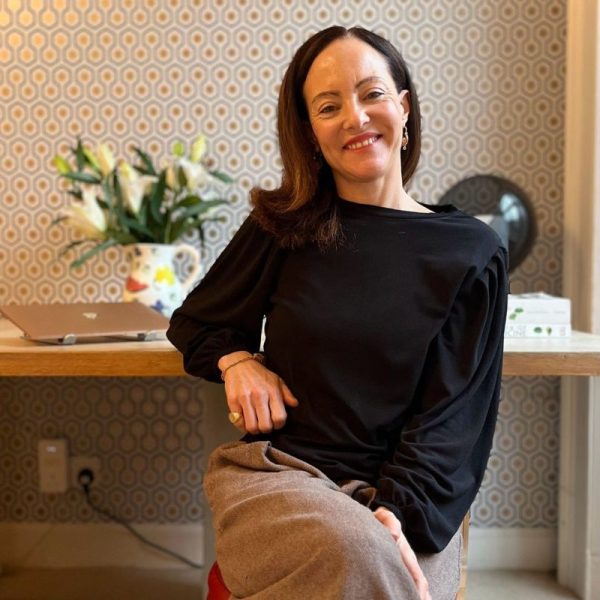
By Madonna Salameh-Ayanian, Associate Professor at USEK University, Lebanon
Higher Education Institutions Face a Critical Question
Higher Education (HE) institutions are the main source of knowledge. Because of the very essence of their existence, they should set the path to exemplary practices. More specifically, they should endorse female talent across top decisional positions.
Gender Affects Knowledge Production Itself
In HE leadership, gender is not only about the under-representation of women. It also affects the very nature of knowledge production itself. Therefore, several higher education institutions have faced severe criticism. Critics point to their lack of solid actions towards endorsing women across their boards. This criticism intensifies when these same institutions present research outcomes about the needs and positive effects of gender diversity.
Governance Must Avoid Tokenism
Governance plays an extremely important role here. It ensures that the place and role of women are authentically provided and effective. We must move away from the tokenism theory, where minorities and women serve as symbolic representations to please certain stakeholders.
Board Structure and Governance
International Entities Have Increased Their Efforts
During the past few years, several international public and private entities have increased their endeavors. They promote and support women’s participation across all fields of life, especially among large corporations. With globalization changing the rules of commerce, governance principles have become a cornerstone for sustainability and for building trust with various stakeholders.
Board Composition and Gender Diversity Matter
When tackling governance, board of directors’ composition and gender diversity appear as governance mechanisms. These mechanisms intend to align the interests of shareholders and managers. They also correct ineffective management practices. However, the size, composition, and structure of these boards play a major role in dictating their efficiency.
Optimal Board Size Depends on the Organization
The optimal board of directors’ composition and size depend on the organization’s structure. According to Investopedia, the average board size falls between 8 and 12 members. Most boards range from 3 to 31 members.
Diversity Leads to Better Decision-Making
Another element that organizations widely regard is the level of diversity across these boards. More specifically, they focus on the presence and role of women. Diversity is a healthy and necessary element because it leads to better overall decision-making. Women’s presence brings a noticeable edge. Women have a more focused approach on the human element. They add new insights into strategy development. They improve corporate social responsibility. Ultimately, they can lead to enhanced organizational performance.
The Higher Education Industry
The Sector Makes Steady Progress
The higher education industry is making steady progress when it comes to gender equality on the board. A recent analysis found that 32% of board members in the sector are female. This compares with just 23.5% of those in Financial Times Stock Exchange 100 companies.
Governance Has Transformed Since 1990
Governance in higher education has undergone numerous transformations since 1990. These changes aim to meet societal, economic, and demographic challenges. They also increase the social responsibilities of universities. More women are making their way to the highest levels of academic leadership. However, the numbers remain shaky, and many obstacles persist.
Women Lead 19.5% of Top Institutions
In a report about women’s representation in higher education published in 2021, 39 out of the top 200 institutions in the world (19.5 percent) currently have women leaders. This represents a slight increase from the 34 universities (17 percent) in 2019.
European Data Shows Wide Variation
In Europe, according to the 2017 European University Association (EUA) data on leadership in European universities, which covers 720 universities in 46 countries, only 12% of all rectors are female. The differences between various countries are also vast. For example, one-third of rectors in Sweden, Norway, and Finland are women. Meanwhile, several countries have less than 10%.
US Data Reveals Persistent Gaps
In the US, as of 2021, women represent around 30% of college presidents and 30% as well of college board of directors. More than 50% of heads of departments are women. However, women still earn less than men at every faculty rank and in most positions within institutional leadership.
Middle East Lags Behind
In the Middle East, women lead fewer than 7 percent of Arab higher-education institutions.
Board Composition and Accreditation: Focus on Lebanon and the Middle East
Globalization Drives Board Creation
Because of the realities of globalization and the growing competitive environment, many academic institutions have made it necessary to have a board of directors. They need this to increase their governance practices and to earn accreditation. These endeavors will help these institutions rank higher in the community of quality higher learning institutions worldwide. They will also improve the value of their degrees along with the quality of teaching. Finally, they will advance their overall competitive position.
Lebanon Takes Serious Actions
In Lebanon, many privately owned universities are taking serious actions towards endorsing governance practices. However, not all of them hold international accreditation. Several ones have only recently created their own board of directors. Lebanon has been a leader of quality education in the region. Lebanese women continue to invest in their education and in earning higher-level degrees.
Board Composition in Top Lebanese Universities
According to their official websites viewed on November 12, 2021, here is an overview of the board composition of some of the top universities in Lebanon and the Arab World.
Lebanese American University (LAU): 23 members of the board of trustees with 6 women.
Holy Spirit University of Kaslik (USEK): 20 board members with 4 women.
American University of Beirut (AUB): 37 members of the board of trustees with 12 women.
Board Composition in the Arab World
In Dubai, the American University of Dubai (AUD) has 6 men on the governing board. The leadership team includes 3 others, among whom 1 is a woman.
In Egypt, the American University of Cairo has 8 women on its 31-member board.
In Qatar, Qatar University has 6 women out of 21 members of the board of directors.
In Tunisia, the Université de Carthage has a woman president at its helm. The university council includes 13 women out of 56 members.
In Morocco, Mohammad V University in Rabat has 10 women out of 57 board members.
A Final Word
Higher Education Must Lead by Example
Higher education institutions have an obligation to lead by example and to walk the talk. For centuries, women fought for access to higher education. Let us hope to see more actions that further promote their role and involvement.
A Historic Milestone from 1993
In December 1993, Judith Rodin became the first woman appointed as President at the helm of an Ivy League school at the University of Pennsylvania. Almost two decades later, the struggle continues. We still need not only gender diversity but also social diversity. This includes age, educational background, and nationality among other demographic features. All of these elements are necessary for organizations to grow and prosper and for societies to flourish.
Breaking Stereotypes Remains the Challenge
Under governance principles, women see their growth opportunities enlarged. New horizons become possible for them. The challenge that remains is to break existing stereotypes. We need successful role models to pave the way for others to follow.
[1] Strength in numbers? A test of Kanter’s theory of tokenism – ScienceDirect
[2] Evaluating the Board of Directors (investopedia.com)
[3] Why Women on Boards — Boardbound by Women’s Leadership Foundation (womensleadershipfoundation.org)
[6] Fast Facts: Women Working in Academia – AAUW : Empowering Women Since 1881
[7] Arab Women Are Left Out of University Leadership – Al-Fanar Media
[8] https://www.al-fanarmedia.org/2015/03/a-growing-number-of-arab-universities-seek-international-accreditation/
[9] Top Universities in Lebanon | 2021 Lebanese University Ranking (4icu.org)
[11] FIRST WOMAN PRESIDENT NAMED IN IVY LEAGUE – The Washington Post
Stay Connected:
Follow us on Instagram: https://www.instagram.com/executivewomen_/
Connect on LinkedIn: https://www.linkedin.com/company/3654085/admin/dashboard/
Like us on Facebook: https://www.facebook.com/ExecutiveWomen/
Read more articles: https://executive-women.global/en/the-secret-ingredient-in-great-marketing-its-stolen/