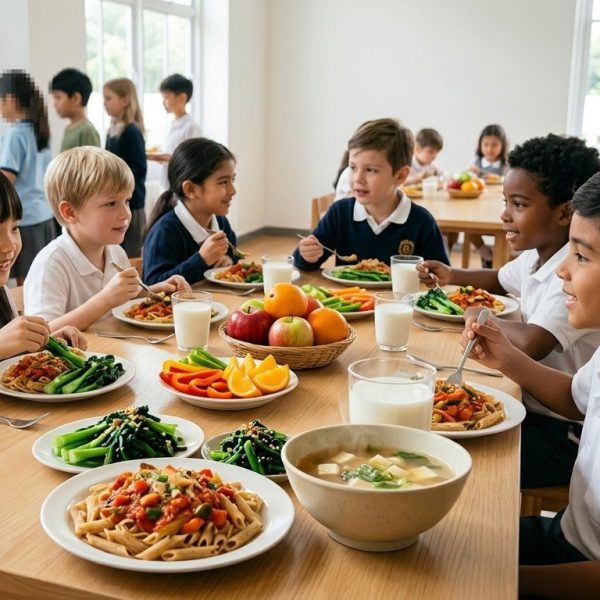
Every morning, you send your child to school hoping they get something nourishing. You trust the system. Meanwhile, in Japan, children sit down to fresh fish, seasonal vegetables, and miso soup made that morning. In Sweden, children from preschool through high school eats a free hot meal cooked from scratch. In Denmark, schools are shifting toward organic, locally sourced food, with some municipalities reaching over 90% organic ingredients.
The system there actually works.
Here, the system is lying to you.
Your child gets pizza for breakfast. Chicken nuggets shaped like toys. Fries counted as vegetables. Chemicals you cannot pronounce.
This is not feeding children. This is creating future patients
The Numbers Break Your Heart
American children: 19.7% obese. Japanese children: 3.5% obese. European countries average around 10%.
This gap is not genetic. This gap is policy.
Some countries chose children over profits. Others chose convenience over kids.
What Real Food Looks Like Around the World
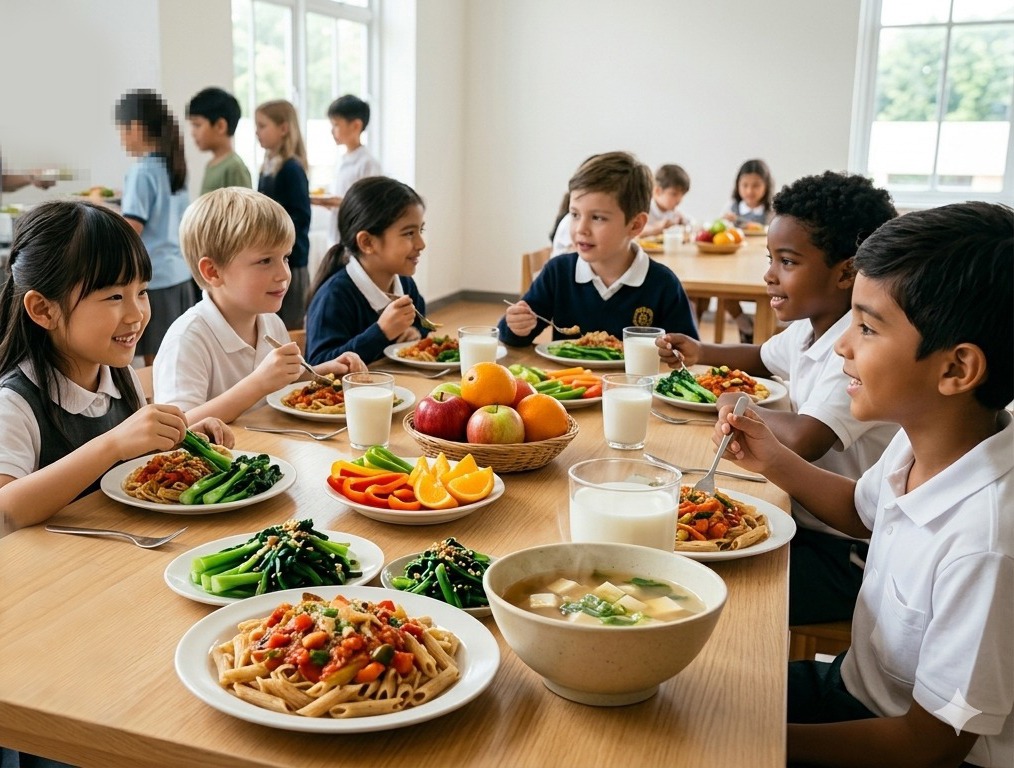
Walk into any Japanese public school cafeteria and you will find fresh fish caught that morning, seasonal vegetables from local farms, miso soup prepared at dawn, milk from nearby dairies. Over 95% of Japanese elementary students receive these meals, planned by nutritionists and cooked from scratch.
Travel to Sweden and you will see something equally impressive. Since the 1940s, Sweden has provided free hot meals to all students. No questions asked. No income requirements. Just food. The government’s guide explicitly states these meals exist so “all children, regardless of socioeconomic background,” can eat well together.
In Denmark, the approach varies by region but the ambition remains. Some municipalities now serve over 90% organic food to children. The “Green Cities” cooperation averages 59% organic across all public procurement.
Hong Kong takes a hybrid approach. Schools outsource meal preparation but follow strict nutritional guidelines. Meals mix rice, vegetables, meats, fish, and soups. Less processed than America. More practical than Japan. Still focused on real ingredients.
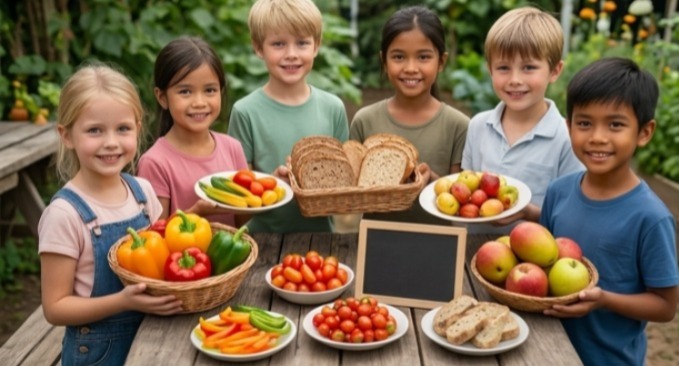
The Philippines offers something different entirely. At Happy Hollow National High School in Baguio, students created Project ORGANIC. They grow mustasa vegetables using organic methods, process them into chips, and feed their classmates. The program won the 2025 AIA Healthiest Schools Healthy Eating Award for all of Asia-Pacific.
Even Switzerland has national quality standards for school meals through “Fourchette verte,” ensuring children eat well.
Real food exists everywhere. Just not here
What America Serves Instead
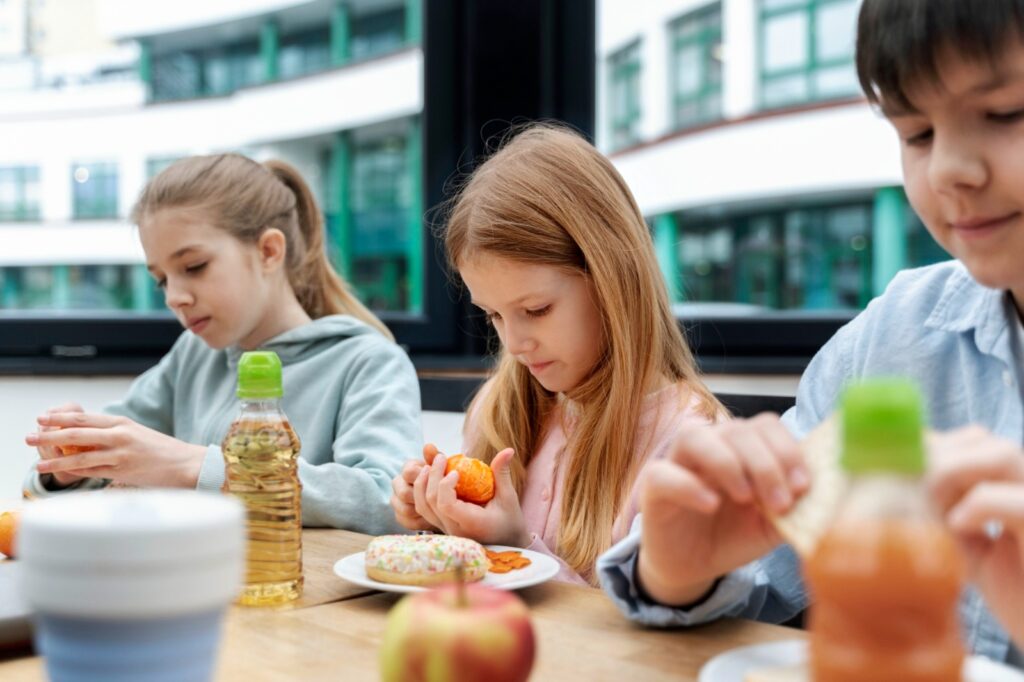
The United States treats school food as an expense to minimize. Frozen nuggets. Reheated pizza bags. Industrial shortcuts. Ultra-processed garbage disguised as nutrition.
Food becomes a budget line. Children become collateral damage.
The United Kingdom struggles with similar issues. A 2020 comparison showed private schools serving salmon while public school children received processed foods . The government sets nutritional standards on paper, but implementation varies wildly. Free school meals exist only for families below strict income thresholds. Everyone else pays for whatever the cafeteria offers.
The Key Difference: Universal vs. Targeted
Sweden feeds every child. No stigma. No separation. No “free lunch” line that marks certain kids as poor. The BMJ recently published a major review confirming that universal programs work better. They improve healthy weight, behavior, and social support. Targeted programs reduce food insecurity but create stigma and worse mental health outcomes.
Japan feeds every child the same meal. Teachers eat with students. No exceptions.
America feeds only children whose parents prove to be poor. Then wonders why participation drops and shame rises.
The Budget Excuse Ends Now
Here comes the argument you will hear: “We cannot afford fresh food for millions of children.”
Stop right there.
Let’s compare costs.
A box of processed chicken nuggets: $4. A bag of frozen fries: $3. A sugary juice box: $1.50. Total for one mediocre meal: $8.50.
Now, calculate the healthcare costs fifteen years later. Diabetes management. Heart disease medication. Obesity-related surgeries. The bill runs into the hundreds of thousands per person.
Fresh fish costs less than a lifetime of insulin. Seasonal vegetables cost less than blood pressure medication. Real milk costs less than cholesterol drugs.
Japan spends approximately $3 per student per day on school lunch. America spends similar amounts but buys processed garbage with it.
The difference? Japan buys ingredients. America buys convenience. Sweden invests in kitchens. America invests in freezers.
When you purchase chips, chocolate, and processed snacks for your children today, you pay twice. Once at the register. Again at the pharmacy decades later.
The Corporate Capture of Children’s Health
Countries with healthy school meals do not hand cafeterias to big private corporations. Management stays public. Oversight stays local. Profits stay irrelevant.
Sweden runs school meals through municipalities. Denmark’s most successful programs operate at the community level. Japan’s nutritionists design menus based on health, not shareholder returns.
American schools sign exclusive contracts with soda companies. They install vending machines in hallways. They let food giants advertise directly to children during lunch.
This is not about feeding kids. This is about creating customers. Lifelong customers for processed food, then lifelong customers for the healthcare system.
Your child is not a student to them. Your child is a lifetime revenue stream.
Simple Rules Other Countries Follow
Japan’s approach follows clear principles: meals must be fresh, balanced, traditional, and cooked on-site.
Sweden’s approach adds another layer: meals teach equality. Teachers and students eat together. Children learn table manners, food preparation, and cleanup as part of the school day.
Denmark’s Green Cities prove that high organic content is achievable at scale.
Hong Kong demonstrates that even outsourced meals can meet strict nutritional standards when governments actually enforce them.
The Philippines shows that students themselves can drive change when adults step aside.
What Prevention Actually Looks Like
Healthy children reduce future costs. Period.
A child who eats real food for twelve years of schooling will likely continue those habits. That child will visit doctors less frequently. That child will miss fewer work days as an adult. That child will contribute more to the economy and require less from the healthcare system.
Countries with universal school meal programs understand this math. America pretends the math does not exist.
The Excuses Stop Here
“But fresh food spoils faster.”
Buy less. Buy more often. Support local farmers instead of multinational corporations. Sweden and Denmark do this every day.
“But we lack kitchen facilities.”
Build them. Other countries did. Japan rebuilt after the war. America chooses processed food because processing requires less infrastructure, not because it costs less overall.
“But children prefer processed food.”
Children prefer what you give them consistently. Japanese children prefer fish and vegetables because that is what school has always served. Swedish children expect hot meals because that is normal there. Taste adapts. Marketing creates preferences, not biology.
“But budgets are tight.”
Budgets are always tight. The question is where the money goes. Pay a little now for fresh ingredients. Or pay a fortune later for disease management.
“But America is too big.”
Denmark serves multiple municipalities with varying approaches. Switzerland maintains national standards despite regional differences. The Philippines just won an international award with one small mountain school. Size is not a barrier. Will is.
The Choice Belongs to Adults
Children do not control school lunch contracts. Adults do. Voters do. Parents do.
Every processed meal served in a school represents an adult decision. Every frozen nugget represents a choice to prioritize short-term convenience over long-term health.
Japan proves it works. The three percent obesity rate proves it works. Sweden’s 100-year commitment proves it works. Denmark’s organic transition proves it works. Hong Kong’s balanced approach proves it works. The Philippines’ student-led innovation proves it works.
Healthcare savings prove it works.
What Demands Change for the sake of our children
Stop treating school food as a logistical problem. Start treating it as a public health intervention.
Stop accepting frozen as normal. Start demanding fresh as standard.
Stop budgeting for sickness. Start investing in wellness.
Stop feeding only poor children. Start feeding all children.
The Bottom Line
Countries around the world feed their children real food. Japan does it. Sweden does it. Denmark does it. Switzerland does it. Hong Kong does it. The Philippines is learning to do it.
The results should not shock anyone. Real food produces real health. Processed food produces processed people.
America can make the same choice these countries made. The question is whether enough adults will demand it.
Because the children cannot demand it themselves. They just eat what we serve them.
And right now, we are serving them a lifetime of disease disguised as convenience.
Fresh fish costs less than insulin. Seasonal vegetables cost less than heart surgery. Real milk costs less than diabetes management.