
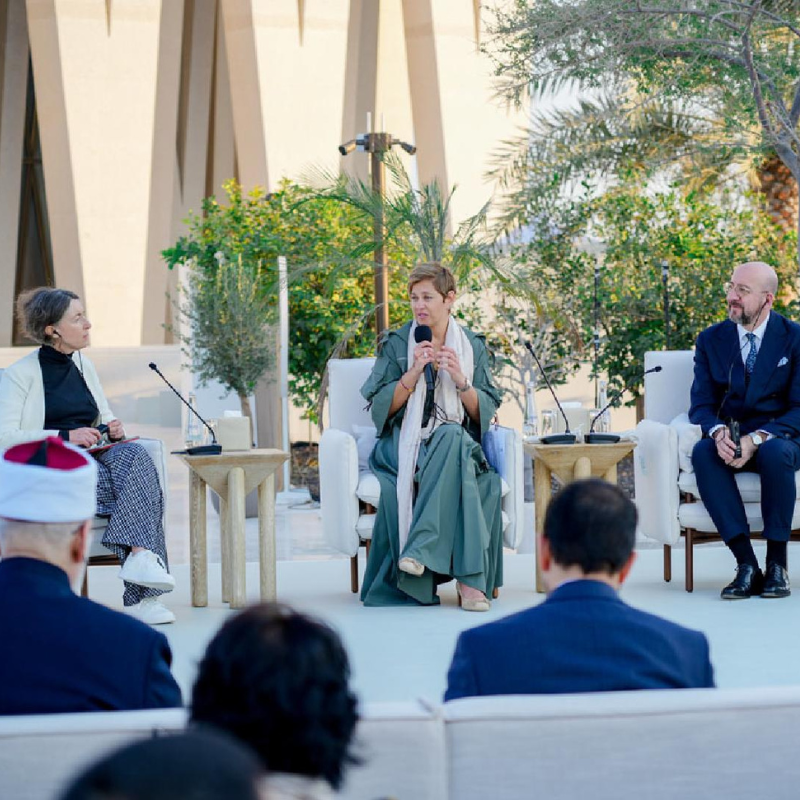
3rd International Zayed Award for Human Fraternity Majlis to convene world leaders and peacebuilders at Zayed National Museum Abu Dhabi, 02 February 2026: The 3rd International Zayed Award for Human Fraternity Majlis, organised by Zayed Award for Human Fraternity ahead of its annual award ceremony, will take place on 3 February 2026 at Zayed National Museum in Abu Dhabi. The International Zayed Award for Human Fraternity Majlis will bring together distinguished decision makers, international female and youth leaders, and experts for in-depth dialogue on pressing humanitarian challenges, the advancement of human fraternity worldwide, and creating pathways to peace. For the first time, the event will be held at the newly inaugurated Zayed National Museum, which celebrates the rich history, culture and narrative of the UAE and tells the story of the late Sheikh Zayed bin Sultan Al Nahyan, founder of the UAE and namesake of the award. Ahead of the opening panel, head of the Administration of the President of the Republic of Uzbekistan H.E. Saida Mirziyoyeva will deliver remarks on behalf of the 2026 Zayed Award for Human Fraternity judging committee, of which Her Excellency is a member. The event’s opening session, Female Leadership at the Heart of Human Fraternity, will gather influential international female leaders whose work has strengthened human fraternity values and the social fabric of their nations including first female president of Indonesia Megawati Sukarnoputri, 2024 Zayed Award for Human Fraternity judging committee member; First Lady of Lebanon Nehmat Aoun; First Lady of Pakistan Aseefa Bhutto Zardari; First Lady of Colombia Verónica Alcocer; and Vice-President of Heydar Aliyev Foundation, Leyla Aliyeva. The second session, Humanitarian Response in Action: Leading with Courage, Compassion, and Integrity, will examine strategies and partnerships that support crisis-affected communities worldwide and help ensure the swift delivery of urgent assistance to countries impacted by natural disasters and conflict. Speakers will include José Ramos-Horta, President of East Timor and Nobel Peace Laureate; Professor Sir Magdi Yacoub, world-renowned Egyptian cardiac surgeon; Javier Garcia, CEO of World Central Kitchen, 2025 co-honouree; Kailash Satyarthi, 2014 Nobel Peace Laureate and 2023 judging committee member; and Dr Ghada Waly, Executive Director of the United Nations Office at Vienna and Director-General of the United Nations Office on Drugs and Crime. Judge Mohamed Abdelsalam, Secretary-General of the Zayed Award for Human Fraternity, said: “The international Zayed Award for Human Fraternity Majlis serves as an annual global platform for discussion and dialogue on ways to advance the values of human fraternity internationally and to foster a culture of coexistence and mutual understanding among peoples. The Majlis convenes a distinguished group of experts, global leaders, and prominent intellectual and humanitarian figures, reaffirming that this initiative embodies the award’s commitment to translating shared human values into practical, action-oriented pathways that help counter hate and division and build a more just and humane world.” The International Human Fraternity Majlis is one of the Zayed Award for Human Fraternity’s key annual initiatives, held to commemorate the UN-recognised International Day of Human Fraternity on 4 February and the historic meeting in Abu Dhabi on 4 February 2019, between the late His Holiness Pope Francis, 266th head of the Catholic Church, and His Eminence Ahmed Al-Tayeb, Grand Imam of Al-Azhar, during which the two religious figures co-signed the Document on Human Fraternity under the patronage of His Highness Sheikh Mohamed bin Zayed Al Nahyan, President of the UAE and patron of human fraternity. The Zayed Award for Human Fraternity is an annual independent humanitarian global award that recognises, supports and honours people and entities of all backgrounds working to advance the timeless values of solidarity, integrity, fairness and optimism. In its seventh edition, the award will honour – during its annual ceremony to be held on 4 February at the Founder’s Memorial in Abu Dhabi – the historic peace agreement between the Republic of Azerbaijan and the Republic of Armenia, represented by President Ilham Aliyev, President of the Republic of Azerbaijan and Nikol Pashinyan, Prime Minister of the Republic of Armenia; as well as the Afghan girls’ education advocate Zarqa Yaftali, and Palestinian humanitarian organisation Taawon. Stay Connected: Follow us on Instagram: https://www.instagram.com/executivewomen_/ Connect on LinkedIn: https://www.linkedin.com/company/executive-women/ Like us on Facebook: https://www.facebook.com/ExecutiveWomen/ Read more articles: https://executive-women.global/en/the-gulfs-growth-engine-how-women-in-finance-will-power-the-next-economic-wave/
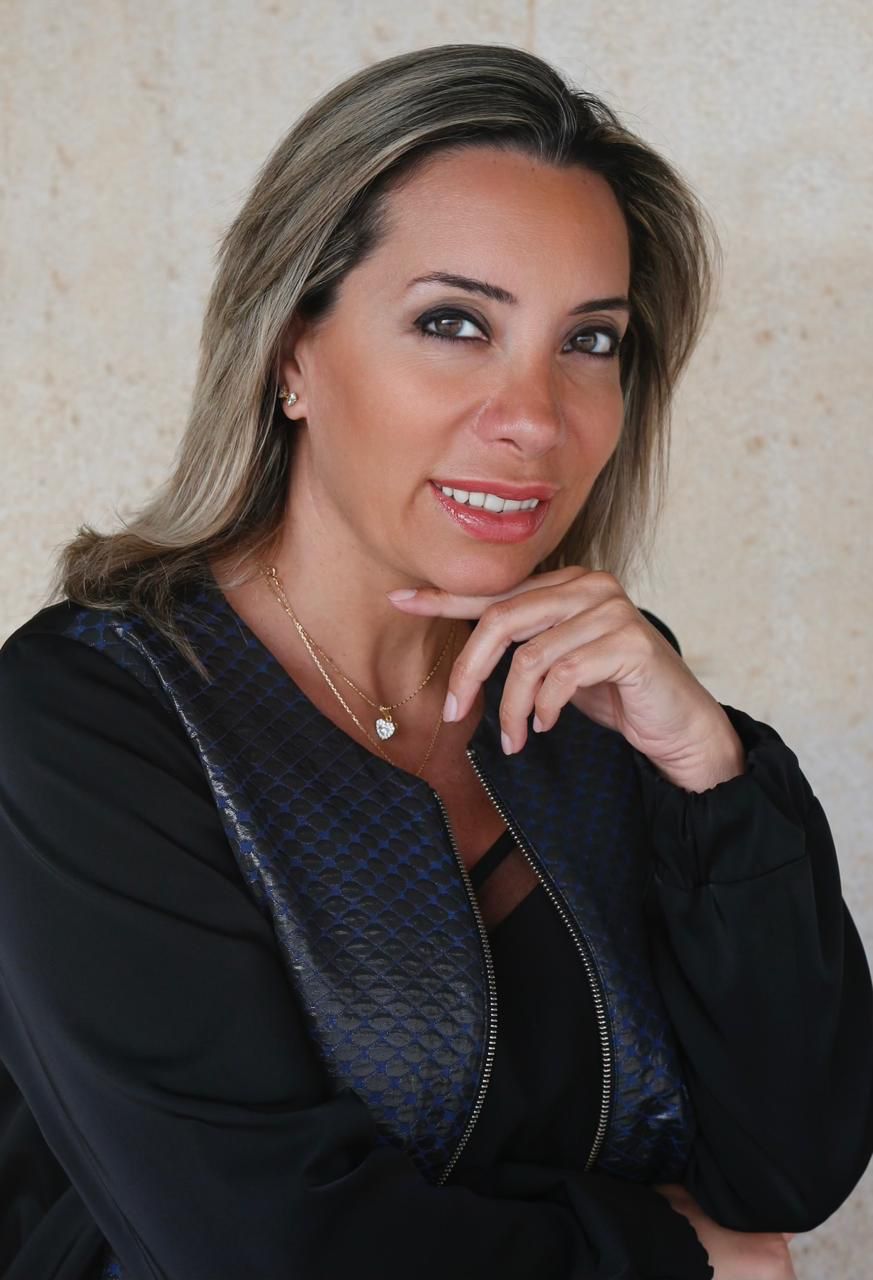
When Women Rise, Regions Transform By Dr. Nada Mallah Boustani
By Dr. Nada Mallah Boustani In my previous article, we looked at four significant forces empowering women today that are redefining women’s leadership and shaping opportunities for them over the next few decades across the Arab world. Women are not just entering into leadership; they are rewriting what leadership looks like. From corporate boardrooms to community startups, from innovation hubs to ministries, women are pioneering a new era of visibility, competence, and influence. In the current article, we look at additional three forces equally powerful, equally promising that will accelerate women’s ascent in the coming years. These are not passing trends; they are engines of structural transformation. The first and perhaps most powerful shift is the rise of mentorship and networking ecosystems built by women for women. For decades, many female leaders navigated their professional journeys in isolation, often finding themselves as the “only woman in the room” and facing systems that were never designed with them in mind. Today, that isolation is fading. Across the Arab region, new mentorship communities are emerging with energy and structure. In the UAE, Womena has become a dynamic hub connecting tech founders, investors, and innovators. Arab Women in Computing has grown into a vast network linking thousands of women across MENA to world-class academic and tech institutions. Programs such as She Entrepreneurs unite emerging leaders across the region to co-create socially driven ventures. Saudi women’s councils are guiding young talent in aviation, cybersecurity, finance, and sports. In Lebanon, a rising wave of women-led initiatives is nurturing the next generation of entrepreneurs, community leaders, and digital innovators. Mentorship today is no longer an informal cup of coffee; it is organized, strategic, data-driven, and increasingly global. Women are learning to negotiate more effectively, accessing networks that once excluded them, forming peer circles that amplify their visibility, and receiving guidance on leadership challenges, conflict management, and career transitions. Collaboration is replacing competition, accelerating progress for all. Over the next years, these mentorship ecosystems will be among the strongest engines of women’s leadership in the Arab region, ensuring that women do not rise alone, but rise together. A second, equally profound transformation is unfolding in the realm of social attitudes. The Arab world is experiencing a cultural shift that, although difficult to measure, is unmistakable in its impact. Across cities and villages, within families and institutions, attitudes toward women’s roles are evolving faster than at any point. Women now occupy fields that were once considered entirely off limits. Fighter pilots in the UAE, Jordan, and Saudi Arabia are challenging old assumptions about gender and military service. Architects and engineers are leading major regional projects; women are shaping cybersecurity and AI strategies in Qatar, Bahrain, and the UAE; and female scientists, climate negotiators, and diplomats are steering discussions at COP28 and beyond. In Lebanon, Tunisia, and Kuwait, women head university departments and direct research centers, influencing both academic governance and national policy. These achievements are accompanied by internal changes within organizations. Companies are adopting gender-sensitive safety gear, expanding maternity and paternity leave, implementing anti-discrimination training, setting diversity goals, and designing leadership programs specifically for women. Progress is not perfectly linear and challenges remain, but the direction is clear: Arab societies are broadening their definition of leadership, and women are becoming indispensable to that story. As more women take on influential roles in media, government, sports, and STEM, public perception will continue to shift. The third force reshaping women’s leadership is the rapid rise of AR and VR technologies in education and professional training. The power of these tools is already visible across the region. A Saudi medical student can perform lifelike simulated surgeries long before entering a real operating room. AR and VR remove the need for physical access to expensive machinery or specialized labs. They reduce the impact of unconscious gender bias by shifting learning away from gatekeepers. They create safe, controlled spaces for women to train in industries where male dominance once discouraged female participation. They also offer realistic, hands-on experience without the logistical or cultural constraints that often limit women’s exposure to technical roles. Saudi Arabia’s Vision 2030 and Neom projects are deploying immersive technologies to train women in future-focused sectors such as robotics, urban design, and renewable energy. Lebanese and Jordanian startups are creating localized VR content, while Egypt is exploring the use of virtual tools for vocational training in manufacturing and construction. Taken together, these three forces paint a compelling picture. We are not witnessing incremental progress; we are witnessing a structural redesign of how women grow, lead, and contribute. The Arab world, with its youthful populations, ambitious national visions, strategic digital investments, and increasingly educated, multilingual, and resilient women, is poised for a historic transformation. The next years will bring more women CEOs, founders, diplomats, scientists, engineers, and policymakers. They will bring greater visibility in global innovation arenas and deeper influence across the region’s political, economic, and cultural landscapes. Women are no longer waiting for a seat at the table … they are building new tables, shaping new models of leadership, and redefining the future on their own terms. Stay Connected: Follow us on Instagram: https://www.instagram.com/executivewomen_/ Connect on LinkedIn: https://www.linkedin.com/company/executive-women/ Like us on Facebook: https://www.facebook.com/ExecutiveWomen/ Read more articles: https://executive-women.global/en/a-transformative-era-for-womens-leadership-by-dr-nada-mallah-boustani/

Data Management 101: The Unseen Engine of Modern Business Success
Data Management 101 In today’s digital-first economy, your most valuable asset isn’t your product, your team, or your intellectual property; it’s your data. But without a strategic foundation for managing it, this asset becomes a liability. The Data Deluge is Here Every single day, businesses generate staggering volumes of information. To put this into perspective, experts estimate that the global datasphere will grow to over 180 zettabytes by 2025. Customer interactions, supply chain logs, financial transactions, and machine outputs, this constant stream holds the key to unprecedented efficiency and insight. However, raw data is chaotic. Consequently, the critical discipline that separates industry leaders from the struggling pack is no longer just data collection, but strategic data management. Ultimately, effective data management is the unseen engine that powers informed decision-making, regulatory compliance, and sustainable growth. This article is the first in a five-part series, “Mastering Your Data Universe,” designed to transform your data from a costly burden into your most potent competitive weapon. What is Data Management? Beyond Storage to Strategy. First and foremost, let’s define the core concept. Contrary to popular belief, data management is not merely about buying server space or backing up files. Instead, it is a comprehensive framework of policies, processes, and technologies that govern the acquisition, storage, security, quality, and lifecycle of an organization’s data assets. Think of it this way: If data is the new oil, then data management is the entire infrastructure, the drills, pipelines, refineries, and quality control systems that transform a crude resource into a high-performance fuel. Without this infrastructure, the resource is messy, dangerous, and ultimately useless. The Critical Pillars: Why Data Management is Non-Negotiable So, why should this be a C-suite priority? Here are the non-negotiable benefits: 1. Trustworthy Analytics & Confident Decisions In today’s competitive landscape, decisions must be driven by evidence, not instinct. However, a recent Gartner study revealed that poor data quality costs organizations an average of $12.9 million annually. Therefore, a robust data management framework ensures high data quality, consistency, and accessibility. As a result, leaders can trust their dashboards and reports, leading to faster, more accurate strategic decisions that directly impact the bottom line. 2. Regulatory Compliance and Risk Mitigation With the proliferation of regulations like GDPR, CCPA, and industry-specific mandates, data governance is a legal imperative. For instance, non-compliance with GDPR can result in fines of up to €20 million or 4% of global annual turnover. Effective data management provides the audit trails, access controls, and classification systems necessary to demonstrate compliance, thereby shielding your organization from severe financial and reputational damage. 3. Enhanced Security & Customer Trust Cyber threats are escalating in both frequency and sophistication. A foundational data management strategy includes defining where sensitive data resides, who can access it, and how it is encrypted. By proactively securing data, you not only protect your business from breaches but also build vital trust with customers who are increasingly concerned about their privacy. In essence, strong data management is a cornerstone of your brand’s integrity. 4. Operational Efficiency & Cost Reduction Inefficient data handling creates significant hidden costs. Consider the following: Duplicate records, siloed databases, and unused “dark data” waste storage and clutter systems. By implementing sound data management practices, you streamline operations, eliminate redundancies, and ensure teams spend time analyzing data, not searching for or correcting it. This directly translates to reduced IT costs and improved productivity across all departments. Looking Ahead: Your Journey to Data Mastery This exploration of the “why” behind data management is just the beginning. Mastering your data universe requires a deliberate journey. In our next article, Part 2 of this series, we will dive into the “Data Management Framework: Building Your Blueprint for Success.” We will deconstruct the core components, from Data Governance and Architecture to Quality and Security, providing you with an actionable blueprint to construct your own program. Stay tuned to transform your understanding into action and unlock the full potential of your organization’s data. Stay Connected: Follow us on Instagram: https://www.instagram.com/executivewomen_/ Connect on LinkedIn: https://www.linkedin.com/company/executive-women/ Like us on Facebook: https://www.facebook.com/ExecutiveWomen/ Read more articles: https://executive-women.global/en/the-secret-ingredient-in-great-marketing-its-stolen/

Why Children Feel So Deeply, and How Adults Can Help Them Regulate Emotions
Children’s emotions are often misunderstood. What may look like an overreaction to adults is, for a child, a very real and overwhelming emotional experience. This is because children feel emotions deeply long before they learn how to manage them. To begin with, a child’s brain is still developing, especially the areas responsible for emotional regulation, impulse control, and reasoning. While children can feel anger, fear, excitement, or sadness intensely, they do not yet have the internal tools to calm themselves down. As a result, emotions often come out loudly and visibly through crying, tantrums, or sudden mood shifts. Because of this imbalance between feeling and regulation, emotional outbursts are rarely intentional. They are signals of overload. A child who melts down is not trying to be difficult; they are struggling to cope with emotions that feel too big for their system to handle alone. This is where adults play a crucial role. Emotional regulation is not something children learn through instruction alone, it is learned through experience and modeling. When adults respond with calmness, empathy, and consistency, children slowly internalize those responses. Over time, external regulation becomes internal self-control. Equally important is emotional validation. When children hear phrases such as “I see you’re upset” or “That feeling makes sense”, they learn that emotions are acceptable and manageable. Validation does not mean agreeing with inappropriate behavior; rather, it separates the feeling from the action and teaches children that emotions are safe, even when limits are firm. On the other hand, dismissing or punishing emotions can lead children to suppress their feelings rather than understand them. Suppressed emotions often reappear later as anxiety, aggression, or withdrawal. Emotional safety, therefore, becomes the foundation for emotional strength. Ultimately, helping children regulate emotions is not about controlling their reactions, but about guiding them through emotional experiences until they are capable of doing so independently. Stay Connected: Follow us on Instagram: https://www.instagram.com/executivewomen_/ Connect on LinkedIn: https://www.linkedin.com/company/executive-women/ Like us on Facebook: https://www.facebook.com/ExecutiveWomen/ Read more articles: https://executive-women.global/en/the-secret-ingredient-in-great-marketing-its-stolen/

 English
  العربية