

Hilda Maalouf Melki
Oxford-Certified AI Expert | Author of “AI Simplified.”
In a world buzzing with both the promise and peril of artificial intelligence, true leadership requires moving beyond hype and anxiety to grasp the practical fundamentals. Hilda Maalouf Melki, an Oxford-certified AI expert and strategic advisor, is on a mission to make this understanding accessible. Her new book, “AI Simplified,” written in Arabic, breaks down complex concepts for professionals, parents, and institutions. We spoke with her about the urgent need for AI literacy, why it’s a core leadership competency, and how women executives can lead with confidence in an AI-transformed future.
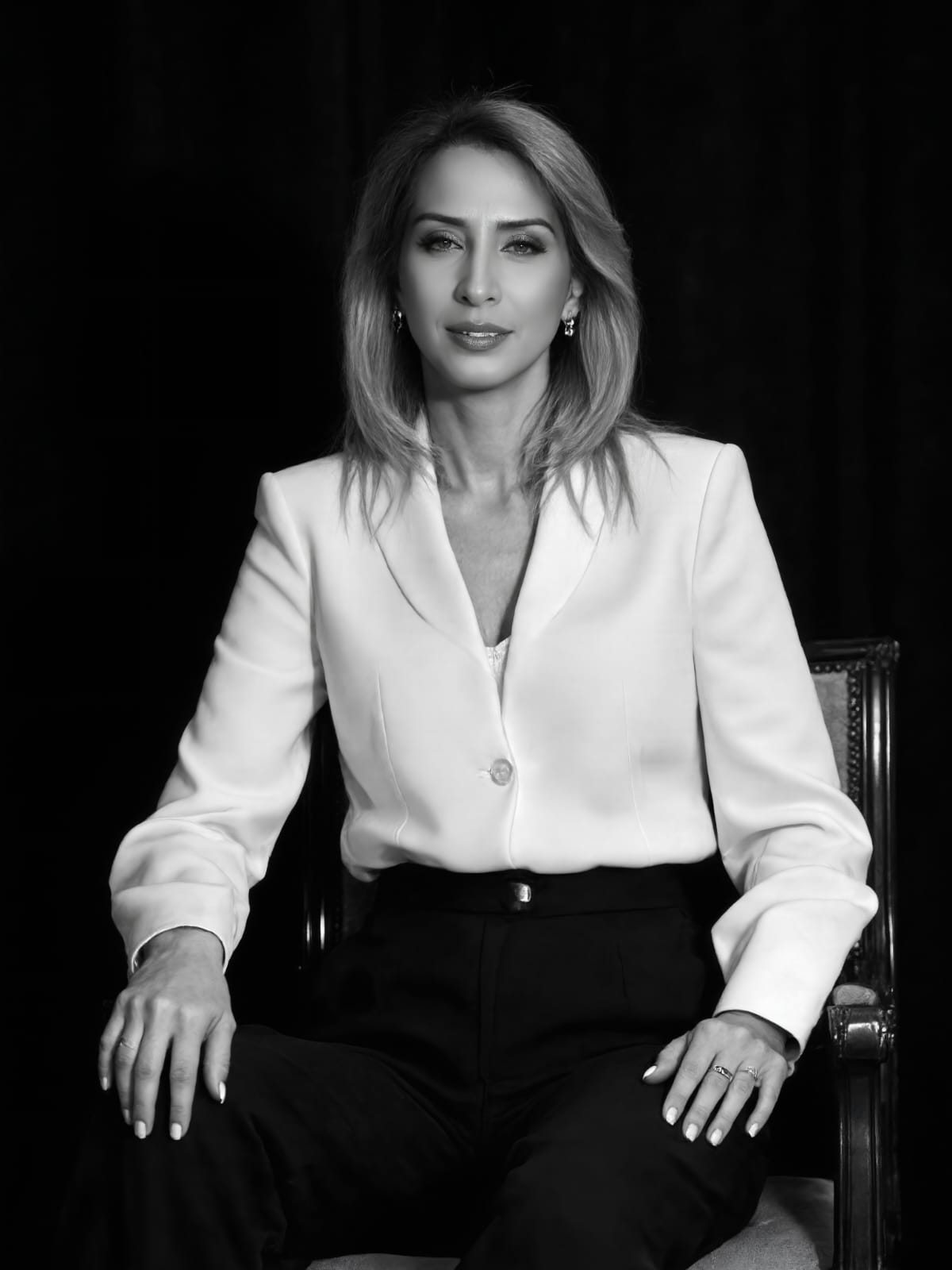
Your bio places you at the intersection of AI, leadership, and society. For our readers who are senior leaders, how do you define your role in this complex space, and what drove you to establish the AI Simplified Hub?
I define my role as a translator between worlds that urgently need each other but rarely speak the same language. On one side, you have advanced technology evolving at an unprecedented speed. On the other hand, you have leaders, institutions, and societies responsible for making decisions that affect people, trust, and stability.
My work sits precisely in that space, turning AI from a technical abstraction into a leadership competency.
The AI Simplified Hub was born from a very practical realization that most decision-makers do not need to become technologists, but they must understand AI well enough to govern it responsibly, ask the right questions, and make informed strategic choices. I saw fear, confusion, and sometimes blind optimism, none of which are good foundations for leadership.
The Hub is not about tools or trends. It is about AI literacy as a form of institutional maturity, helping leaders move from reaction to stewardship.
With the pace of technological change, the decision to publish a book is significant. Why was this the right moment to write “AI Simplified,” and what specific gap in the current discourse are you addressing?
This was the right moment because we had crossed a threshold. AI is no longer experimental or optional it is structural. It is reshaping work, education, governance, and even how people perceive value and authority.
Yet the dominant discourse is polarized; Either highly technical or highly exaggerated. What was missing was a calm, grounded, and human explanation of AI written for people who carry responsibility, parents, executives, educators, and institutional leaders.
“AI Simplified” addresses that gap.
It does not teach people how to build algorithms. It teaches them how to think about AI how to contextualize it, question it, and integrate it without fear or dependency.
The urgency is not about speed. It is about clarity.
You explicitly state your book is not just for tech specialists. Who is your primary audience, and why did you choose to write it in Arabic?
My primary audience is any decision-maker who influences people but does not come from a technical background. That includes Executives, board members, Educators, parents, policymakers and institutional leaders. Also, any kind of professional navigating AI without formal training.
I chose Arabic deliberately. Language is not just a medium it is access.
AI is entering Arab societies rapidly, yet most meaningful explanations remain locked in English, often filtered through Western cultural assumptions. Writing in Arabic was a way of reclaiming understanding, not translating jargon.
This book says, “You do not need to leave your language, or your identity, to understand the future.” I wrote the book relating to our culture, traditions and social habits.
The market isn’t short of introductory guides. What makes “AI Simplified” uniquely valuable for an institutional leader or a busy executive?
Most introductory guides explain what AI is. “AI Simplified” focuses on what AI means.
For institutional leaders, value lies in relevance, not volume. The book is structured around Decision-making, not tools and responsibility, not hype but context, and of course, not disruption but narratives instead.
It helps leaders understand where AI adds real value and where it doesn’t and how to govern AI ethically without paralysis. In addition, it shows how to lead teams through change without fear or blind adoption. In short, it respects the reality of leadership.
Finally, what is your central message for women leaders navigating industries reshaped by AI? What mindset should they embrace?
My message to women leaders is simple: “Approach AI as a space of influence, not uncertainty”. Women already lead through adaptability, structured thinking, and the ability to navigate complexity, exactly the leadership qualities this moment demands. AI is not just a technological shift; it is a shift toward more thoughtful decision-making and more responsible, human-centered leadership. Thus, lead with clarity, anchored values, and informed authority.
Do not wait to be invited into the AI conversation; shape it.
Stay Connected:
Follow us on Instagram: https://www.instagram.com/executivewomen_/
Connect on LinkedIn: https://www.linkedin.com/company/executive-women/
Like us on Facebook: https://www.facebook.com/ExecutiveWomen/
Read more articles: https://executive-women.global/en/3rd-international-zayed-award-for-human-fraternity-majlis-to-convene-world-leaders-and-peacebuilders-at-zayed-national-museum/







 العربية
  English