
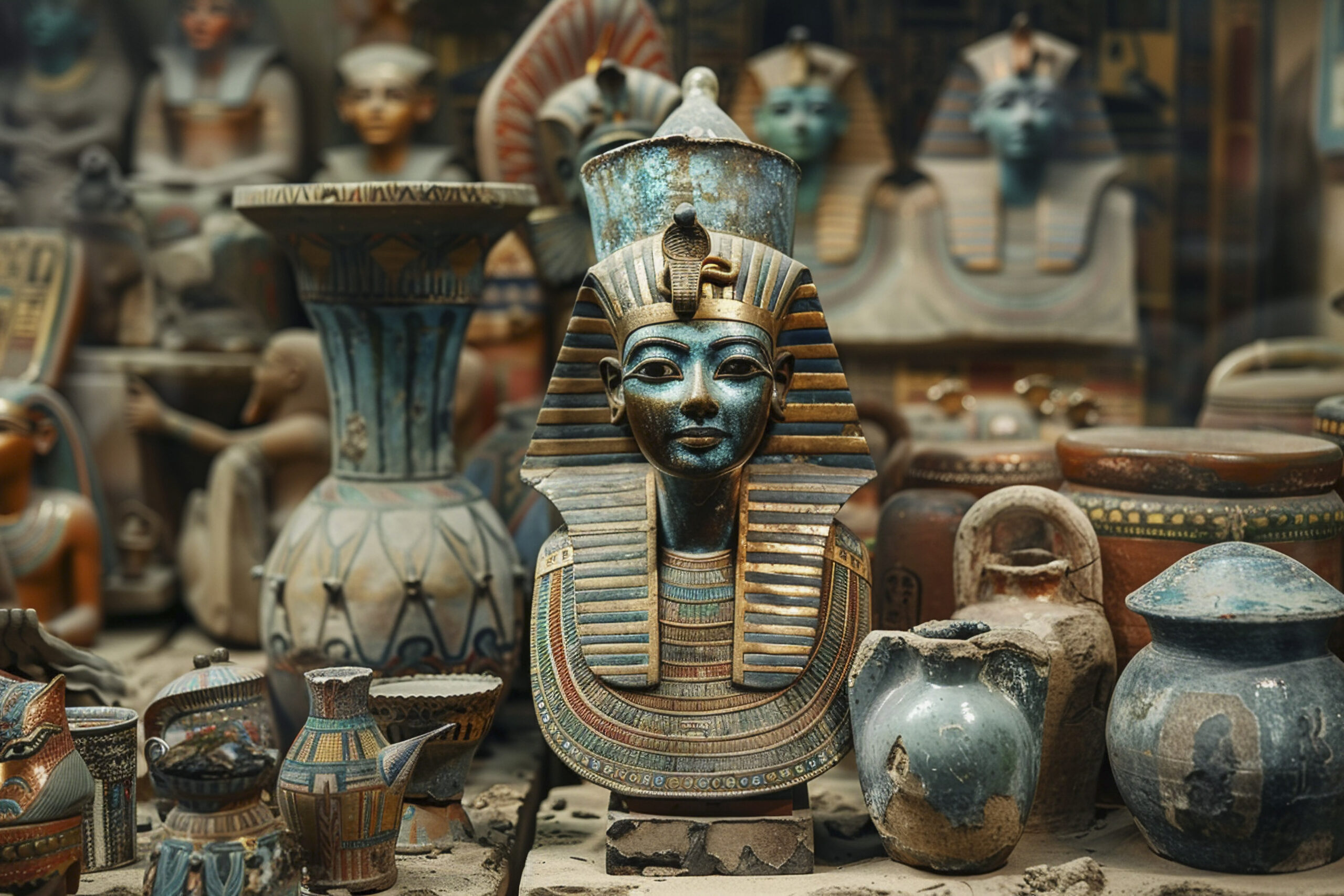
You know the Louvre. Similarly, you’ve seen photos of the British Museum. Furthermore, you’ve likely heard of the Met. But have you heard of the museum that holds not just artifacts, but the very heartbeat of human civilization? Specifically, a museum that doesn’t just display history, but has lived it in the most dramatic way possible?
Welcome to the Egyptian Museum in Cairo. Often called the “Cairo Museum,” it should rightly be known as the “Unbreakable Museum.”
A Treasure Chest with a Scar
To begin, picture this: a dusty-pink, neo-classical building standing proudly right on Tahrir Square. Importantly, it doesn’t have the sleek, modern glamour of its Western cousins. Instead, inside, it’s a beautiful, overwhelming chaos, a labyrinth of history where golden sarcophagi jostle for space with mummified pharaohs and jewel-encrusted daggers. Consequently, it feels authentic, raw, and undeniably alive.
However, that very rawness comes from a recent story of survival.
During the 2011 revolution, without a doubt, the world held its breath. As Tahrir Square became the epicenter of a nation’s upheaval, the museum at its edge stood uniquely vulnerable. Subsequently, looters smashed windows and cases. In a particularly heart-wrenching theft, they made off with several priceless pieces, including a gilded wooden statue of the boy-king Tutankhamun, beautifully crafted to show him being carried by a goddess.
Initially, the image was devastating: a nation’s soul, seemingly under attack and plundered.
But here’s the powerful plot twist they often omit. This wasn’t merely a story of loss; above all, it was a story of profound protection. As the chaos unfolded, a human chain of Egyptian civilians, young and old, revolutionaries and ordinary citizens, spontaneously formed around the museum. In other words, they literally linked arms to shield their heritage from further harm. Ultimately, they understood that to destroy these treasures was to erase a part of their own identity.
As for the stolen artifacts? Fortunately, many were later recovered in a series of dramatic police operations across the country. This recovery stands as a testament to a nation’s collective refusal to let its history be stolen away.
The Great Irony: A Secret in Plain Sight
Therefore, you’d logically think a museum with this level of drama, resilience, and sheer historical weight would be on every traveler’s bucket list, right? The profound irony, however, is that for many, it’s not.
While European museums are consistently flooded with visitors who can easily name their star attractions, the Egyptian Museum surprisingly remains a destination that doesn’t get the global exposure it so richly deserves. Primarily, it’s tucked away in the Middle East, a region whose ancient narratives are frequently, and unfortunately, overshadowed by modern political headlines.
As a direct result, the world flocks to see a single Egyptian obelisk in Paris or a collection of papyri in London, while consistently overlooking the very source, the overwhelming, breathtaking mother lode, in downtown Cairo. Essentially, we’ve been culturally conditioned to believe that the primary custodians of “world” history are in the West, while the actual cradle of civilization waits patiently, and majestically, in the East for its due recognition.
Beyond the Revolution: A Deeper Narrative
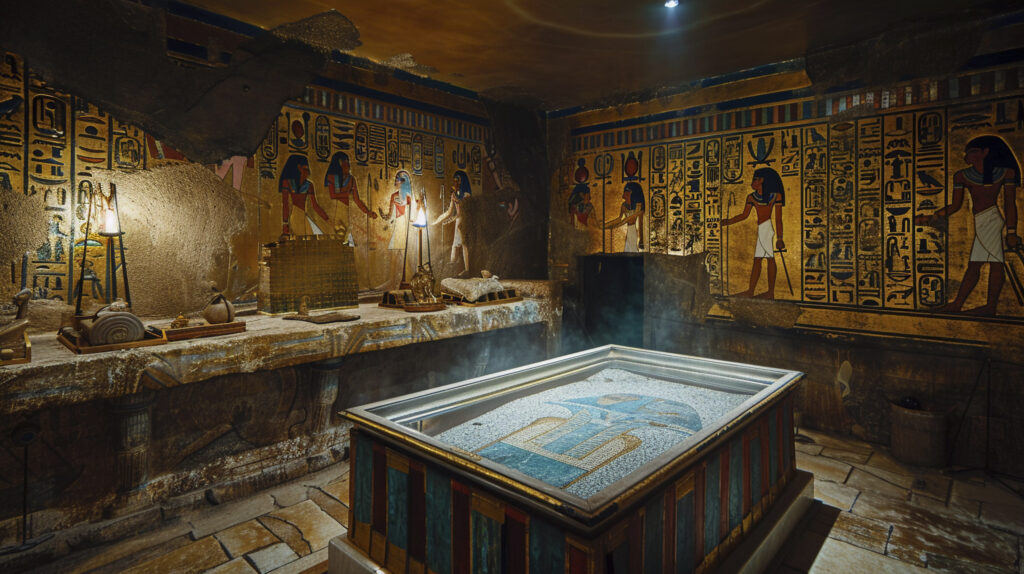
Of course, the story doesn’t start or end with the revolution. To truly understand its significance, we must look further back. For generations, this iconic building has been the guardian of Egypt’s most profound secrets. For instance, it was here that Howard Carter’s breathtaking discovery of Tutankhamun’s tomb found its home, flooding the world with a new wave of Egyptomania. Moreover, it houses the complete royal mummy room, allowing visitors to stand face-to-face with the likes of Ramses the Great and Queen Hatshepsut.
Additionally, the museum’s very design contributes to its charm. Unlike the minimalist, thematic displays of modern institutions, the Egyptian Museum offers a sense of discovery around every corner. Consequently, you feel less like a passive observer and more like an archaeologist on the verge of a personal, groundbreaking find. In fact, this dense, treasure-hunt atmosphere is part of what makes a visit so uniquely unforgettable.
The Ultimate Plot Twist is in the Culture Itself
Ultimately, the real plot twist isn’t just the museum’s survival story or its captivating chaos. Instead, it’s the staggering, almost incomprehensible depth of culture it represents.
For example, walk its halls and you are not just a tourist; you become a time traveler. Here is the solid gold death mask of Tutankhamun, a masterpiece of ancient craftsmanship that has literally never been surpassed. Similarly, here are the actual mummified remains of Ramses II, the great pharaoh himself. Not to mention, the glittering treasures of Queen Hetepheres, arranged exactly as they were found in her tomb, offering an intimate glimpse into royal life millennia ago.
This, therefore, is the Arab region’s most powerful open secret: we are sitting on a geological layer of human history. The stories, the innovations, the art, and the beliefs that fundamentally shaped the world are embedded in our very soil. From the origins of writing and urban planning to advancements in medicine and astronomy, the evidence is all here.
Thus, the Egyptian Museum is not just a building; it’s a powerful, tangible reminder that while empires in Europe were yet to be dreamed of, ours were already reaching for the sun and the stars, building a legacy that would endure for eternity.
So, the next time you plan a cultural pilgrimage, look beyond the usual suspects. Instead, venture to where history isn’t just displayed behind sterile glass, but where it breathes, where it has fought to survive, and where it continues to stand, unbroken and magnificent.
The greatest museum story ever told awaits you in Cairo. It’s time the world started listening.
Stay Connected:
Follow for more: https://www.instagram.com/cosetteawad.author
https://www.instagram.com/executivewomen_
Like us: https://www.facebook.com/ExecutiveWomen
Read more articles: https://executive-women.global/en/meet-sara-elemary/










 العربية
  English