

By: Aline J. Badr PCCGlobal Executive Coach + Reputation Advisor | Trusted Leadership For decades, women have been told about the barriers above us, the ceilings that block our ascent, invisible structures we are told to shatter in order to rise. Those ceilings exist. But many of the women I work with encounter something different: a barrier not above, but directly in front of them. A door that reflects their own doubts, insecurities, and the quiet questions that surface in moments of decision: Am I ready? Am I enough? Do I truly belong here? Unlike the glass ceiling, the mirrored door cannot be smashed with force. It requires something else entirely: the courage to look directly into the reflection, to meet our own gaze without turning away, and to trust what we see enough to step through. This is where deep confidence begins. Deep confidence is not the loud, performative kind of confidence that depends on applause, titles, or the approval of others. It is the quieter strength that comes from alignment, when our values, actions, and impact are in sync. When who we are, how we show up, and the impression we leave are congruent. Deep confidence steadies us in rooms where the voices are louder, the stakes higher, and the expectations heavier. It is not the absence of fear, that is an illusion, but the anchor that allows us to move forward despite it. I wrote a short poem about this a few years ago: The Do-It-Afraid GirlShe builds her strength with her fears.Self-awareness is her treasured weapon.The deeper she digs the more she finds.The more she finds the stronger she becomes.She is brave and she is afraid.She is tough and she is tender.She is excited and she is scared.She is bold and she is sensitive.The more she accepts her whole selfthe more free she feels.She plugs in, into herself,to regenerate her energy.She is the source of her own power.A free bird flying in the direction of her true self.A resilient girl.One who has come home to herself.To find a deeply rooted womanflowing in the waters of her own inner resource. This is what deep confidence really looks like in practice. Not the erasure of fear, but the choice to act while it walks beside us. It is both intimate and universal, lived inside us yet reflected in the world around us. I often describe it through the image of a cedar tree, rooted and resilient. The cedar does not grow by rushing or bending to every storm. Its strength shows not in quick bursts, but in decades of holding its ground. Women leaders who cultivate deep confidence carry that same steadiness. They do not waste energy constantly proving themselves. They conserve it for the choices that matter most, and they understand that confidence is not one-dimensional. It lives in duality, where strength and softness, courage and vulnerability, light and shadow all coexist in the same leader. Too often we are told to choose between being strong or being kind, decisive or compassionate, ambitious or humble. Deep confidence refuses this false choice, giving us permission to hold both and integrate the opposites. When a leader can be both firm and empathetic, both visionary and pragmatic, both resilient and receptive, she embodies the kind of presence people trust. The challenge, of course, is that cultivating this depth requires more than achievement or ambition. It requires reflection. It requires the discipline of asking: Am I honoring what I stand for, or betraying it? It requires redefining resilience, not as the ability to do everything, but as the ability to remain steady when it matters most. And it requires awareness that the impact we have on others, in other words, our reputation, is shaped not by how loudly we speak of our strength, but by how consistently others experience it in us. I am thinking of a senior executive I once worked with who believed she needed to emulate the most dominant voices in the boardroom in order to be effective. The louder she tried to be, the more disconnected she felt from herself. When she finally allowed herself to lead from her natural presence, calm, thoughtful, deliberate, the impact was immediate. Her deep confidence shifted the entire atmosphere of the room. People leaned in. They listened differently. She had not become someone else; she had trusted who she already was. That is the quiet power women leaders carry when they step through the mirrored door. The glass ceiling may still exist, but ceilings are broken collectively, over time. The mirrored door is personal, immediate, and deeply intimate. Each of us must decide whether we will let the reflection hold us back, or whether we will trust it enough, with compassion and courage, to walk forward. Deep confidence allows us to make that choice. It transforms hesitation into action, resistance into resilience, and leadership into legacy. So when you stand before that mirrored door, the question is not whether you can force it open. The question is: will you trust the woman you see on the other side? Note: The metaphor of the “mirrored door” is borrowed from the book The Mirrored Door: Break Through the Hidden Barrier That Locks Successful Women in Place. Read more articles: https://executive-women.global/en/from-chance-to-awareness-the-story-of-a-woman-who-discovered-the-meaning-of-life-by-nadine-lawandos/
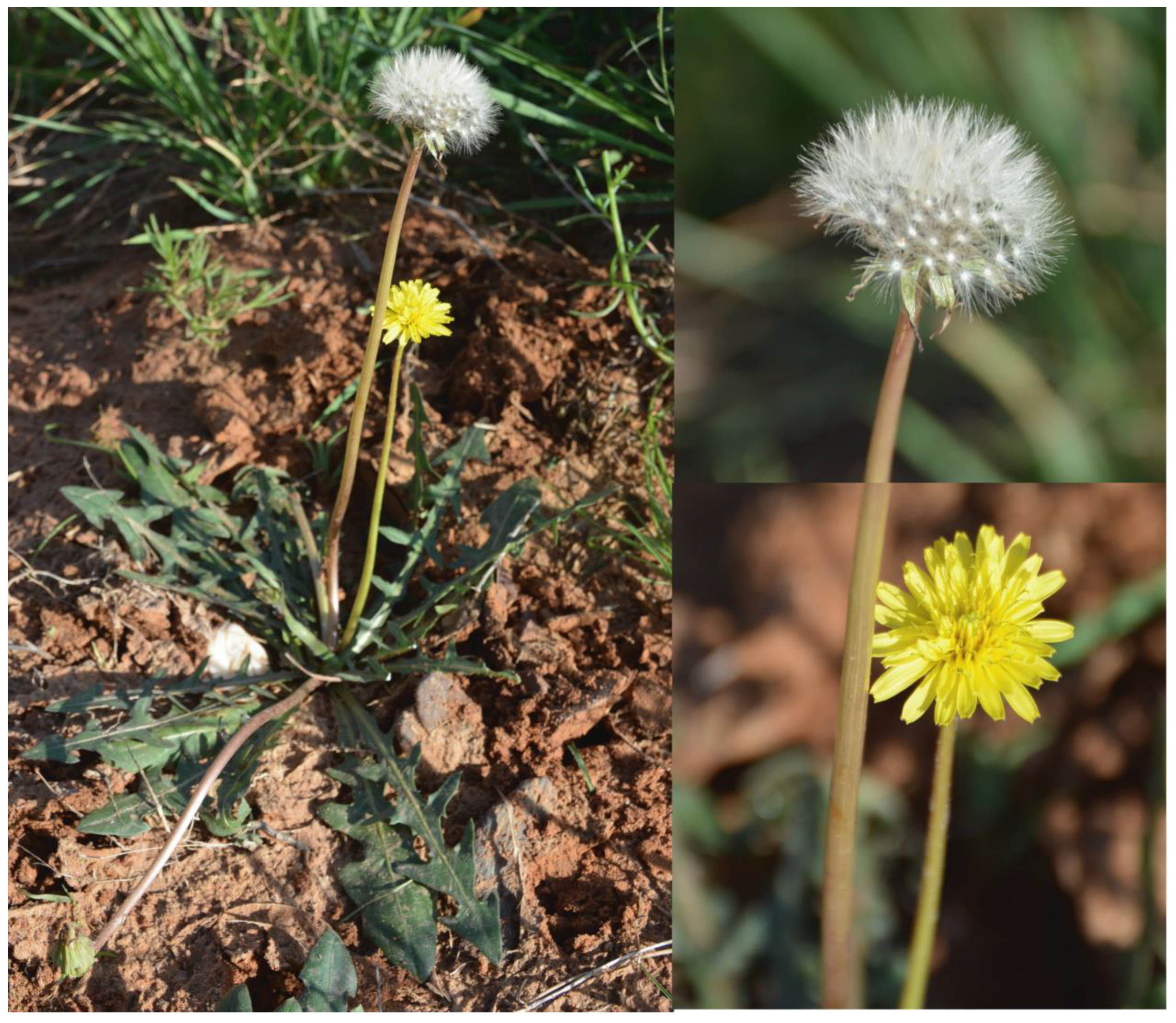
Dandelion Root and Cancer: Separating Hopeful Science from Dangerous Myths
Introduction A powerful image circulates online, claiming “Dandelion root shown to kill over 90% of colon cancer cells in less than two days.” At first glance, this statement offers a breathtaking promise of a natural cancer cure. However, while this claim is rooted in a fragment of real science, it is dangerously misleading. Understanding the vast gap between a laboratory experiment and a human cure is crucial. This article will separate the hopeful science from the harmful myths, explaining why dandelion root is not a proven cancer treatment and why believing such simplified claims can be risky. The Kernel of Truth Behind the Claim First and foremost, it is important to acknowledge the source of this viral statement. The claim originates from legitimate scientific research, primarily from a University of Windsor study. In this research, scientists applied a highly concentrated extract of dandelion root directly to human colon cancer cells in a petri dish. Consequently, they observed that the extract triggered a process called apoptosis, or programmed cell death, in a significant number of these cells within a 48-hour window. Therefore, the core finding of the study is factual—but only within the extremely specific and controlled conditions of a laboratory. The Critical Caveats: Why the Lab Isn’t a Human Body This is the most vital point to understand: a petri dish is not a person. The leap from “in vitro” (in glass) to “in vivo” (in a living body) is one of the biggest challenges in medical science. In a lab, scientists can apply a pure, concentrated substance directly to cancer cells. Conversely, inside the human body, that same substance must survive the digestive system, enter the bloodstream, reach the tumor site at a high enough concentration, and kill cancer cells without harming healthy ones. Unfortunately, most compounds that successfully kill cells in a dish fail at one or more of these steps in a human. As a result, while the dandelion root extract is a fascinating subject for further research, it is not a validated treatment. The “Dandelion Root” in the Study Isn’t in Your Tea Furthermore, the “dandelion root” used in the study is not what you can find in your backyard or a health food store. The researchers used a meticulously prepared, standardized laboratory extract. This extract was designed to have a specific and powerful concentration of active compounds. On the other hand, brewing tea from dandelion roots you dig up or taking an unregulated supplement provides an unknown and likely much weaker dose. Therefore, assuming that a daily cup of dandelion tea will have the same effect as the laboratory extract is a serious and potentially dangerous misconception. The Real-World Dangers of Believing the Hype Why is such a “hopeful” message so dangerous? The problem lies in the real-world actions it can inspire. Primarily, such claims can create false hope and lead individuals to delay or replace proven, evidence-based cancer treatments like chemotherapy, radiation, or surgery. For instance, a patient might choose to drink dandelion tea instead of undergoing a recommended course of chemotherapy. This delay can allow the cancer to grow and spread to a more advanced, less treatable stage. Additionally, dandelion can interact negatively with conventional treatments. For example, because dandelion acts as a diuretic, it could potentially interfere with how the body processes certain chemotherapy drugs. This interference might either reduce the drug’s effectiveness or increase its toxicity. For this reason, cancer patients must consult their oncologist before using any supplement, including dandelion. A Hopeful Future, But a Clear-Eyed Present So, where does the science truly stand? Researchers like Dr. Caroline Hamm in Canada are actively investigating dandelion root extract. Their work is promising and has led to early-phase clinical trials designed primarily to assess safety in humans. However, these are not large-scale trials to prove it cures cancer. The scientific community is proceeding with cautious optimism, recognizing the need for many more years of rigorous study. In the meantime, it is perfectly healthy to enjoy dandelion greens in a salad or a cup of dandelion tea as part of a nutritious diet. Dandelion is rich in vitamins and antioxidants. However, it is critical to view it as a food, not a medicine. Conclusion In conclusion, the viral image claiming dandelion root kills cancer cells tells a very small part of a much larger and more complex story. While the initial laboratory research is a valid starting point for scientific inquiry, it is a long way from a human cure. The claim is misleading because it ignores the fundamental differences between lab results and human biology, the specific nature of the extract used, and the potential for real harm. When it comes to cancer, the safest path is always to rely on the guidance of medical professionals and treatments that have been proven effective through rigorous clinical trials. Ultimately, hope in science is essential, but it must be paired with clear-eyed critical thinking. A Final, Friendly Thought Navigating health information, especially online, can feel overwhelming. It’s completely natural to grasp onto hopeful stories and simple solutions. We all want a gentle, natural answer to something as tough as cancer. So, let’s reframe the takeaway: Let’s be curious, not just hopeful. The real power isn’t in any single plant, but in the powerful combination of science and your own advocacy. The next time you see a bold claim, you now have the tools to ask the right questions: Was this in people, or in a lab? Is this a treatment, or just a starting point for research? Your health, and the health of those you love, is worth that extra moment of questioning. The most powerful step you can take is to be an engaged partner with your healthcare team. Talk to them openly, ask them questions, and always, always keep them informed about anything you are considering. Take care of yourself and each other. You’ve got this. Stay Connected: Follow for more: https://www.instagram.com/cosetteawad.author https://www.instagram.com/executivewomen_ Like us: https://www.facebook.com/ExecutiveWomen Read more articles: https://executive-women.global/en/its-okay-to-not-be-okay/

 العربية
  English