From Desert Installations to Global Art Fairs – A Cultural Transformation
In recent years, Qatar has shaped a cultural narrative that feels both intentional and inspired. Rather than merely investing in art, the country is thoughtfully curating its place, one that is firmly situated within the global artistic dialogue.
At the heart of this movement stands Doha. Over time, the city has evolved, and today it is a living gallery, where heritage, architecture, and contemporary expression intersect with remarkable harmony.
Cultural Leadership That Sees Art as Legacy, Not Accessory
Central to this vision is Sheikha Mayassa bint Hamad Al Thani. In particular, her leadership has profoundly influenced Qatar’s approach to art. This includes art acquisition. It includes curation. It also includes cultural exchange. Moreover, her strategy has never been about volume alone. Instead, it is about significance.
As a result, Qatar has brought works, exhibitions, and artists. These deepen intellectual engagement. These efforts build bridges. The bridges connect civilizations. They connect histories. They also connect creative mediums. This approach is selective. It is also ambitious. Through this approach, Qatar has cultivated collections. It has also cultivated cultural literacy. And it has cultivated global artistic credibility.
Cultural Museums, Public Spaces, and the Living Gallery
Today, Qatar’s art ecosystem reflects a sophisticated openness. For example, museums and collections span eras and geographies. Likewise, exhibitions invite dialogue. Furthermore, public art initiatives bring creativity into everyday life.
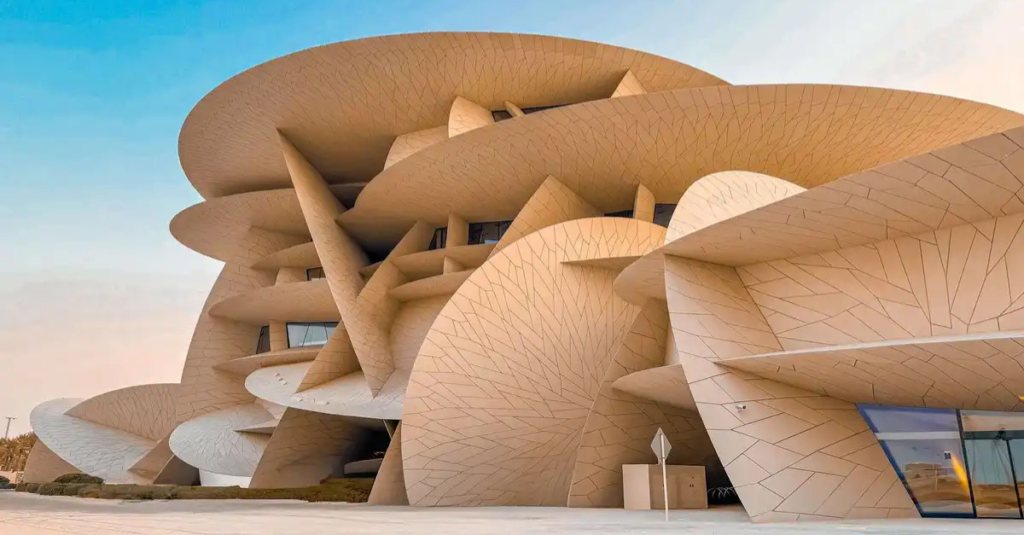
For instance, the National Museum of Qatar embodies this philosophy architecturally and curatorially. It transforms storytelling into a spatial experience. Likewise, spaces like Katara Cultural Village merge performance, visual arts, and community engagement. Culture is not confined to galleries. It is woven into public life.
Cultural Art Beyond Walls – Airports and Deserts as Galleries
Moreover, Qatar’s cultural imprint extends beyond traditional venues. At Hamad International Airport, monumental art installations greet travelers. This signals that the nation sees art not as an accessory but as an expression of identity.
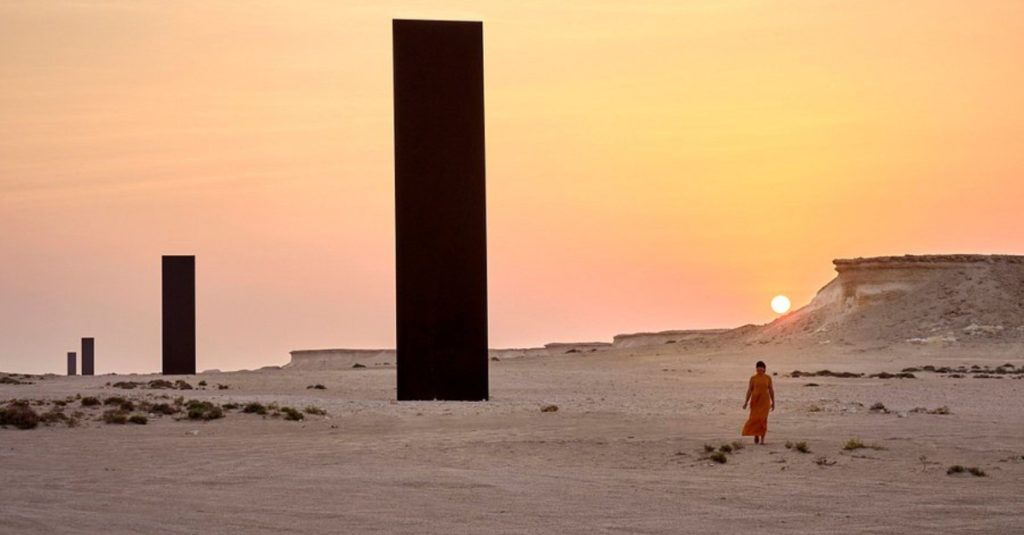
In the desert, sculptures rise unexpectedly from the sand. Natural space becomes a contemplative environment where art meets the horizon. Even within spiritual and civic architecture, such as the Al-Mujadilah Center and Mosque, design reflects a deliberate fusion of meaning, aesthetics, and cultural dialogue.
When the Desert Itself Becomes a Cultural Gallery
Equally striking is how Qatar has allowed art to inhabit its most untouched landscapes. In the remote Brouq Nature Reserve, Richard Serra’s East-West/West-East rises from the earth in quiet symmetry. Specifically, placed in the middle of nowhere, the sculpture transforms the desert into a contemplative gallery. Moreover, shifting sunlight, elongated shadows, and vast silence become part of the artwork itself.
Thus, Qatar demonstrates that creativity extends into the horizon. Even in the heart of the desert, art can shape experience, perception, and place.
Global Cultural Partnerships and Cultural Diplomacy
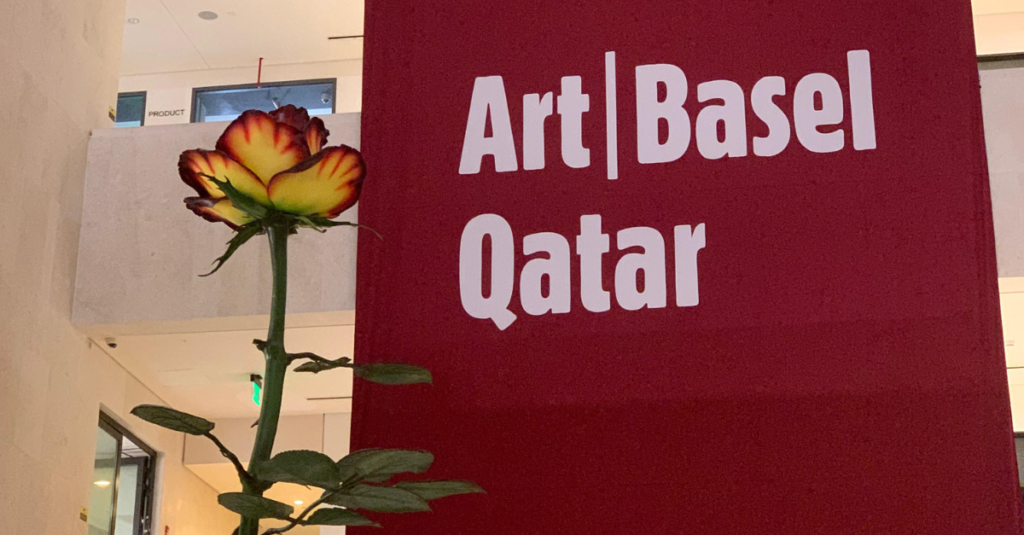
Additionally, internationally, Qatar’s growing presence within the Art Basel ecosystem signals confident cultural diplomacy. In turn, these collaborations reinforce Qatar’s commitment to positioning itself as a global nexus for artistic thought, patronage, and exchange.
The Quiet Power of Cultural Public Participation
Yet the most compelling dimension lies in quieter moments. Murals emerge during festivals. Creative expressions accompany heritage events. Artistic initiatives are woven into cultural competitions that bring together communities from across the Gulf.
Consequently, these instances reveal a country that understands art as participation. Art becomes a shared language celebrating hidden talents, diverse nationalities, and collective imagination.
A Cultural Mindset, Not Just Institutions
Through this layered strategy, Qatar has firmly placed itself on the global art map. It is a nation where museums educate, architecture inspires, public spaces invite reflection, and leadership sustains vision. More than building institutions, Qatar is building a cultural mindset, one that views art as both legacy and future, knowledge and experience, identity and invitation.
In doing so, Qatar offers a compelling model: thoughtful cultural investment can transform a nation into a destination for meaning, creativity, and global cultural conversation.
Art Basel Qatar 2026: Where Material, Memory, and Women’s Voices Converge
A New Cultural Generation Rises in Doha’s Creative Scene
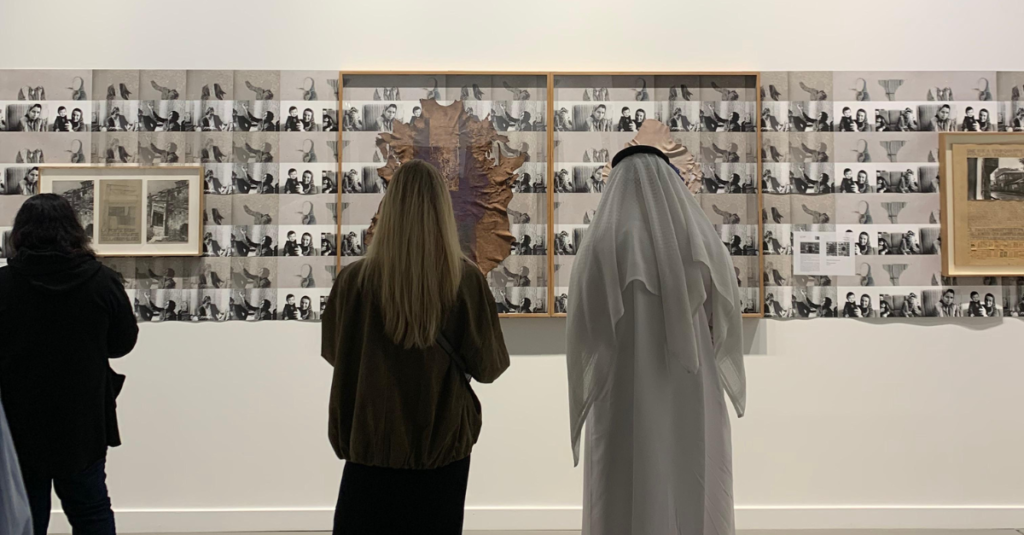
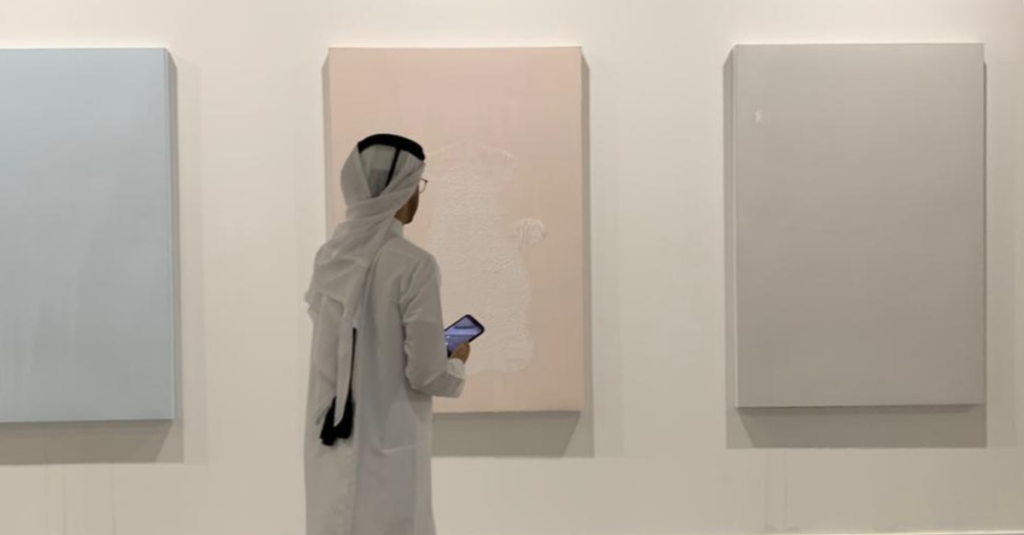
At Art Basel Qatar 2026, unfolding across M7 and the Doha Design District, the fair signaled the rise of a new generation shaping the region’s creative future.
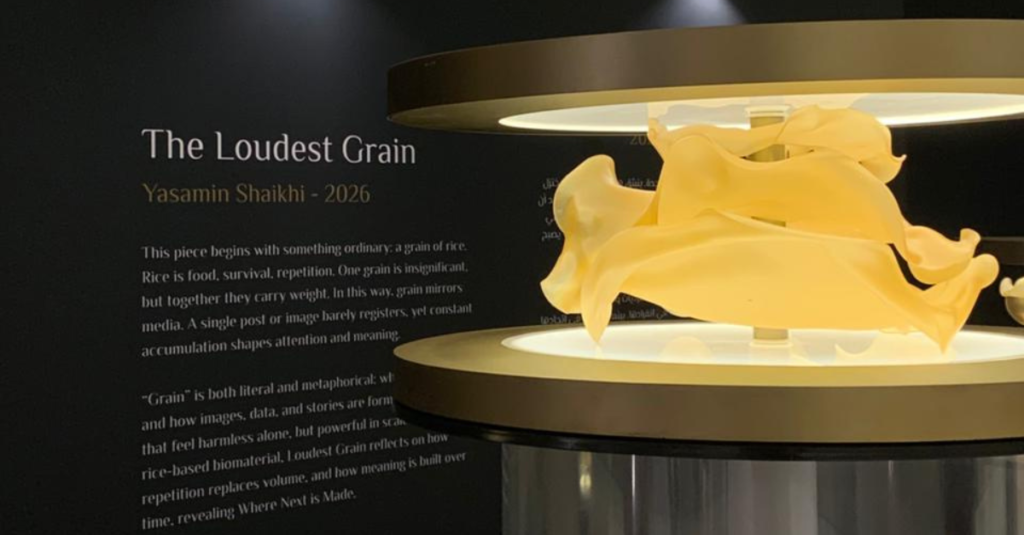
Among standout emerging voices was Qatar-based Iranian artist Yasamin Shaikhi. Her installation is called The Loudest Grain. It became one of the most discussed works. It earned recognition through Media City Qatar’s Next in Arts programme. That programme is a multi-year initiative. It runs alongside Art Basel. Its goal is to amplify experimental practices. Shaikhi uses grain tactically. Grain is both material and metaphor. Through this, she transforms a humble substance. That substance becomes a meditation. It meditates on sustenance, fragility, and cultural memory. Even the smallest element can carry the loudest narrative.
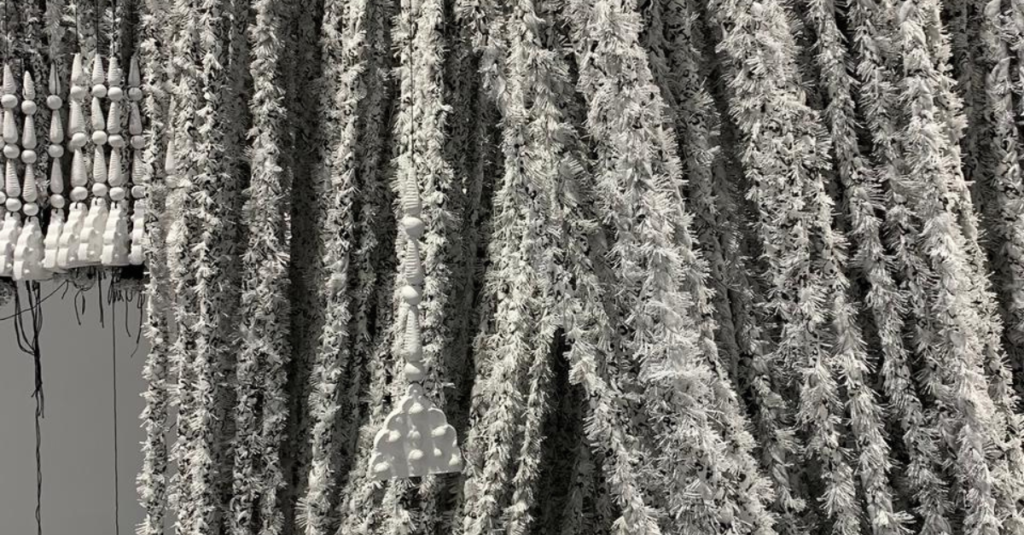
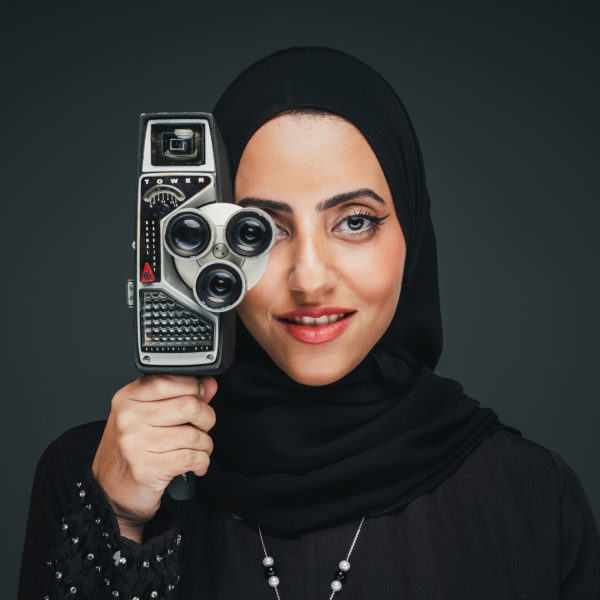
Similarly, Bouthayna Al Muftah’s Living: Architectures of Memory treats memory as inhabitable. It is felt energetically and collectively. The installation is built around a deconstructed thobe. That thobe uses natural materials tied to land and ancestry. The installation unfolds like a conceptual artist’s book in space. Hundreds of braids reference intimate rituals. Those rituals happen between mothers and daughters. Poetry is held within its woven structure. Generational knowledge is also held there. Al Muftah captures a universal yet deeply local moment. That moment is women gathering, dressing, preparing, remembering. It is a reflection on fragile yet enduring familial heritage.
Bouthayna Al Muftah – Art Basel Qatar 2026
Nadia Ayari – Botanical Cultural Abstraction as Identity
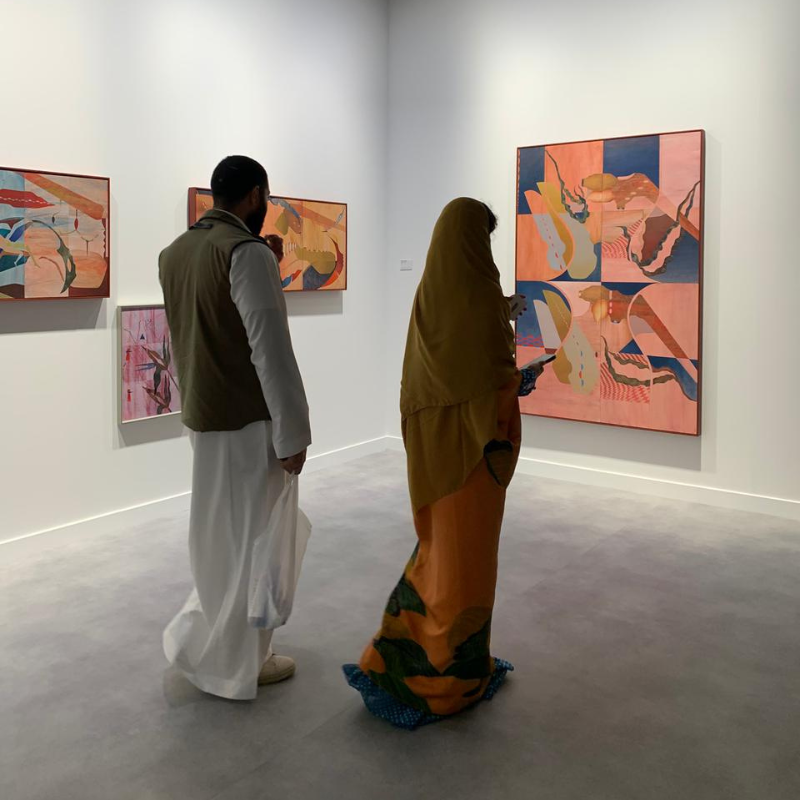
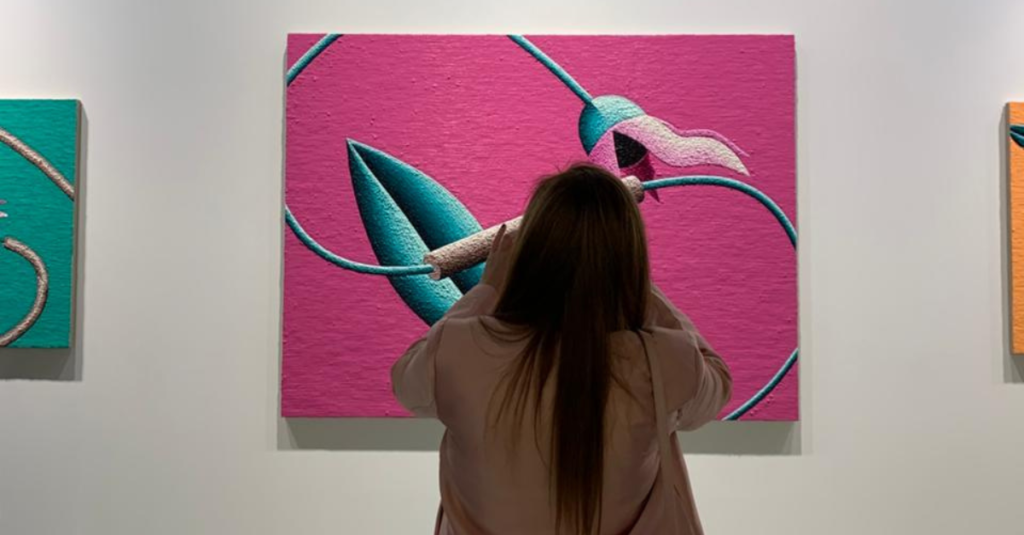
Across the fair, women artists from the region and diaspora demonstrated powerful new directions. For example, New York-based Tunisian painter Nadia Ayari presented luminous canvases where floral forms from North African landscapes become symbolic protagonists. Petals and leaves unfold across saturated fields of color, suggesting motion, resilience, and interconnected survival. Her layered oil technique evokes how identity evolves through adaptation and continuity.
Nadia Ayari – Art Basel Qatar 2026
Caline Aoun – Technology, Cultural Entropy, and the Natural World
Meanwhile, Lebanese artist Caline Aoun approached technology and time. In Dreaming of Electric Dew, metallic surfaces generate artificial condensation, transforming data and entropy into sensory experiences. Her practice captures natural traces, pine needles, environmental imprints, freezing fleeting processes to make the invisible tangible. Aoun questions the boundary between nature and technology, suggesting that modern systems may risk erasing the natural world.
Calione Aoun – Art Basel Qatar 2026
Lina Gazzaz – Organic Cultural Networks and Urban Memory
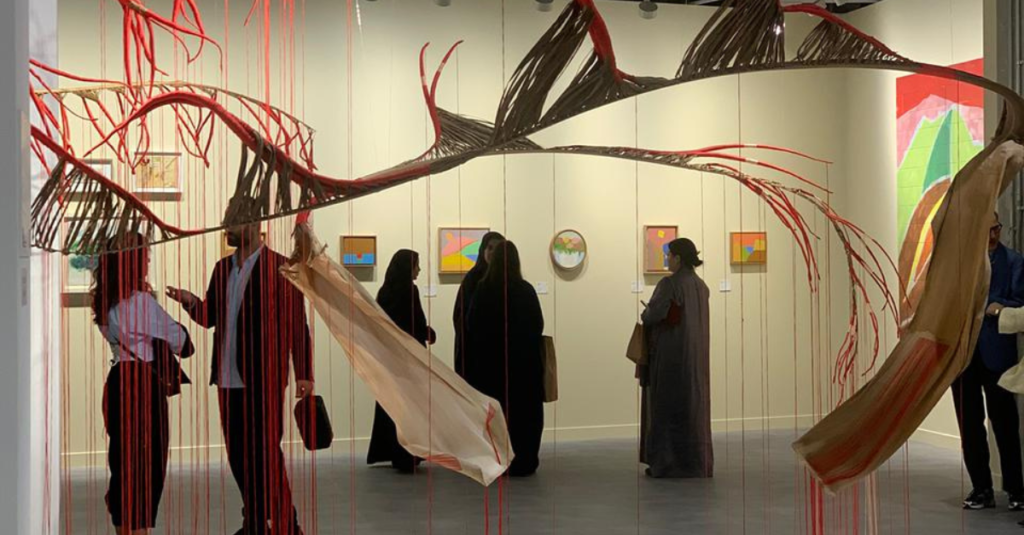
Furthermore, Saudi artist Lina Gazzaz explored transformation through organic networks in Tracing Lines of Growth. Threads wrap around reconstructed palm forms, mapping time, urban change, and environmental memory. Her mycelial sensitivity suggests cities and identities grow like living organisms, shaped by unseen connections beneath the surface. Development becomes biological, charting the pulse of a nation’s evolving landscape.
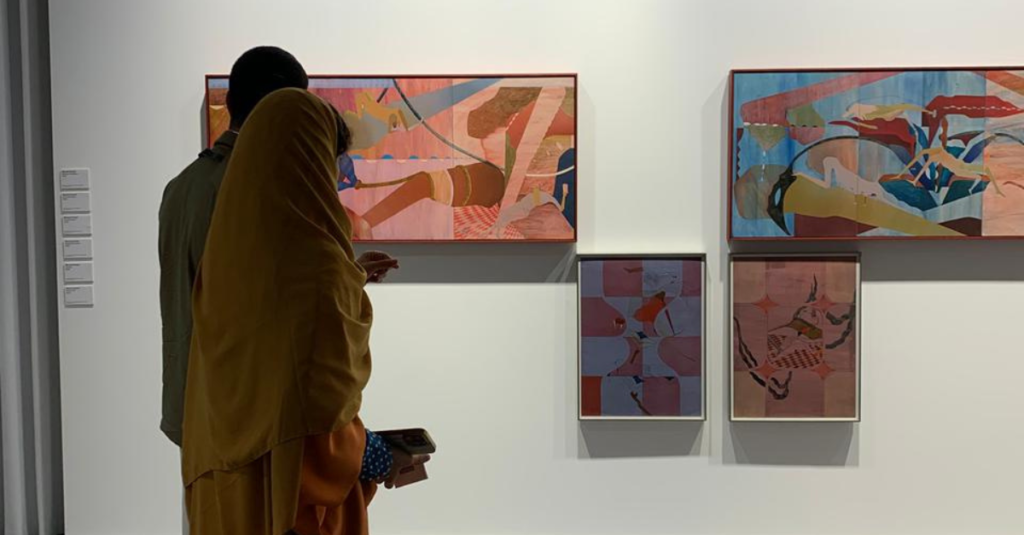
In addition, Iranian-born, New York-based Maryam Hoseini examined the body as an unstable cosmological space. Her series Bodies Do Not Resolve presents fragmented figures multiplying across paneled compositions. Drawing from medieval cosmological thought, Hoseini’s paintings suggest identity and existence are never fixed; they unfold as continuous states of becoming and transformation.
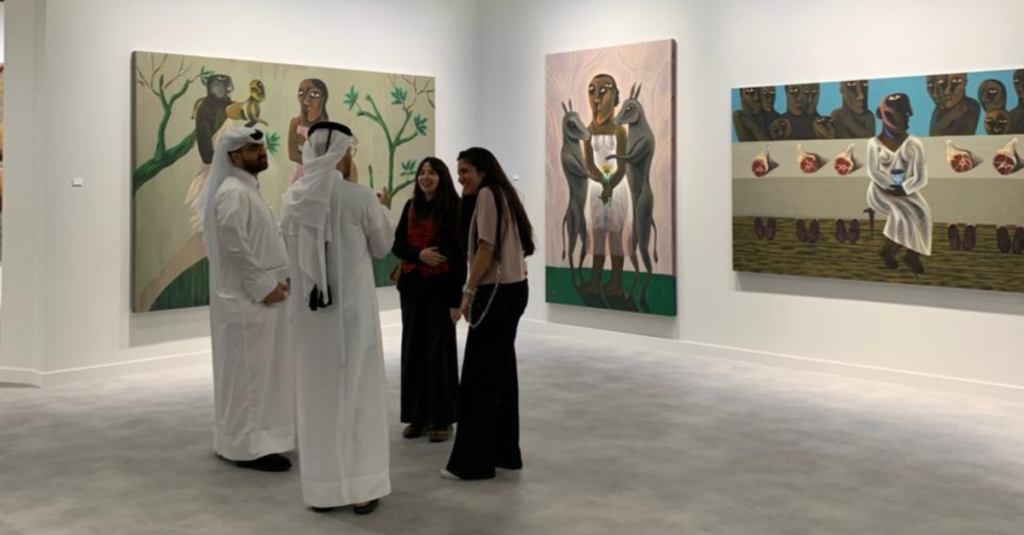
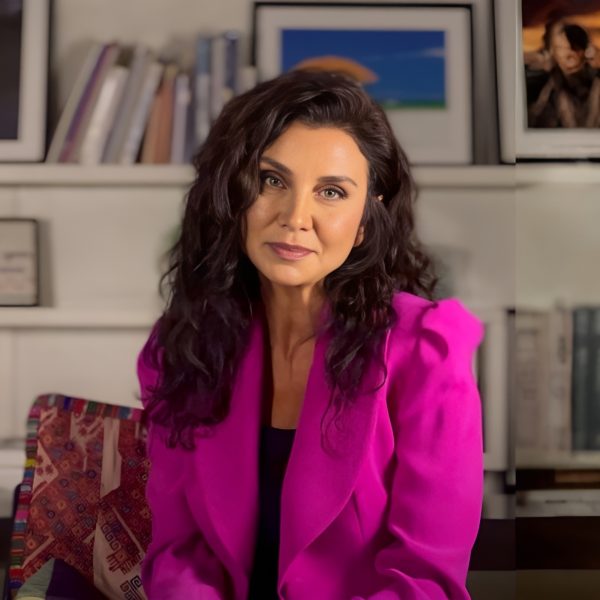
Finally, Egyptian multimedia artist Souad Abdelrasoul portrays human figures merging with botanical and animal forms. For example, in her explorations of myth, ecology, and femininity, the body becomes a symbolic terrain, sprouting plant life or dissolving into hybrid beings. Consequently, her imagery blurs human and environment, suggesting metaphysical interdependence where memory, nature, and identity evolve together.
Souad Abdelrasoul – Art Basel Qatar 2026
A Shared Cultural Language Beyond Geography
Taken collectively, these six artists illustrate how women across the region and its diaspora are reshaping contemporary art. Indeed, they experiment with material, ecology, technology, and inherited ritual.
Although their practices differ widely, from grain installations to braided archives, botanical abstraction, data-driven surfaces, threaded landscapes, and metamorphic figuration, each nonetheless transforms lived experience into a visual language that travels beyond geography.
Art Basel Qatar – A Cultural Meeting Point
In this sense, Art Basel Qatar becomes more than an exhibition platform. It is a cultural meeting point where regional narratives enter global circulation. The fair demonstrates that art remains one of the most powerful universal connectors, capable of translating memory into form, identity into space, and personal history into shared human understanding.