Stop Building Logos.
I am not a strategist. To be honest, I’ve never sat through a marketing certification. I don’t own a single book about the “psychology of color” or “brand architecture frameworks.” In fact, if you put a SWOT analysis in front of me, I’d probably just write a poem about how confused it makes me feel.
What I am is a novelist. A poet. A writer who spent years learning how to make strangers feel something with words. I write about heartbreak and grocery stores and the particular loneliness of 3 AM. I build worlds out of sentences. Above all, I know intimately what makes a person pause, lean in, and let themselves be moved.
Somehow, this skill became the foundation of a career helping people build brands that actually stick.
Let me explain how that happened.

The Logos Trap
A founder recently showed me her new logo. Sleek. Minimalist. Perfect. To my surprise, he’d spent thirty thousand dollars on it. “What do you think?” he asked, beaming.
I looked at it. Then, I looked at her. “What do you want people to feel when they see this?”
He paused. “I don’t know. Trust? Innovation?”
“Does a swoosh make you feel trust?”
He looked down at her phone at the beautiful, expensive, meaningless mark on the screen. “No,” he admitted.
“So why are we starting there?”
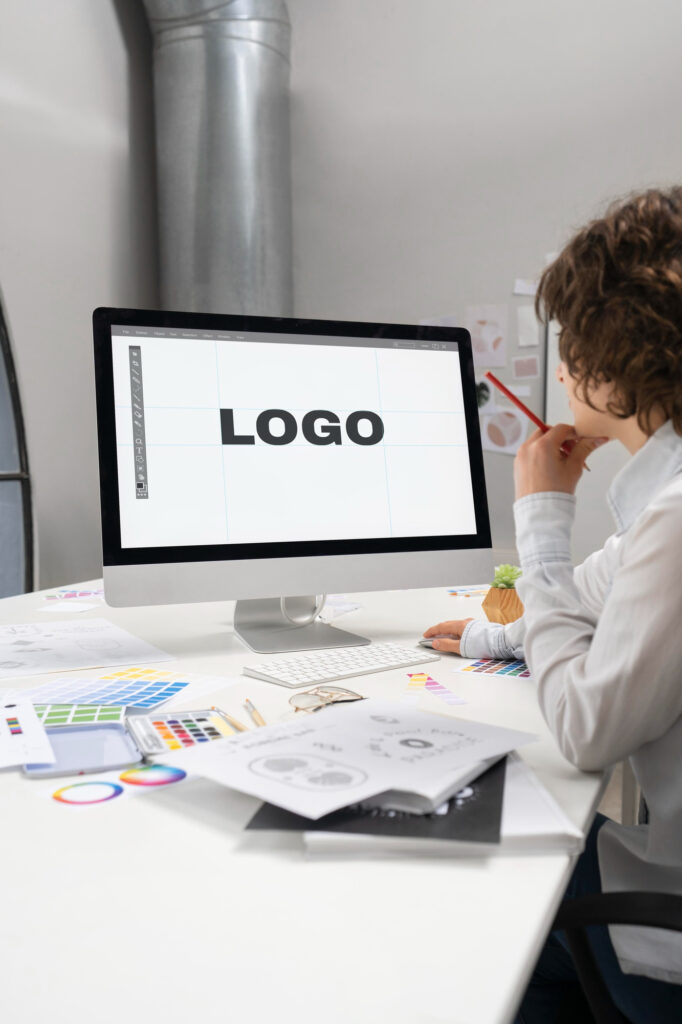
How a Novelist Ends Up Doing Branding
I didn’t choose this work. In reality, it chose me.
People kept coming to me with problems. “We have all this data, but our marketing feels dead.” “Our competitors all sound the same.” “We spent six figures on a brand guide, and no one remembers us.”
What they weren’t asking for was a strategy. Instead, they were asking for what I do naturally: find the truth beneath the surface. Name what everyone is feeling, but no one is saying. Tell a story that makes people care.
So, I stopped pretending I was something else. I stopped trying to sound like an expert. Instead, I showed up as what I am: a writer who builds brands by accident.
The Novelist’s Approach
When I write a novel, I don’t start with a plot. Rather, I start with a character. A person who wants something desperately but can’t get it. Everything else, the story, the tension, the resolution, flows from that desire.
Similarly, branding is the same.
I don’t start with market analysis. Instead, I start with a feeling. What does your customer want so badly that it keeps them up at night? What are they afraid of? The story they tell themselves about who they are.
When I find that, I write toward it. Not with charts. But with words. With sentences that land like a punch. With a voice that feels like a friend, not a salesman.
The $10 Million Poem
A skincare client once handed me a thick brand brief. Charts. Data. Competitor analysis. It was thorough. However, it was dead.
I put it aside. Then, I told them about a poem I’d written years ago. It was about a woman standing in front of a mirror, tracing the lines on her face, wondering when she would stop recognizing herself. It was about the quiet war we wage with our own reflection.
Suddenly, the CEO, a no-nonsense chemist, her jaw tightened. Then, she exhaled slowly.
“That’s it,” she said. “We’re not selling skincare. We’re giving women back their own faces. Helping them meet their own eyes again.”
From that moment, they built their entire brand around that feeling. That truth I’d excavated from a poem I wrote at 2 AM.
Why This Works
I am not the smartest person in any room. Admittedly, I can’t build you a complex attribution model. I don’t know what a “customer journey map” is, and at this point, I’m too afraid to ask.
Nevertheless, I can write a sentence that makes someone stop scrolling. I can find the emotional truth that everyone else is too busy to notice. Moreover, I can build a brand that doesn’t just sit on a shelf but lives in someone’s chest.
Because here’s the secret: brands are stories. Furthermore, stories are the only thing humans have ever truly remembered.
You don’t remember the logos. Instead, you remember how a brand made you feel. You remember the ad that made you cry. You remember the message that arrived exactly when you needed it. Most of all, you remember the voice that sounded like it was speaking only to you.
That’s what I build. Not logos. But feelings. Not names. But narratives. Not campaigns. But experiences. Not brands. But stories people carry with them.
Your Move
So, here’s what I want you to do. Stop obsessing over your logos. Stop tweaking your name. Above all, stop trying to look like a brand.
Instead, ask yourself: What’s the story we’re telling?
Who is the hero? What do they want? What’s standing in their way? What transformation are you offering?
Write it down. Not in corporate language. But in human language. Like you’re telling a friend about something you believe in.
That story is your brand. Not the font. Not the icon. Rather, the story.
Build everything around it. Hire people who feel it. Write words that extend it. Finally, make decisions that honor it.
The Brand That Can’t Be Copied
Anyone can copy logos. Similarly, anyone can mimic a color palette. However, no one can steal your story. No one can replicate your persona, the particular way you see the world and the singular voice you use to express it.
When you build from a story, you become un-copyable. Your competitors can take your fonts. But they can’t take your soul.
In conclusion, I’m not a strategist. I’m a novelist who wandered into the wrong industry and accidentally discovered that the rules are the same. A good story beats good logos every time. Ultimately, a feeling outlasts a font.
Your brand doesn’t need more polish. Instead, it needs more truth. And truth, I’ve learned, is what happens when you stop trying to sound like an expert and start writing like a human.
That’s what I do, that’s all I do, and somehow, it’s enough. Maybe you should give it a try.
Stay connected with EWG:
Follow us on Instagram: https://www.instagram.com/executivewomen_/
Connect on LinkedIn: https://www.linkedin.com/company/executive-women/
Like us on Facebook: https://www.facebook.com/ExecutiveWomen/
Read more articles: https://executive-women.global/the-secret-ingredient-in-great-marketing-its-stolen/