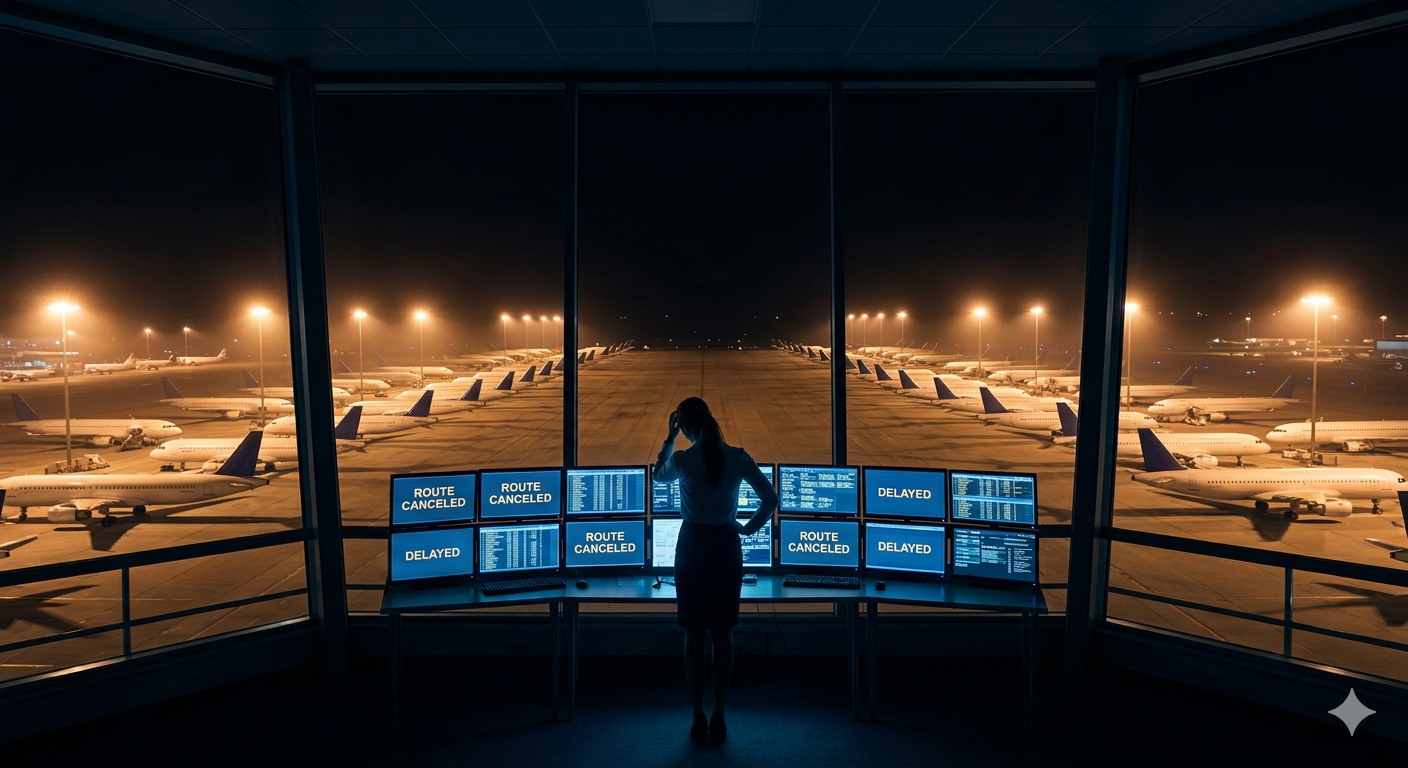
A conflict ignites far away. For some, it feels distant. Yet its impact lands on everyone’s doorstep. In an instant, a nation’s airspace closes. This sky was once a bustling highway. Now it is a void. The world holds its breath. The Day the World’s Highways Stood Still had arrived without warning. The economic toll began immediately. However, the human story unfolded much more quietly. It is a story of disruption, anxiety, and severed connections.
The Numbers Behind The Day the World’s Highways Stood Still
Let us look at the facts. Since the conflict escalated, roughly 19,000 flights have been delayed globally. Additionally, another 11,000 have been canceled. As a result, nearly one million travelers found themselves stranded.
For airlines, the financial hit was instant. On a single day in early March, 29 major carriers lost $22 billion in market value. Specifically, shares of Lufthansa dropped more than five percent. Similarly, British Airways’ parent company suffered the same fate. Meanwhile, oil prices jumped 13 percent. This made jet fuel significantly more expensive. Fuel already accounts for 20 to 35 percent of operating costs.
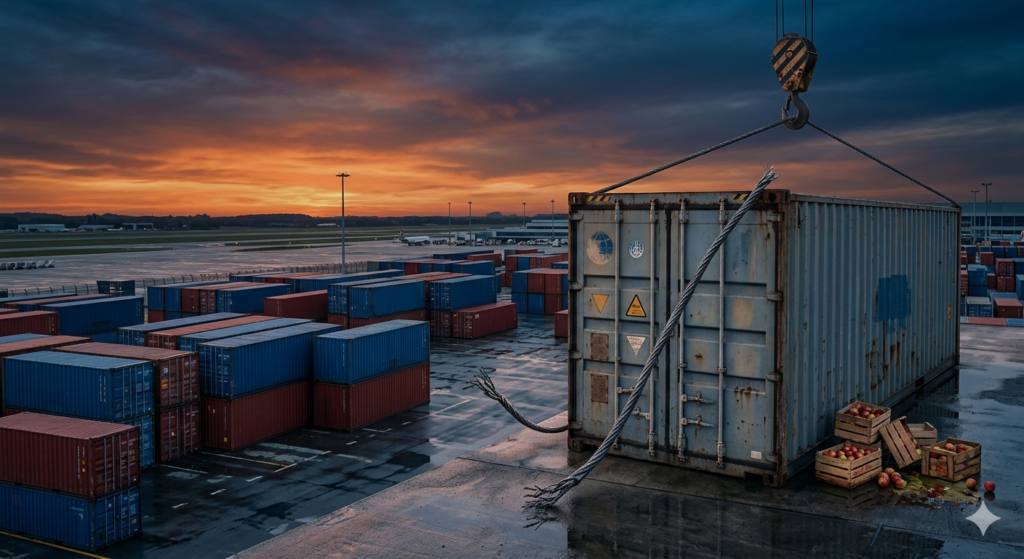
Consider one flight’s journey. A plane bound from Asia to Europe now detours around closed airspace. Consequently, it adds two to three hours to the trip. It burns an extra $6,000 to $10,000 in fuel alone. Furthermore, crews exceed duty limits. Passengers miss connections. Cargo sits on tarmacs. Flowers wilt. Electronics arrive late.
These costs do not vanish. Instead, they travel down the supply chain. Perishable goods rot before reaching markets. Components stall on runways. Therefore, manufacturers slow production. Ultimately, consumers pay more. Inflation edges upward. The entire system groans under rerouted traffic.
Lives Disrupted by The Day the World’s Highways Stood Still
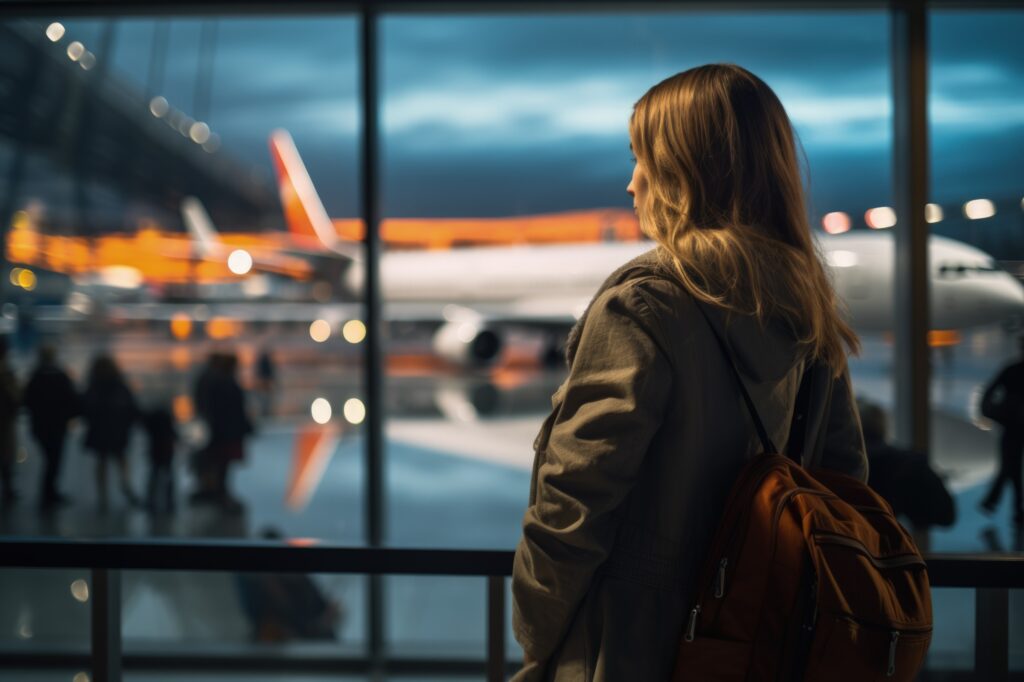
However, the balance sheet tells only half the story. Behind every delayed flight, there are human beings with urgent needs. For instance, a daughter rushing to a dying mother’s bedside. Or a father hoping to reach his son’s wedding. There is also the medical team transporting critical supplies.
Beyond these travelers, others never boarded a plane at all. Families who once lived in comfortable homes now crowd into shelters. They fled with only what they could carry. Photographs. Documents. A child’s favorite toy. Their world has shrunk to the size of a refugee cot. Day after day, they wait for news that may never come.
In Lebanon alone, nearly 700,000 people have been displaced. Schools have become dormitories. Playgrounds have become tent cities. Children who should be studying now stand in food lines. Parents who should be working now search for safety. Simply put, ordinary life has stopped.
Meanwhile, the Strait of Hormuz carries one-fifth of the world’s oil. Yet shipping there has practically halted. Around 20,000 seafarers remain stranded on vessels. They cannot go home. Their families wait, uncertain. Each day without news stretches into silence.
The Workers Stranded by The Day the World’s Highways Stood Still
Perhaps the most invisible victims are the millions who built the Gulf’s prosperity. Men and women left their homelands years ago. They came for work. They send money home to support parents, spouses, and children.
Consider the Bangladeshi workers alone. Approximately six million live in the Middle East. Last year, they sent home nearly $33 billion in remittances. This money sustains entire villages—paying for school fees, buying medicine, building homes, and funding weddings.
Now these workers face impossible choices. Many cannot return to work after leave. Their visas tick down while flights remain grounded. Others cannot go home at all. They are stranded, far from family. Their savings are dwindling.
Think of the man who polished your hotel lobby, the woman who cared for an elderly relative, the driver who navigated chaotic traffic. These are not abstract statistics. They are people with names, dreams, and families.
Each phone call carries unspoken worry. Each delayed paycheck means someone back home goes without. Weddings are postponed. Births occur without fathers present. Funerals are attended alone. The separation is measured in missed moments.
Why The Days the World’s Highways Stood Still Changed Everything
When historians reflect on this period, they will mark The Days the World’s Highways Stood Still as a turning point. Before that day, global travel felt effortless. After that day, everything became uncertain.
For businesses, the disruption exposed hidden vulnerabilities. Supply chains that functioned for decades suddenly fractured. Companies scrambled to find alternatives. Some succeeded. Many did not. The ripple effects will continue for years.
For families, the separation became unbearable. Grandparents missed their grandchildren growing up. Siblings missed each other’s milestones. Lovers missed weddings planned for months. The emotional toll cannot be calculated.
For workers, the uncertainty created constant anxiety. Would their jobs still exist? Would their families survive without remittances? These questions haunted sleepless nights across continents.
What We Learned from The Day the World’s Highways Stood Still
This moment reveals something profound. Our world is deeply connected. A regional conflict is never just regional. Its costs are truly global. We see it in rising prices, feel it in disrupted supply chains, and sense it in the uncertainty of workers far away.
The foundation of our economy is trust. It relies on open transit. That foundation can crack in an instant. We are all more vulnerable than we think. Yet vulnerability can also connect us. It reminds us that we share this small planet. We breathe the same air. We dream the same dreams for our children.

How We as Humans Can Respond After The Day the World’s Highways Stood Still
So what can we do? The problem feels immense. However, small actions matter more than we realize.
First, we can see clearly. We must recognize that global supply chains have human faces. When you hear of conflict, imagine the people behind your morning coffee. Imagine the hands that picked your fruit. Imagine the hearts that miss their children.
Second, we can support organizations that help displaced families. In Lebanon, nearly 400 shelters are open. Most are full. Families need food. They need water, hygiene kits, and blankets. Even small donations make an immediate difference.
Third, we can advocate for corporate responsibility. Supply chain disruptions now affect 86 percent of logistics leaders. Companies must plan for crises. More importantly, they must protect workers within those chains. Fair wages matter. Contingency plans matter. Human dignity matters.
Fourth, we can choose empathy over indifference. When you read headlines about faraway conflicts, pause. Remember that every number is a person. Every statistic has a story. Remember the logistics coordinator working through the night. Picture the migrant worker missing his child’s first steps. Think of the grandmother fleeing her home.
We can stay informed. It is our duty to understand how global events connect to local lives. We must share stories that humanize rather than polarize. Only then can we break the silence that surrounds distant suffering.
Conclusion: Moving Forward from The Day the World’s Highways Stood Still
The Day the World’s Highways Stood Still was more than a news headline. It was a global event with personal consequences—one that disrupted economies, displaced families, and distressed workers. In the end, it reminded us of our shared fate.
As global citizens, we have a role. We can choose awareness over ignorance. We can choose empathy over indifference. The sky may fall silent. However, our response must speak volumes. After all, the highways may stand still. But human connection can never be grounded.
Stay Connected:
Follow us on Instagram: https://www.instagram.com/executivewomen_/
Connect on LinkedIn: https://www.linkedin.com/company/executive-women/
Like us on Facebook: https://www.facebook.com/ExecutiveWomen/
Read more articles: https://executive-women.global/en/the-gulfs-growth-engine-how-women-in-finance-will-power-the-next-economic-wave/